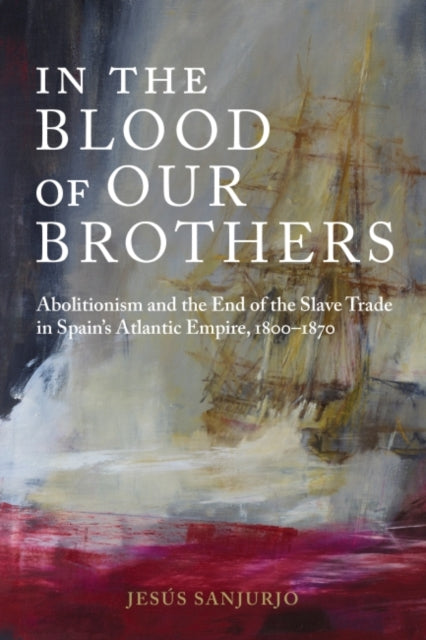
Jesus Sanjurjo
In the Blood of Our Brothers: Abolitionism and the End of the Slave Trade in Spain's Atlantic Empire, 1800-1870
In the Blood of Our Brothers: Abolitionism and the End of the Slave Trade in Spain's Atlantic Empire, 1800-1870
💎 Earn 207 Points (£2.07) on this item.
YOU SAVE £2.46
- Condition: Brand new
- UK Delivery times: Usually arrives within 2 - 3 working days
- UK Shipping: Fee starts at £2.39. Subject to product weight & dimension
Bulk ordering. Want 15 or more copies? Get a personalised quote and bigger discounts. Learn more about bulk orders.
Couldn't load pickup availability
- More about In the Blood of Our Brothers: Abolitionism and the End of the Slave Trade in Spain's Atlantic Empire, 1800-1870
During the nineteenth century, Spain campaigned to stop the slave trade and did little to abolish slavery. Jesús Sanjurjos In the Blood of Our Brothers: Abolitionism and the End of the Slave Trade in Spains Atlantic Empire, 1800–1870, provides a theory of the history, politics, and economics of the persistence and growth of the slave trade in the Spanish empire. He highlights the role of British activists and diplomats in advancing the abolitionist cause, and the complex and uneven development of abolitionist and antiabolitionist discourses in Spain's public life.
Format: Hardback
Length: 208 pages
Publication date: 26 October 2021
Publisher: The University of Alabama Press
The abolition of the slave trade in the Atlantic World to the 1860s was a complex and multifaceted process that involved a range of actors, ideologies, and historical factors. While Spain was not a major player in the slave trade compared to other European powers, it did play a significant role in the trade and was slow to abolish it. This essay will explore the abolition of the slave trade in Spain and its Atlantic empire, focusing on the period from 1800 to 1870.
The abolition of the slave trade in the Atlantic World to the 1860s was a complex and multifaceted process that involved a range of actors, ideologies, and historical factors. While Spain was not a major player in the slave trade compared to other European powers, it did play a significant role in the trade and was slow to abolish it. This essay will explore the abolition of the slave trade in Spain and its Atlantic empire, focusing on the period from 1800 to 1870.
In the early nineteenth century, Spain was a major player in the Atlantic slave trade, transporting millions of African people across the ocean to work on plantations in the Americas. However, there were a few individuals and organizations in Spain who campaigned for the abolition of the slave trade. One of the most prominent figures was the Spanish priest and abolitionist Juan Ignacio Molina y Velasco, who published a series of essays in the late eighteenth century advocating for the abolition of slavery.
Despite the efforts of Molina and other abolitionists, the slave trade continued to thrive in Spain and its empire. This was due in part to the strong economic and political ties between Spain and its colonies, as well as the belief in the inviolability of property rights and the superiority of the white race. However, there were also growing voices of opposition to the slave trade, particularly among Spanish liberals and intellectuals.
In 1811, Spain abolished the slave trade in its colonies in the Americas, but it did not immediately end slavery itself. Slavery continued to be legal in Spain until 1868, when it was finally abolished. The abolition of slavery in Spain was a significant milestone in the abolition of the slave trade in the Atlantic World, but it was also a complex and controversial process that was shaped by a range of factors, including economic, political, and social considerations.
One of the key factors that contributed to the persistence of slavery in Spain was the economic importance of the slave trade. Slaves were used to work on plantations in the Americas, producing goods such as sugar, coffee, and tobacco, which were then sold in Europe and other parts of the world. The slave trade provided a significant source of income for Spain and its colonies, and it was difficult for many Spanish landowners to give up this source of revenue.
Another factor that contributed to the persistence of slavery in Spain was the political power of the Spanish empire. Spain had a strong military presence in its colonies, and it was difficult for abolitionists to challenge the authority. The Spanish government also used its power to suppress opposition to the slave trade, including the execution of abolitionists and the imprisonment of those who spoke out against it.
Despite these challenges, there were a few individuals and organizations in Spain who continued to campaign for the abolition of the slave trade. One of the most prominent figures was the Spanish priest and abolitionist Juan Ignacio Molina y Velasco, who published a series of essays in the late eighteenth century advocating for the abolition of slavery. Molina was also a member of the Royal Spanish Academy, which played a significant role in shaping public opinion on the issue of slavery.
In addition to Molina, there were also a number of Spanish liberals and intellectuals who were opposed to the slave trade. These individuals included the Spanish writer and politician Miguel de Cervantes, who wrote the novel "Don Quixote" in which he criticized the treatment of slaves in Spanish colonies. Cervantes was also a member of the Royal Spanish Academy, which played a significant role in shaping public opinion on the issue of slavery.
Despite the efforts of these individuals and organizations, the slave trade continued to thrive in Spain and its empire until 1868. This was due in part to the strong economic and political ties between Spain and its colonies, as well as the belief in the inviolability of property rights and the superiority of the white race. However, there were also growing voices of opposition to the slave trade, particularly among Spanish liberals and intellectuals.
In 1811, Spain abolished the slave trade in its colonies in the Americas, but it did not immediately end slavery itself. Slavery continued to be legal in Spain until 1868, when it was finally abolished. The abolition of slavery in Spain was a significant milestone in the abolition of the slave trade in the Atlantic World, but it was also a complex and controversial process that was shaped by a range of factors, including economic, political, and social considerations.
In conclusion, the abolition of the slave trade in the Atlantic World to the 1860s was a complex and multifaceted process that involved a range of actors, ideologies, and historical factors. While Spain was not a major player in the slave trade compared to other European powers, it did play a significant role in the trade and was slow to abolish it. The abolition of slavery in Spain was a significant milestone in the abolition of the slave trade in the Atlantic World, but it was also a complex and controversial process that was shaped by a range of factors, including economic, political, and social considerations.
Weight: 450g
Dimension: 162 x 237 x 24 (mm)
ISBN-13: 9780817321055
This item can be found in:
UK and International shipping information
UK and International shipping information
UK Delivery and returns information:
- Delivery within 2 - 3 days when ordering in the UK.
- Shipping fee for UK customers from £2.39. Fully tracked shipping service available.
- Returns policy: Return within 30 days of receipt for full refund.
International deliveries:
Shulph Ink now ships to Australia, Belgium, Canada, France, Germany, Ireland, Italy, India, Luxembourg Saudi Arabia, Singapore, Spain, Netherlands, New Zealand, United Arab Emirates, United States of America.
- Delivery times: within 5 - 10 days for international orders.
- Shipping fee: charges vary for overseas orders. Only tracked services are available for most international orders. Some countries have untracked shipping options.
- Customs charges: If ordering to addresses outside the United Kingdom, you may or may not incur additional customs and duties fees during local delivery.