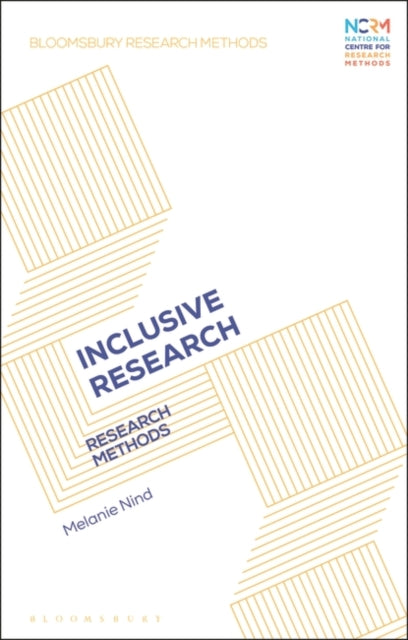
Prof. MelanieNind
Inclusive Research: Research Methods
Inclusive Research: Research Methods
💎 Earn 268 Points (£2.68) on this item.
We can order this item for you. Delivery usually takes about 4 to 6 weeks.
This item is not held in our immediate stock. We will order it for you after checkout.
Estimated delivery: About 4 to 6 weeks
YOU SAVE £11.31
- Condition: Brand new
- UK Delivery times: Usually arrives within 2 - 3 working days
- UK Shipping: Fee starts at £2.39. Subject to product weight & dimension
Bulk ordering. Want 15 or more copies? Get a personalised quote and bigger discounts. Learn more about bulk orders.
Couldn't load pickup availability
- More about Inclusive Research: Research Methods
This book provides an introduction to inclusive research, discussing how to recognize, understand, and do it well. It addresses the overlap and distinctiveness of participatory, emancipatory, user-led, and partnership research, and explores the various practices encompassed within each approach. The author focuses on how and why more inclusive approaches to research have evolved and discusses the range of challenges involved.
Format: Hardback
Length: 120 pages
Publication date: 24 December 2020
Publisher: Bloomsbury Publishing PLC
Inclusive research is a multifaceted approach to inquiry that aims to encompass diverse perspectives, experiences, and backgrounds. It seeks to understand and address the complexities of social and cultural phenomena, recognizing the importance of diversity and equity in research.
Inclusive research encompasses a range of approaches, including participatory, emancipatory, user-led, and partnership research. These approaches prioritize the involvement of research participants in the design, implementation, and analysis of the research, ensuring that their voices and experiences are heard and valued.
One of the key features of inclusive research is its commitment to recognizing and challenging power imbalances and inequalities. It seeks to address the historical and systemic factors that have marginalized certain groups and promote greater equity and justice in research.
Inclusive research also emphasizes the importance of reflexivity and self-awareness in the research process. Researchers must be aware of their own biases, assumptions, and cultural backgrounds and work to mitigate their impact on the research. This involves critically examining their own research practices and seeking feedback from research participants to ensure that their perspectives are accurately represented.
One of the challenges of inclusive research is the need to balance the involvement of research participants with the demands of academic rigor and scientific validity. While inclusive research values the perspectives and experiences of research participants, it is also important to ensure that the research is rigorous and well-designed. This requires a careful balance between qualitative and quantitative methods, as well as a commitment to using rigorous statistical analysis to evaluate the findings.
Another challenge of inclusive research is the need to engage with diverse communities and stakeholders. This involves building relationships and partnerships with community organizations, advocacy groups, and other stakeholders who have a stake in the research topic. It requires a willingness to listen to and learn from these stakeholders and to incorporate their perspectives and experiences into the research design and analysis.
Despite these challenges, inclusive research has the potential to make a significant impact on our understanding of social and cultural phenomena. By promoting greater diversity and equity in research, inclusive research can help to address the systemic inequalities that exist in our society and promote greater social justice.
In conclusion, inclusive research is a critical approach to inquiry that aims to encompass diverse perspectives, experiences, and backgrounds. It emphasizes the importance of recognizing and challenging power imbalances and inequalities, promoting greater equity and justice in research, and engaging with diverse communities and stakeholders. While there are challenges to inclusive research, it has the potential to make a significant impact on our understanding of social and cultural phenomena and promote greater social justice.
Inclusive research is a multifaceted approach to inquiry that aims to encompass diverse perspectives, experiences, and backgrounds. It seeks to understand and address the complexities of social and cultural phenomena, recognizing the importance of diversity and equity in research.
Inclusive research encompasses a range of approaches, including participatory, emancipatory, user-led, and partnership research. These approaches prioritize the involvement of research participants in the design, implementation, and analysis of the research, ensuring that their voices and experiences are heard and valued.
One of the key features of inclusive research is its commitment to recognizing and challenging power imbalances and inequalities. It seeks to address the historical and systemic factors that have marginalized certain groups and promote greater equity and justice in research.
Inclusive research also emphasizes the importance of reflexivity and self-awareness in the research process. Researchers must be aware of their own biases, assumptions, and cultural backgrounds and work to mitigate their impact on the research. This involves critically examining their own research practices and seeking feedback from research participants to ensure that their perspectives are accurately represented.
One of the challenges of inclusive research is the need to balance the involvement of research participants with the demands of academic rigor and scientific validity. While inclusive research values the perspectives and experiences of research participants, it is also important to ensure that the research is rigorous and well-designed. This requires a careful balance between qualitative and quantitative methods, as well as a commitment to using rigorous statistical analysis to evaluate the findings.
Another challenge of inclusive research is the need to engage with diverse communities and stakeholders. This involves building relationships and partnerships with community organizations, advocacy groups, and other stakeholders who have a stake in the research topic. It requires a willingness to listen to and learn from these stakeholders and to incorporate their perspectives and experiences into the research design and analysis.
Despite these challenges, inclusive research has the potential to make a significant impact on our understanding of social and cultural phenomena. By promoting greater diversity and equity in research, inclusive research can help to address the systemic inequalities that exist in our society
In conclusion, inclusive research is a critical approach to inquiry that aims to encompass diverse perspectives, experiences, and backgrounds. It emphasizes the importance of recognizing and challenging power imbalances and inequalities, promoting greater equity and justice in research, and engaging with diverse communities and stakeholders. While there are challenges to inclusive research, it has the potential to make a significant impact on our understanding of social and cultural phenomena and promote greater social justice.
Weight: 296g
Dimension: 146 x 223 x 15 (mm)
ISBN-13: 9781350188778
UK and International shipping information
UK and International shipping information
UK Delivery and returns information:
- Delivery within 2 - 3 days when ordering in the UK.
- Shipping fee for UK customers from £2.39. Fully tracked shipping service available.
- Returns policy: Return within 30 days of receipt for full refund.
International deliveries:
Shulph Ink now ships to Australia, Belgium, Canada, France, Germany, Ireland, Italy, India, Luxembourg Saudi Arabia, Singapore, Spain, Netherlands, New Zealand, United Arab Emirates, United States of America.
- Delivery times: within 5 - 10 days for international orders.
- Shipping fee: charges vary for overseas orders. Only tracked services are available for most international orders. Some countries have untracked shipping options.
- Customs charges: If ordering to addresses outside the United Kingdom, you may or may not incur additional customs and duties fees during local delivery.