ArthurDudney
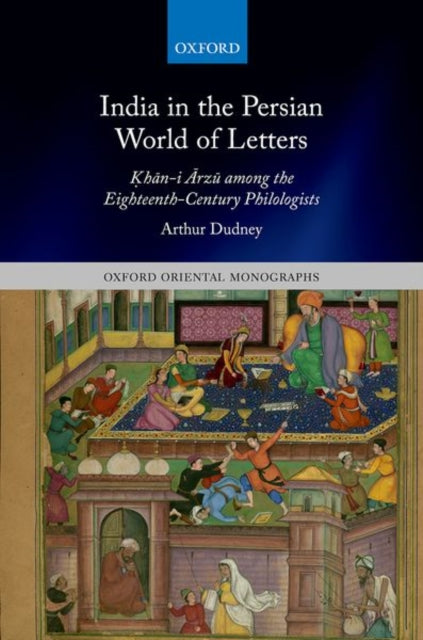
India in the Persian World of Letters: Khan-i Arzu among the Eighteenth-Century Philologists
India in the Persian World of Letters: Khan-i Arzu among the Eighteenth-Century Philologists
💎 Earn 532 Points (£5.32) on this item.
- Condition: Brand new
- UK Delivery times: Usually arrives within 2 - 3 working days
- UK Shipping: Fee starts at £2.39. Subject to product weight & dimension
Bulk ordering. Want 15 or more copies? Get a personalised quote and bigger discounts. Learn more about bulk orders.
Couldn't load pickup availability
- More about India in the Persian World of Letters: Khan-i Arzu among the Eighteenth-Century Philologists
This book traces the development of philology (the study of literary language) in Persian tradition in India, focusing socio-political ramifications, and provides an intellectual biography of Ārzū, an innovative and influential eighteenth-century scholar and poet in India.
Format: Hardback
Length: 336 pages
Publication date: 15 April 2022
Publisher: Oxford University Press
This is an open access title available under the terms of a CC BY-NC-ND 4.0 International licence. It is free to read at Oxford Scholarship Online and offered as a free PDF download from OUP and selected open access locations. This book traces the development of philology (the study of literary language) in the Persian tradition in India, concentrating on its socio-political ramifications. The most influential Indo-Persian philologist of the eighteenth-century was Sirāj al-Dīn 'Alī Khān, (d. 1756), whose pen-name was Ārzū. Besides being a respected poet, Ārzū was a rigorous theoretician of language whose Intellectual legacy was side-lined by colonialism. His conception of language accounted for literary innovation and historical change in part to theorize the tāzah-go'ī [literally, "fresh-speaking"] movement in Persian literary culture. Although later scholarship has tended to frame this debate in anachronistically nationalist terms (Iranian native-speakers versus Indian imitators), the primary sources show that contemporary concerns had less to do with geography than with the question of how to assess innovative "fresh-speaking" poetry, a situation analogous to the Quarrel of the Ancients and the Moderns in early modern Europe. Ārzū used historical reasoning to argue that as a cosmopolitan language Persian could not be the property of one nation or be subject to one narrow kind of interpretation. Ārzū also shaped attitudes about reḳhtah, the Persianized form of vernacular poetry that would later be renamed and reconceptualized as Urdu, helping the vernacular to gain acceptance in elite literary circles in northern India. This study puts to rest the persistent misconception that Indians started writing the vernacular because they were ashamed of their poor grasp of Persian at the twilight of the Mughal Empire.
Weight: 518g
Dimension: 224 x 145 x 25 (mm)
ISBN-13: 9780192857415
This item can be found in:
UK and International shipping information
UK and International shipping information
UK Delivery and returns information:
- Delivery within 2 - 3 days when ordering in the UK.
- Shipping fee for UK customers from £2.39. Fully tracked shipping service available.
- Returns policy: Return within 30 days of receipt for full refund.
International deliveries:
Shulph Ink now ships to Australia, Belgium, Canada, France, Germany, Ireland, Italy, India, Luxembourg Saudi Arabia, Singapore, Spain, Netherlands, New Zealand, United Arab Emirates, United States of America.
- Delivery times: within 5 - 10 days for international orders.
- Shipping fee: charges vary for overseas orders. Only tracked services are available for most international orders. Some countries have untracked shipping options.
- Customs charges: If ordering to addresses outside the United Kingdom, you may or may not incur additional customs and duties fees during local delivery.