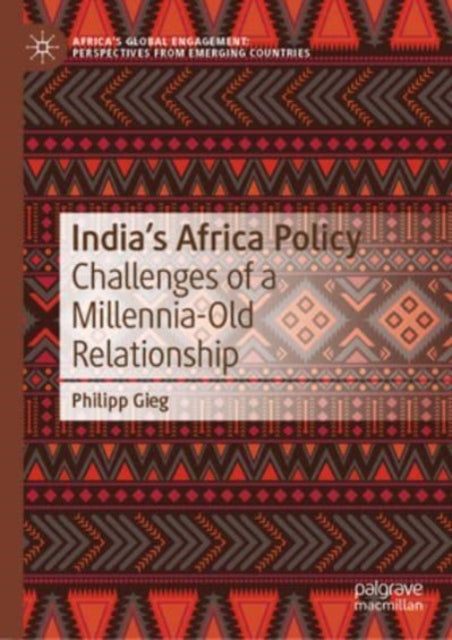
Philipp Gieg
India's Africa Policy: Challenges of a Millennia-Old Relationship
India's Africa Policy: Challenges of a Millennia-Old Relationship
💎 Earn 495 Points (£4.95) on this item.
We can order this item for you. Delivery usually takes about 4 to 6 weeks.
This item is not held in our immediate stock. We will order it for you after checkout.
Estimated delivery: About 4 to 6 weeks
YOU SAVE £20.88
- Condition: Brand new
- UK Delivery times: Usually arrives within 2 - 3 working days
- UK Shipping: Fee starts at £2.39. Subject to product weight & dimension
Bulk ordering. Want 15 or more copies? Get a personalised quote and bigger discounts. Learn more about bulk orders.
Couldn't load pickup availability
- More about India's Africa Policy: Challenges of a Millennia-Old Relationship
India's emergence as an emerging power has significantly impacted New Delhi's Africa policy,with India now one of Africa's largest trading partners and providing significant development assistance. However,the book highlights challenges such as corruption,regional security concerns,and the need for more balanced and equitable engagement.
India's rise to power has influenced its Africa policy,with India being one of Africa's largest trading partners and providing development assistance. However,the book highlights challenges such as corruption,regional security concerns,and the need for more balanced and equitable engagement.
Format: Hardback
Length: 413 pages
Publication date: 04 June 2023
Publisher: Springer Verlag, Singapore
The book delves into the intricate dynamics of India's rise to prominence as an emerging power,and its profound impact on New Delhi's Africa policy. It provides a comprehensive historical overview of Indo-African relations, tracing their evolution from ancient civilizations to contemporary partnerships. Moreover, it examines the normative underpinnings of these relations, highlighting the shared values, interests, and challenges that underpin India's engagement with the African continent.
India and Africa's historical relationship spans millennia, making them among the oldest and most enduring diplomatic partners in the world. Today, India stands as one of Africa's largest trading partners, second only to China. The country extends substantial lines of credit worth billions to African nations, and its pharmaceutical industry dominates many African markets. In fact, nearly one-fifth of India's oil imports and more than one-quarter of its natural gas imports originate from Africa.
However, the scope of India's engagement with Africa extends beyond economic cooperation. The book examines three critical foreign policy domains:
Indo-African Trade, Investment, and Lines of Credit: This section delves into India's foreign economic policy towards Africa, analyzing Indo-African trade, investment, and lines of credit. It explores the trends, patterns, and opportunities for bilateral cooperation in various sectors, including agriculture, technology, and infrastructure.
New Delhi's Development Cooperation Policy towards Africa: This section examines New Delhi's development cooperation policy towards Africa, its principles, instruments, and volume. It explores the ways in which India contributes to Africa's economic growth, poverty reduction, and social development through initiatives such as grants, loans, technical assistance, and capacity-building programs.
Indo-African Politico-Diplomatic Foreign and Security Policy: This section explores India's politico-diplomatic foreign and security policy towards Africa, including New Delhi's high-level diplomacy, security cooperation, and diaspora policy. It also examines India's multilateral engagement with Africa, including its participation in regional and international organizations such as the African Union (AU) and the United Nations (UN).
The book employs a multidisciplinary approach, drawing on insights from political science, economics, international relations, and development studies. It provides a rich and nuanced understanding of India's Africa policy, highlighting both the opportunities and challenges that arise from India's growing influence on the continent.
One of the key findings of the book is that India's rise to prominence has brought about significant changes in New Delhi's Africa policy. The country has increasingly recognized the importance of Africa as a strategic partner in its global outreach, and has taken steps to strengthen its engagement with the continent. This has included increased diplomatic efforts, expanded trade and investment relations, and increased development cooperation.
However, India's Africa policy also faces several challenges. These include concerns about corruption, human rights abuses, and political instability in many African countries. India has also been criticized for its approach to foreign aid, which some argue is often tied to commercial interests rather than sustainable development goals.
To address these challenges, the book suggests several policy recommendations. These include promoting greater transparency and accountability in India's development cooperation, engaging in more constructive dialogue with African governments and civil society, and prioritizing human rights and democracy in its foreign policy towards Africa.
In conclusion, India and Africa's complex and multifaceted relationship is a subject of vital importance in the global arena. The book provides a comprehensive analysis of India's rise to prominence as an emerging power and its impact on New Delhi's Africa policy. It highlights the opportunities and challenges that arise from India's growing influence on the continent, and offers policy recommendations to address these challenges. By understanding the dynamics of India's Africa policy, policymakers and scholars can better navigate the complex terrain of Indo-African relations and contribute to the promotion of sustainable development, peace, and prosperity in the region.
India and Africa share a rich and complex history, dating back thousands of years. Today, India is one of Africa's largest trading partners, second only to China. The country regularly extends lines of credit worth billions to African nations, and its pharmaceutical producers dominate many African markets. Almost one-fifth of India's oil imports and more than one-quarter of its natural gas imports come from the continent.
However, relations between India and Africa are far from being limited to economic cooperation. The book scrutinises three foreign policy fields:
Indo-African Trade, Investment, and Lines of Credit:
This section delves into India's foreign economic policy towards Africa, analyzing Indo-African trade, investment, and lines of credit. It explores the trends, patterns, and opportunities for bilateral cooperation in various sectors, including agriculture, technology, and infrastructure.
New Delhi's Development Cooperation Policy towards Africa:
This section examines New Delhi's development cooperation policy towards Africa, its principles, instruments, and volume. It explores the ways in which India contributes to Africa's economic growth, poverty reduction, and social development through initiatives such as grants, loans, technical assistance, and capacity-building programs.
Indo-African Politico-Diplomatic Foreign and Security Policy:
This section explores India's politico-diplomatic foreign and security policy towards Africa, including New Delhi's high-level diplomacy, security cooperation, and diaspora policy. It also examines India's multilateral engagement with Africa, including its participation in regional and international organizations such as the African Union (AU) and the United Nations (UN).
The book employs a multidisciplinary approach, drawing on insights from political science, economics, international relations, and development studies. It provides a rich and nuanced understanding of India's Africa policy, highlighting both the opportunities and challenges that arise from India's growing influence on the continent.
One of the key findings of the book is that India's rise to prominence has brought about significant changes in New Delhi's Africa policy. The country has increasingly recognized the importance of Africa as a strategic partner in its global outreach, and has taken steps to strengthen its engagement with the continent. This has included increased diplomatic efforts, expanded trade and investment relations, and increased development cooperation.
However, India's Africa policy also faces several challenges. These include concerns about corruption, human rights abuses, and political instability in many African countries. India has also been criticized for its approach to foreign aid, which some argue is often tied to commercial interests rather than sustainable development goals.
To address these challenges, the book suggests several policy recommendations. These include promoting greater transparency and accountability in India's development cooperation, engaging in more constructive dialogue with African governments and civil society, and prioritizing human rights and democracy in its foreign policy towards Africa.
In conclusion, India and Africa's complex and multifaceted relationship is a subject of vital importance in the global arena. The book provides a comprehensive analysis of India's rise to prominence as an emerging power and its impact on New Delhi's Africa policy. It highlights the opportunities and challenges that arise from India's growing influence on the continent, and offers policy recommendations to address these challenges. By understanding the dynamics of India's Africa policy, policymakers and scholars can better navigate the complex terrain of Indo-African relations and contribute to the promotion of sustainable development, peace, and prosperity in the region.
Weight: 708g
Dimension: 210 x 148 (mm)
ISBN-13: 9789811968488
Edition number: 1st ed. 2023
UK and International shipping information
UK and International shipping information
UK Delivery and returns information:
- Delivery within 2 - 3 days when ordering in the UK.
- Shipping fee for UK customers from £2.39. Fully tracked shipping service available.
- Returns policy: Return within 30 days of receipt for full refund.
International deliveries:
Shulph Ink now ships to Australia, Belgium, Canada, France, Germany, Ireland, Italy, India, Luxembourg Saudi Arabia, Singapore, Spain, Netherlands, New Zealand, United Arab Emirates, United States of America.
- Delivery times: within 5 - 10 days for international orders.
- Shipping fee: charges vary for overseas orders. Only tracked services are available for most international orders. Some countries have untracked shipping options.
- Customs charges: If ordering to addresses outside the United Kingdom, you may or may not incur additional customs and duties fees during local delivery.