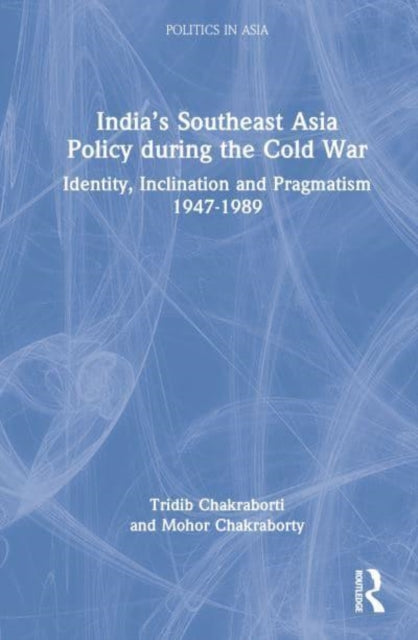
Tridib Chakraborti,Mohor Chakraborty
India's Southeast Asia Policy during the Cold War: Identity, Inclination and Pragmatism 1947-1989
India's Southeast Asia Policy during the Cold War: Identity, Inclination and Pragmatism 1947-1989
💎 Earn 689 Points (£6.89) on this item.
We can order this item for you. Delivery usually takes about 4 to 6 weeks.
This item is not held in our immediate stock. We will order it for you after checkout.
Estimated delivery: About 4 to 6 weeks
YOU SAVE £8.18
- Condition: Brand new
- UK Delivery times: Usually arrives within 2 - 3 working days
- UK Shipping: Fee starts at £2.39. Subject to product weight & dimension
Bulk ordering. Want 15 or more copies? Get a personalised quote and bigger discounts. Learn more about bulk orders.
Couldn't load pickup availability
- More about India's Southeast Asia Policy during the Cold War: Identity, Inclination and Pragmatism 1947-1989
Chakraborti and Chakraborty analyze India's foreign policy shift from nonalignment to realism and self-assertion,perceived by Southeast Asian countries. They study the development of India's foreign and security policies,driven by ideology, pragmatism, and changes in priorities,and draw lessons for the Indo-Pacific.
Format: Hardback
Length: 214 pages
Publication date: 10 February 2023
Publisher: Taylor & Francis Ltd
Over the course of four decades of the Cold War, Chakraborti and Chakraborty meticulously analyze India's transformative journey from nonalignment towards realism and self-assertion, culminating in confidence-building and interdependence with its neighbors in Southeast Asia.
The reasons for India's shift from nonalignment to a more pragmatic approach to foreign relations in its interactions with both the non-Communist states of ASEAN and the Communist States of Indochina are multifaceted and complex. This shift was driven by a combination of factors, including India's growing economic and political influence, the need to secure its interests in a rapidly changing regional landscape, and the desire to align with countries that shared its values and interests.
One of the key drivers of India's shift was its recognition of the changing nature of the global political order. As the Cold War came to an end, the world was becoming increasingly interconnected, and countries were no longer able to isolate themselves from the rest of the world. India recognized the importance of building strong relationships with its neighbors, both to promote its own interests and to contribute to regional stability.
Another factor that contributed to India's shift was the rise of China as a global power. With its growing economic and military capabilities, China posed a significant challenge to India's interests in the region. India sought to establish closer ties with its neighbors, both to counterbalance China's influence and to promote regional cooperation.
In terms of India's relationships with ASEAN and Indochina, the shift was perceived differently by each country. ASEAN countries welcomed India's pragmatic approach, as it aligned with their own goals of promoting economic development and regional stability. India's membership in ASEAN in 1997 was a significant milestone in its foreign policy, as it allowed India to play a more active role in regional affairs.
On the other hand, Indochina countries were initially skeptical of India's shift towards realism. They saw India as a potential rival and were concerned about its intentions in the region. However, over time, India's policies towards Indochina became more nuanced and constructive, and it established close diplomatic and economic ties with the countries.
Pakistan's foreign and defense policies played a significant role in India's changes in alignment throughout the Cold War. Pakistan was a key ally of the United States and the Soviet Union, and its policies towards India were often driven by its own interests in the region. However, Pakistan's support for terrorism and its involvement in the Kashmir conflict strained India's relations with Pakistan.
India's response to Pakistan's policies was multifaceted. It sought to establish diplomatic relations with Pakistan, but these efforts were often frustrated by Pakistan's refusal to engage in meaningful dialogue. India also increased its military presence in the region, particularly in the border areas with Pakistan, to deter any potential threats.
The lessons that can be drawn from these events as the Indo-Pacific is again becoming a major arena of great power rivalry are numerous. First and foremost, it is important for countries to prioritize their own interests and to build strong relationships with their neighbors. This requires a nuanced and pragmatic approach to foreign policy, which takes into account the complex and multifaceted nature of the regional landscape.
Second, it is important for countries to engage in meaningful dialogue and to resolve disputes through peaceful means. The history of the Cold War demonstrates the devastating consequences of conflict, and it is essential for countries to avoid resorting to military force to resolve their differences.
Third, it is important for countries to recognize the growing importance of regional cooperation and to work together to address shared challenges. The Indo-Pacific is a region that is home to a diverse range of countries, each with its own unique interests and priorities. By working together, countries can promote economic development, promote regional stability, and address issues such as climate change and terrorism.
In conclusion, Chakraborti and Chakraborty's study of India's shift from nonalignment towards realism and self-assertion provides valuable insights into the complex and multifaceted nature of India's foreign and security policies throughout the Cold War. The study highlights the importance of ideology, pragmatism, and changes in priorities as drivers of India's foreign policy, and it demonstrates the significance of India's relationships with its neighbors in Southeast Asia. As the Indo-Pacific is again becoming a major arena of great power rivalry, it is essential for countries to prioritize their own interests, engage in meaningful dialogue, and work together to promote regional cooperation and stability.
Weight: 560g
Dimension: 234 x 156 (mm)
ISBN-13: 9780367724931
This item can be found in:
UK and International shipping information
UK and International shipping information
UK Delivery and returns information:
- Delivery within 2 - 3 days when ordering in the UK.
- Shipping fee for UK customers from £2.39. Fully tracked shipping service available.
- Returns policy: Return within 30 days of receipt for full refund.
International deliveries:
Shulph Ink now ships to Australia, Belgium, Canada, France, Germany, Ireland, Italy, India, Luxembourg Saudi Arabia, Singapore, Spain, Netherlands, New Zealand, United Arab Emirates, United States of America.
- Delivery times: within 5 - 10 days for international orders.
- Shipping fee: charges vary for overseas orders. Only tracked services are available for most international orders. Some countries have untracked shipping options.
- Customs charges: If ordering to addresses outside the United Kingdom, you may or may not incur additional customs and duties fees during local delivery.