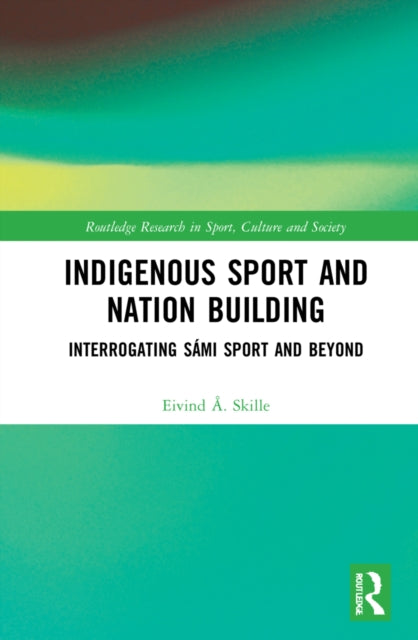
Eivind A.Skille
Indigenous Sport and Nation-Building: Interrogating Sami Sport and Beyond
Indigenous Sport and Nation-Building: Interrogating Sami Sport and Beyond
💎 Earn 811 Points (£8.11) on this item.
We can order this item for you. Delivery usually takes about 4 to 6 weeks.
This item is not held in our immediate stock. We will order it for you after checkout.
Estimated delivery: About 4 to 6 weeks
YOU SAVE £9.63
- Condition: Brand new
- UK Delivery times: Usually arrives within 2 - 3 working days
- UK Shipping: Fee starts at £2.39. Subject to product weight & dimension
Bulk ordering. Want 15 or more copies? Get a personalised quote and bigger discounts. Learn more about bulk orders.
Couldn't load pickup availability
- More about Indigenous Sport and Nation-Building: Interrogating Sami Sport and Beyond
This book explores the relationship between sport and Indigenous peoples in the context of nation-building and national identity. It draws on original empirical research to provide insight into the Sámi people of Norway and offers broader implications for understanding other Indigenous cultures and communities.
Format: Hardback
Length: 170 pages
Publication date: 05 May 2022
Publisher: Taylor & Francis Ltd
The groundbreaking work "Sport and Indigenous Peoples: Negotiating National Identity" is a seminal exploration of the intricate relationship between sport and Indigenous peoples within the framework of nation-building and national identity. This pioneering book offers a comprehensive and in-depth analysis of the role that sport plays in shaping and consolidating national identities, while also addressing critical contemporary themes such as colonialism, post-colonial research, and cultural identity.
Drawing on extensive original empirical research, the author delves into the unique experiences and perspectives of the Sámi people of Norway, providing valuable insights into their culture, traditions, and relationship with sport. Through a multidisciplinary approach, the book explores how sport has been both a catalyst for social change and a tool for preserving cultural heritage, while also examining the broader implications of these dynamics for other Indigenous peoples and cultures worldwide.
One of the key strengths of "Sport and Indigenous Peoples" is its ability to bridge the gap between academic research and practical applications. The author employs a multidisciplinary approach, drawing on insights from sociology, anthropology, history, and sports studies to provide a comprehensive understanding of the complex interplay between sport, identity, and society. This approach not only enhances the academic rigor of the book but also makes its findings accessible and relevant to a wider audience, including policymakers, sports administrators, and community leaders.
In addition to its theoretical insights, "Sport and Indigenous Peoples" offers practical recommendations for promoting inclusivity, diversity, and social justice in sports and society. The author advocates for the recognition and empowerment of Indigenous peoples in sports, as well as the promotion of cultural exchange and understanding through sports. By highlighting the unique challenges and opportunities faced by Indigenous peoples, the book provides a valuable resource for policymakers, sports organizations, and community groups seeking to foster positive change and promote inclusive communities.
Overall, "Sport and Indigenous Peoples: Negotiating National Identity" is a groundbreaking work that has significantly contributed to our understanding of the role of sport in shaping national identity and promoting social justice. By offering a comprehensive and interdisciplinary analysis of the relationship between sport and Indigenous peoples, the book provides valuable insights for scholars, practitioners, and policymakers alike. Its findings will undoubtedly inspire further research and dialogue on the important issues of cultural identity, social inclusion, and the role of sport in building resilient and inclusive communities.
Introduction:
The relationship between sport and Indigenous peoples has been a subject of scholarly inquiry for many years. While sport has been recognized as a powerful tool for social change and development, it has also been implicated in perpetuating colonialism, cultural appropriation, and marginalization of Indigenous peoples. In recent years, there has been a growing recognition of the need to address these issues and promote greater inclusivity and diversity in sports and society.
Theoretical Framework:
In "Sport and Indigenous Peoples: Negotiating National Identity," the author employs a multidisciplinary approach to explore the complex interplay between sport, identity, and society. The book draws on insights from sociology, anthropology, history, and sports studies to provide a comprehensive understanding of the role that sport plays in shaping national identity and consolidating social cohesion. The author argues that sport can be both a catalyst for social change and a tool for preserving cultural heritage, depending on the context and the intentions of those involved.
Empirical Research:
One of the key strengths of the book is its extensive empirical research into the experiences of the Sámi people of Norway. The Sámi are an Indigenous people who have historically been marginalized and oppressed by the Norwegian state. Despite this, the Sámi have a strong tradition of sports participation and have made significant contributions to Norwegian sports culture. The author conducted interviews with Sámi athletes, coaches, and community leaders to gain a deeper understanding of the role that sport plays in their lives and communities.
Key Findings:
Through their research, the author identifies several key findings that shed light on the relationship between sport and Indigenous peoples. Firstly, sport can be a powerful tool for promoting social inclusion and diversity. Sports programs and events can bring people from different backgrounds together, promoting understanding and appreciation of different cultures and traditions. This can help to break down barriers and promote social cohesion, particularly in communities that have been historically marginalized or excluded.
Secondly, sport can also be a tool for preserving cultural heritage. Sports programs and events can be used to celebrate and promote traditional practices, languages, and customs. This can help to maintain and strengthen cultural identity and prevent the loss of cultural knowledge and traditions.
Thirdly, sport can be a source of empowerment and self-determination for Indigenous peoples. Sports programs and events can provide opportunities for Indigenous people to participate in decision-making processes and have a voice in the development of sports policies and programs. This can help to promote greater autonomy and self-determination and prevent the marginalization and oppression of Indigenous peoples.
Conclusion:
In conclusion, "Sport and Indigenous Peoples: Negotiating National Identity" is a groundbreaking work that has significantly contributed to our understanding of the role of sport in shaping national identity and promoting social justice. The book offers a comprehensive and interdisciplinary analysis of the relationship between sport, identity, and society, drawing on insights from a range of disciplines. Through its empirical research into the experiences of the Sámi people of Norway, the book provides valuable insights into the challenges and opportunities faced by Indigenous peoples in the context of sport. The book's findings will undoubtedly inspire further research and dialogue on the important issues of cultural identity, social inclusion, and the role of sport in building resilient and inclusive communities.
Weight: 500g
Dimension: 234 x 156 (mm)
ISBN-13: 9780367685942
This item can be found in:
UK and International shipping information
UK and International shipping information
UK Delivery and returns information:
- Delivery within 2 - 3 days when ordering in the UK.
- Shipping fee for UK customers from £2.39. Fully tracked shipping service available.
- Returns policy: Return within 30 days of receipt for full refund.
International deliveries:
Shulph Ink now ships to Australia, Belgium, Canada, France, Germany, Ireland, Italy, India, Luxembourg Saudi Arabia, Singapore, Spain, Netherlands, New Zealand, United Arab Emirates, United States of America.
- Delivery times: within 5 - 10 days for international orders.
- Shipping fee: charges vary for overseas orders. Only tracked services are available for most international orders. Some countries have untracked shipping options.
- Customs charges: If ordering to addresses outside the United Kingdom, you may or may not incur additional customs and duties fees during local delivery.