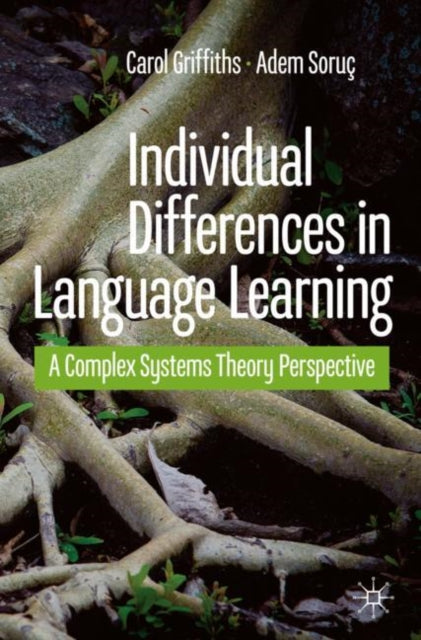
Carol Griffiths,Adem Soruc
Individual Differences in Language Learning: A Complex Systems Theory Perspective
Individual Differences in Language Learning: A Complex Systems Theory Perspective
💎 Earn 289 Points (£2.89) on this item.
We can order this item for you. Delivery usually takes about 4 to 6 weeks.
This item is not held in our immediate stock. We will order it for you after checkout.
Estimated delivery: About 4 to 6 weeks
YOU SAVE £12.18
- Condition: Brand new
- UK Delivery times: Usually arrives within 2 - 3 working days
- UK Shipping: Fee starts at £2.39. Subject to product weight & dimension
Bulk ordering. Want 15 or more copies? Get a personalised quote and bigger discounts. Learn more about bulk orders.
Couldn't load pickup availability
- More about Individual Differences in Language Learning: A Complex Systems Theory Perspective
This textbook examines individual differences between learners and the potential impact of these variables on the process of acquiring a second language. It takes a Complex Systems Theory approach and is written in an accessible style for final-year undergraduate and Masters-level students. It includes clear definitions of key terms, discussion questions, practical exercises, and examples of real empirical studies.
\n Format: Paperback / softback
\n Length: 220 pages
\n Publication date: 02 December 2020
\n Publisher: Springer Nature Switzerland AG
\n
This comprehensive textbook delves into the realm of Complex Systems Theory to explore the intricate differences between learners and their potential influence on the acquisition of a second language. The authors assert that individual variables alone cannot capture the full complexity of the language learning process, emphasizing the need to understand them as part of an interconnected and dynamic system encompassing various factors. Written in a user-friendly style, suitable for both final-year undergraduate and Masters-level students, the book offers clear definitions of key terms, engaging discussion questions for classroom use, practical exercises, and real-world examples that students and teachers can replicate in their own contexts. With its broad coverage of TESOL and SLA courses, modules, and Applied Linguistics programs, this textbook is a valuable resource for anyone seeking to gain a deeper understanding of the complexities of language learning.
Introduction:
Complex Systems Theory provides a framework for understanding the intricate relationships between individuals, their behaviors, and the broader environment. In the context of language learning, this theory offers valuable insights into the diverse factors that contribute to individual differences and their impact on the learning process.
Individual Variables:
The textbook emphasizes that individual variables, such as age, aptitude, motivation, and learning style, play a significant role in language learning. These variables can shape a learner's cognitive processes, affect their attention and memory, and influence their ability to acquire and retain language. However, the authors argue that these variables should not be viewed in isolation but rather as part of an interconnected and dynamic system.
Interconnected and Dynamic System:
The authors posit that individual differences should be understood within the context of an interconnected and dynamic system of factors. This system includes not only the individual learner but also their social and cultural background, the language learning environment, and the educational policies and practices that shape their learning experiences. By recognizing the interconnectedness of these factors, educators can develop more effective language learning strategies that cater to the diverse needs of their students.
The Role of Context:
The textbook highlights the importance of context in language learning. The learning environment, whether it be a classroom, a language school, or an online platform, can have a profound impact on a learner's motivation, engagement, and success. The authors argue that educators should create learning environments that are inclusive, supportive, and conducive to language learning.
Key Terms and Definitions:
To facilitate understanding, the textbook provides clear definitions of key terms and concepts related to Complex Systems Theory and language learning. These definitions are accompanied by examples and illustrations to help students grasp the theoretical framework and its practical applications.
Discussion Questions:
Throughout the book, engaging discussion questions are posed to encourage students to reflect on the topics covered. These questions promote critical thinking, stimulate class participation, and help students connect the theoretical concepts to their own experiences and observations.
Practical Exercises and Activities:
The textbook includes practical exercises and activities that reinforce the theoretical concepts and help students apply them in real-world scenarios. These exercises range from problem-solving tasks to language practice activities and can be adapted to different learning contexts and levels.
Examples of Real Empirical Studies:
To provide a practical perspective, the textbook includes examples of real empirical studies that explore the relationship between individual differences and language learning outcomes. These studies offer valuable insights into the effectiveness of different language learning strategies and provide practical guidelines for educators and practitioners.
Conclusion:
In conclusion, this textbook takes a holistic approach to examining individual differences between learners and their potential impact on the process of acquiring a second language. By adopting a Complex Systems Theory perspective, the authors emphasize the importance of understanding individual variables as part of an interconnected and dynamic system. The book provides a comprehensive framework for educators and practitioners to develop effective language learning strategies that cater to the diverse needs of their students. Whether you are a TESOL or SLA instructor, or a student interested in Applied Linguistics, this textbook is a valuable resource for gaining a deeper understanding of the complexities of language learning.
\n Weight: 384g\n
Dimension: 156 x 235 x 23 (mm)\n
ISBN-13: 9783030528997\n
Edition number: 1st ed. 2020\n
UK and International shipping information
UK and International shipping information
UK Delivery and returns information:
- Delivery within 2 - 3 days when ordering in the UK.
- Shipping fee for UK customers from £2.39. Fully tracked shipping service available.
- Returns policy: Return within 30 days of receipt for full refund.
International deliveries:
Shulph Ink now ships to Australia, Belgium, Canada, France, Germany, Ireland, Italy, India, Luxembourg Saudi Arabia, Singapore, Spain, Netherlands, New Zealand, United Arab Emirates, United States of America.
- Delivery times: within 5 - 10 days for international orders.
- Shipping fee: charges vary for overseas orders. Only tracked services are available for most international orders. Some countries have untracked shipping options.
- Customs charges: If ordering to addresses outside the United Kingdom, you may or may not incur additional customs and duties fees during local delivery.