EmirChairullah
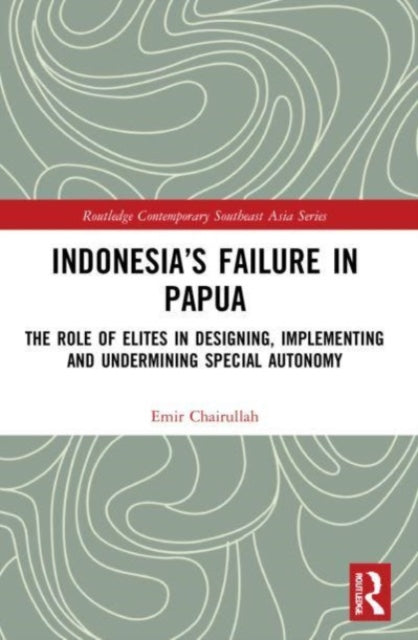
Indonesia's Failure in Papua: The Role of Elites in Designing, Implementing and Undermining Special Autonomy
Indonesia's Failure in Papua: The Role of Elites in Designing, Implementing and Undermining Special Autonomy
💎 Earn 221 Points (£2.21) on this item.
We can order this item for you. Delivery usually takes about 4 to 6 weeks.
This item is not held in our immediate stock. We will order it for you after checkout.
Estimated delivery: About 4 to 6 weeks
YOU SAVE £2.63
- Condition: Brand new
- UK Delivery times: Usually arrives within 2 - 3 working days
- UK Shipping: Fee starts at £3.89. Subject to product weight & dimension
Bulk ordering. Want 15 or more copies? Get a personalised quote and bigger discounts. Learn more about bulk orders.
Couldn't load pickup availability
- More about Indonesia's Failure in Papua: The Role of Elites in Designing, Implementing and Undermining Special Autonomy
Chairullah's book explores how the political, social, and economic interests of national and local elites were negotiated in the formulation and early stages of Special Autonomy in Papua Province, Indonesia. He reveals that secret negotiations between Papuan and national elites were held during Abdurrahman Wahid's presidency, which were crucial in reducing separatist sentiment. The United States also strongly influenced the negotiation process, leading to widespread disappointment and the escalation of separatist sentiment based on Papuan ethnic identity. This book is essential for scholars of Indonesian politics and society.
Format: Paperback / softback
Length: 176 pages
Publication date: 25 September 2023
Publisher: Taylor & Francis Ltd
Chairullah delves into the intricate negotiations that shaped the political, social, and economic interests of national and local elites in the formulation and early stages of Special Autonomy in Papua Province, Indonesia. This case study provides valuable insights into the current conception of elite theory, which recognizes the influence of actors and dynamics beyond power elites in the decision-making process.
The failure of the policy implementation as a conflict reduction strategy in the Papuan case can be attributed to the complex dynamics of elite configurations during the negotiation and early implementation stages. Chairullah presents two significant new findings for research on Papuan Special Autonomy. Firstly, that secret negotiations were held between Papuan and national elites during the presidency of Abdurrahman Wahid, which played a crucial role in reducing separatist sentiment in Papua. Secondly, that the United States, through Freeport McMoRan, exerted a strong influence on the Special Autonomy negotiation process. The actions of national elites in Jakarta led to widespread disappointment about the policy at all levels in Papua, ultimately contributing to the escalation of separatist sentiment based on Papuan ethnic identity.
This book is a valuable resource for scholars of Indonesian politics and society, particularly those with a keen interest in the Papuan conflict. It sheds light on the complex interplay of power, interests, and identities that shape political outcomes in the region and provides valuable insights into the challenges and opportunities for peace and development in Papua.
Weight: 453g
Dimension: 234 x 156 (mm)
ISBN-13: 9781032059327
UK and International shipping information
UK and International shipping information
We deliver throughout the United Kingdom and to 128 countries and territories worldwide, including the United States, Australia, Canada, Germany, Spain and France.