1
/
of
1
Taylor & Francis Ltd
Industrial Applications of Microbial Secondary Metabolites: Biotechnological and Commercial Applications
Industrial Applications of Microbial Secondary Metabolites: Biotechnological and Commercial Applications
💎 Earn 589 Points (£5.89) on this item.
ORDERED FOR YOU
We can order this item for you. Delivery usually takes about 4 to 6 weeks.
This item is not held in our immediate stock. We will order it for you after checkout.
Estimated delivery: About 4 to 6 weeks
Regular price
£117.99 GBP
Regular price
£124.99 GBP
Sale price
£117.99 GBP
Unit price
/
per
Taxes included.
Shipping calculated at checkout.
YOU SAVE £7.00
- Condition: Brand new
- UK Delivery times: Usually arrives within 2 - 3 working days
- UK Shipping: Fee starts at £2.39. Subject to product weight & dimension
Bulk ordering. Want 15 or more copies? Get a personalised quote and bigger discounts. Learn more about bulk orders.
Couldn't load pickup availability
- More about Industrial Applications of Microbial Secondary Metabolites: Biotechnological and Commercial Applications
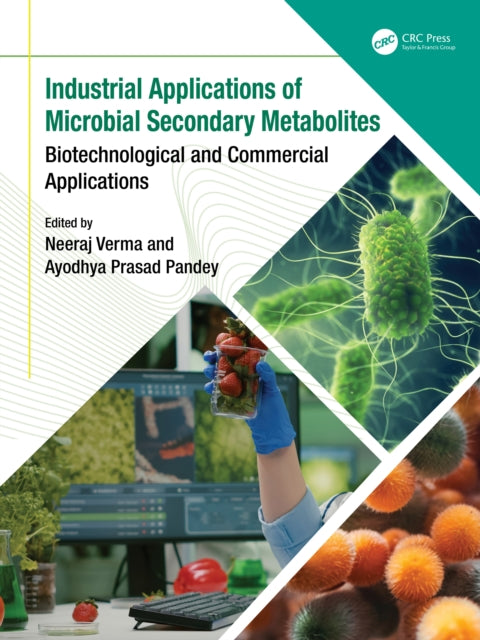
This comprehensive volume of Industrial Applications of Microbial Secondary Metabolites: Biotechnological and Commercial Applications offers an in-depth, research-driven overview of microbial secondary metabolites, emphasizing their biosynthesis, functional diversity, and cross-sectoral industrial relevance. All chapters are authored by domain experts. This volume provides a comprehensive examination of microbial secondary metabolites, elucidating their biosynthetic complexity, ecological significance, and translational potential across agricultural, pharmaceutical, industrial, and environmental domains. Secondary metabolites, distinct from primary metabolic products, represent a vast array of structurally diverse and biologically active compounds produced by microorganisms such as bacteria, fungi, and actinomycetes, often under specific environmental or stress-induced conditions. The book investigates their regulatory networks, gene clusters (e.g., PKS, NRPS, and hybrid pathways), and microbial genomics that underpin metabolite production and optimization through advanced metabolic engineering, synthetic biology, and omics-integrated biotechnological platforms. Early chapters explain the role of secondary metabolites in various industries, detailing current bioprocessing methods for large-scale fermentation, strain improvement strategies, and downstream processing for value-added compounds. The book transitions into agronomic applications, where microbial metabolites act as natural elicitors, phytostimulants, and rhizosphere modulators. Detailed case studies explore the functional role of secondary metabolites in inducing systemic acquired resistance (SAR) and induced systemic resistance (ISR), modulating phytohormone signaling (e.g., auxin, ethylene, jasmonic acid), and suppressing pathogenic fungi, bacteria, and nematodes through antagonistic metabolites such as lipopeptides, siderophores, VOCs, and antibiotics. The integration of microbial consortia and bioformulations for sustainable agriculture—including biofertilizers, seed biopriming, and advanced delivery systems—is covered with an emphasis on formulation stability, carrier matrices, and shelf-life enhancement. The chapters also cover human health applications, including novel antimicrobials, immunomodulatory agents, and nutraceutical compounds derived from Ganoderma and probiotic strains. Industrial sections discuss microbial pigments and fungal-derived dyes as alternatives to synthetic colorants with their physicochemical properties, scalability, and applications in food, pharmaceuticals, and textiles. Nanotechnology-enabled strategies for metabolite production and delivery, including nano-bioreactors, green nanomanufacturing processes, nanoformulations, and biosensors for agriculture and diagnostics have also been discussed. The book also covers future trends in biomanufacturing, emphasizing the need for integrated biorefineries, AI-driven strain design, and global harmonization of microbial product commercialization. The regulatory and commercial landscapes are also evaluated, including guidelines for GRAS status, intellectual property, biosafety considerations, and pathway standardization for scale-up. This book will serve as a valuable reference for researchers, microbiologists, biotechnologists, agricultural scientists, environmental professionals, and industrial stakeholders engaged in microbial biotechnology and allied fields. This compilation will not only support ongoing academic and industrial efforts but also inspire novel research directions. Constructive feedback and suggestions from valued readers are warmly welcomed and will be thoughtfully considered for inclusion in future editions, ensuring that the content remains current, relevant, and impactful.
- Publication date: 5 August 2026
- Page count: 274
- Dimensions: Height 280 mm; Width 210 mm
- Publisher: Taylor & Francis Ltd
- Format: Hardback
- ISBN-13: 9781032515502
UK and International shipping information
UK and International shipping information
UK Delivery and returns information:
- Delivery within 2 - 3 days when ordering in the UK.
- Shipping fee for UK customers from £2.39. Fully tracked shipping service available.
- Returns policy: Return within 30 days of receipt for full refund.
International deliveries:
Shulph Ink now ships to Australia, Belgium, Canada, France, Germany, Ireland, Italy, India, Luxembourg Saudi Arabia, Singapore, Spain, Netherlands, New Zealand, United Arab Emirates, United States of America.
- Delivery times: within 5 - 10 days for international orders.
- Shipping fee: charges vary for overseas orders. Only tracked services are available for most international orders. Some countries have untracked shipping options.
- Customs charges: If ordering to addresses outside the United Kingdom, you may or may not incur additional customs and duties fees during local delivery.