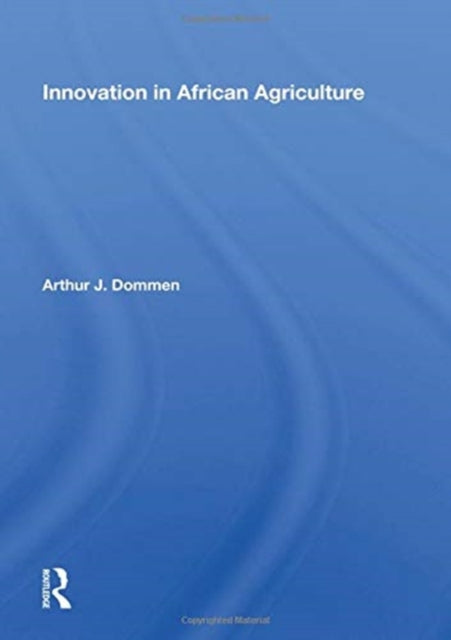
Arthur J. Dommen
Innovation In African Agriculture
Innovation In African Agriculture
💎 Earn 207 Points (£2.07) on this item.
We can order this item for you. Delivery usually takes about 4 to 6 weeks.
This item is not held in our immediate stock. We will order it for you after checkout.
Estimated delivery: About 4 to 6 weeks
YOU SAVE £2.47
- Condition: Brand new
- UK Delivery times: Usually arrives within 2 - 3 working days
- UK Shipping: Fee starts at £2.39. Subject to product weight & dimension
Bulk ordering. Want 15 or more copies? Get a personalised quote and bigger discounts. Learn more about bulk orders.
Couldn't load pickup availability
- More about Innovation In African Agriculture
This book explores the input-output relations in low-resource agriculture in Africa and demonstrates how the application of modern technologies can enhance productivity and sustain production over the long term.
Format: Paperback / softback
Length: 152 pages
Publication date: 29 July 2022
Publisher: Taylor & Francis Ltd
This book delves into the intricate interplay between input-output dynamics in low-resource agriculture across Africa, highlighting the potential for successful intensification through the application of modern technologies. By examining the challenges and opportunities faced by farmers in this context, the book showcases how the adoption of innovative approaches can enhance productivity and ensure sustainable production outcomes over an extended period.
The authors argue that the application of modern technologies, such as precision agriculture, irrigation systems, and genetic improvement, can help farmers optimize resource utilization, improve crop yields, and mitigate the impact of environmental factors on agricultural productivity. Through case studies and empirical evidence, the book demonstrates how these technologies can be integrated into farming practices to achieve sustainable growth and poverty reduction in rural communities.
Moreover, the book emphasizes the importance of policy interventions and supportive infrastructure to facilitate the widespread adoption of modern technologies in low-resource agriculture. It highlights the need for investment in research and development, training programs, and access to financial resources to ensure that farmers have the necessary tools and knowledge to implement these technologies effectively.
In conclusion, this book offers valuable insights into the potential of modern technologies to transform low-resource agriculture in Africa. By exploring the input-output relations and highlighting the success stories of farmers who have embraced these technologies, the book provides a roadmap for policymakers, researchers, and practitioners to promote sustainable agricultural development and alleviate poverty in rural areas.
Introduction:
Low-resource agriculture in Africa faces numerous challenges, including limited access to land, water, fertilizers, and agricultural technologies. Despite these constraints, there is a growing recognition of the potential for successful intensification through the application of modern technologies. This book aims to explore the input-output relations in low-resource agriculture in Africa and investigate how the intensification process through the application of modern technologies can contribute to raising productivity and sustaining production over the long term.
Challenges and Opportunities:
Low-resource agriculture in Africa is characterized by a lack of capital, limited access to credit, and limited knowledge and skills among farmers. These challenges hinder the adoption of modern technologies and limit the potential for productivity improvement. However, there are also opportunities for innovation and growth in this sector.
One of the key challenges is the limited availability of land. In many parts of Africa, land is scarce, and farmers face competition for scarce resources. This leads to land degradation, soil erosion, and reduced agricultural productivity. Modern technologies, such as precision agriculture, can help farmers optimize land use, reduce waste, and increase crop yields.
Another challenge is the limited access to water. Water is a critical resource for agriculture, and in many parts of Africa, farmers face chronic water scarcity. Modern technologies, such as drip irrigation and rainwater harvesting, can help farmers conserve water and improve crop yields.
In addition to these challenges, low-resource agriculture in Africa is also affected by climate change. Droughts, floods, and other extreme weather events are becoming more frequent, and these events can have devastating impacts on agricultural productivity. Modern technologies, such as climate-smart agriculture, can help farmers adapt to changing climate conditions and improve their resilience.
Intensification through Modern Technologies:
Intensification through the application of modern technologies can play a crucial role in raising productivity and sustaining production in low-resource agriculture. Modern technologies can help farmers optimize resource utilization, improve crop yields, and mitigate the impact of environmental factors on agricultural productivity.
Precision agriculture is one of the most promising technologies for intensification in low-resource agriculture. It involves the use of technology to optimize the use of resources, such as land, water, and fertilizers. Precision agriculture technologies include GPS mapping, remote sensing, and data analytics. These technologies can help farmers identify areas of low productivity, optimize planting and harvesting schedules, and apply resources more efficiently.
Irrigation systems are also important for intensification in low-resource agriculture. In many parts of Africa, farmers rely on rainfall for irrigation, which can be unreliable and unpredictable. Modern irrigation systems, such as drip irrigation and sprinkler irrigation, can help farmers conserve water and improve crop yields.
Genetic improvement is another technology that can contribute to intensification in low-resource agriculture. Genetic improvement involves the use of genetic engineering to improve the traits of crops, such as resistance to pests and diseases, drought tolerance, and yield. Genetic improvement can help farmers produce crops that are more resilient to environmental stresses and improve their productivity.
Policy interventions and supportive infrastructure are also important for facilitating the widespread adoption of modern technologies in low-resource agriculture. Governments and international organizations can provide subsidies, grants, and loans to farmers to invest in modern technologies. They can also develop policies that promote the adoption of sustainable agricultural practices and provide training and technical support to farmers.
Conclusion:
In conclusion, this book explores the input-output relations in low-resource agriculture in Africa and highlights the potential for successful intensification through the application of modern technologies. By examining the challenges and opportunities faced by farmers in this context, the book showcases how the adoption of innovative approaches can enhance productivity and ensure sustainable production outcomes over an extended period.
The application of modern technologies, such as precision agriculture, irrigation systems, and genetic improvement, can help farmers optimize resource utilization, improve crop yields, and mitigate the impact of environmental factors on agricultural productivity. Through case studies and empirical evidence, the book demonstrates how these technologies can be integrated into farming practices to achieve sustainable growth and poverty reduction in rural communities.
Moreover, the book emphasizes the importance of policy interventions and supportive infrastructure to facilitate the widespread adoption of modern technologies in low-resource agriculture. It highlights the need for investment in research and development, training programs, and access to financial resources to ensure that farmers have the necessary tools and knowledge to implement these technologies effectively.
In conclusion, this book offers valuable insights into the potential of modern technologies to transform low-resource agriculture in Africa. By exploring the input-output relations and highlighting the success stories of farmers who have embraced these technologies, the book provides a roadmap for policymakers, researchers, and practitioners to promote sustainable agricultural development and alleviate poverty in rural areas.
Weight: 280g
ISBN-13: 9780367162603
This item can be found in:
UK and International shipping information
UK and International shipping information
UK Delivery and returns information:
- Delivery within 2 - 3 days when ordering in the UK.
- Shipping fee for UK customers from £2.39. Fully tracked shipping service available.
- Returns policy: Return within 30 days of receipt for full refund.
International deliveries:
Shulph Ink now ships to Australia, Belgium, Canada, France, Germany, Ireland, Italy, India, Luxembourg Saudi Arabia, Singapore, Spain, Netherlands, New Zealand, United Arab Emirates, United States of America.
- Delivery times: within 5 - 10 days for international orders.
- Shipping fee: charges vary for overseas orders. Only tracked services are available for most international orders. Some countries have untracked shipping options.
- Customs charges: If ordering to addresses outside the United Kingdom, you may or may not incur additional customs and duties fees during local delivery.