Shulph Ink
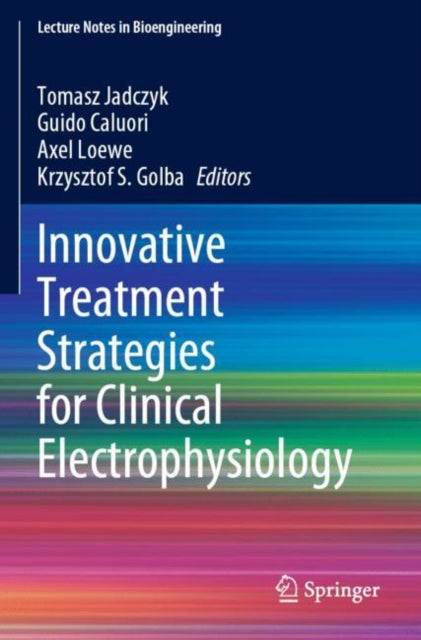
Innovative Treatment Strategies for Clinical Electrophysiology
Innovative Treatment Strategies for Clinical Electrophysiology
💎 Earn 412 Points (£4.12) on this item.
We can order this item for you. Delivery usually takes about 4 to 6 weeks.
This item is not held in our immediate stock. We will order it for you after checkout.
Estimated delivery: About 4 to 6 weeks
YOU SAVE £17.40
- Condition: Brand new
- UK Delivery times: Usually arrives within 2 - 3 working days
- UK Shipping: Fee starts at £2.39. Subject to product weight & dimension
Bulk ordering. Want 15 or more copies? Get a personalised quote and bigger discounts. Learn more about bulk orders.
Couldn't load pickup availability
- More about Innovative Treatment Strategies for Clinical Electrophysiology
The book explores advancements in clinical electrophysiology, focusing on ablation, pacing, devices, signal processing, and paradigm shifts like in situ cell reprogramming, artificial intelligence, and cardiac digital twinning.
Format: Paperback / softback
Length: 134 pages
Publication date: 08 December 2023
Publisher: Springer Verlag, Singapore
Clinical electrophysiology has made significant advancements in various fields, and this book provides a comprehensive overview of these practices. The book focuses on two main aspects: ablation and pacing, discussing novel energy sources and approaches to rhythm restoration and control, as well as devices and signal processing, highlighting new available technologies and numerical approaches aiding practice and home medicine. Additionally, it presents selected strategies that could be paradigm shifts for the field, such as in situ cell reprogramming, exploiting the newly founded achievements in epigenetic modification of somatic cells, artificial intelligence, cardiac digital twinning, and personalized treatment.
Clinical Electrophysiology: Advancements and Perspectives
Clinical electrophysiology is a rapidly evolving field that plays a crucial role in the diagnosis, treatment, and management of various cardiovascular and neurological disorders. This book provides a comprehensive overview of the advancements in clinical electrophysiology, covering a wide range of topics such as ablation and pacing, devices and signal processing, and selected strategies that could be paradigm shifts for the field.
Ablation and Pacing
Ablation and pacing are two important techniques used in clinical electrophysiology to treat various cardiac arrhythmias. Ablation involves the use of energy sources such as radiofrequency, cryotherapy, or laser to destroy or modify the tissue that is causing the arrhythmia. Pacing involves the use of electrical impulses to stimulate the heart to beat in a regular rhythm.
Novel Energy Sources and Approaches to Rhythm Restoration and Control
In recent years, there have been significant advancements in the development of novel energy sources and approaches to rhythm restoration and control. One of the most promising energy sources is the use of magnetic resonance imaging (MRI) to guide ablation procedures. MRI can provide high-resolution images of the heart, allowing surgeons to identify the exact location of the arrhythmia and to guide the ablation procedure with precision.
Another novel energy source is the use of ultrasound energy to destroy or modify the tissue that is causing the arrhythmia. Ultrasound energy can be delivered through a catheter or a probe and can be used to target specific areas of the heart. Ultrasound energy has been shown to be effective in treating atrial fibrillation, ventricular tachycardia, and other arrhythmias.
In addition to novel energy sources, there have been significant advancements in the development of approaches to rhythm restoration and control. One of these approaches is the use of cardiac digital twinning. Cardiac digital twinning involves the use of imaging, mechanics, and electrophysiology to create a patient-specific model of the heart. This model can be used to predict the behavior of the heart and to develop personalized treatment plans.
Devices and Signal Processing
Devices and signal processing are essential components of clinical electrophysiology. Advances in these areas have led to the development of new technologies and numerical approaches that aid in practice and home medicine. One of the most significant advancements in devices is the use of implantable cardiac devices such as pacemakers and defibrillators. These devices can be used to treat a wide range of cardiac arrhythmias and to improve the quality of life for patients.
In addition to implantable cardiac devices, there have been significant advancements in the development of non-invasive devices such as wearable devices and mobile apps. These devices can be used to monitor the heart and to provide feedback to patients. Non-invasive devices can also be used to detect early signs of cardiac arrhythmias and to prevent the development of more serious conditions.
Selected Strategies that Could Be Paradigm Shifts for the Field
In addition to the advancements in ablation and pacing, devices and signal processing, there have been selected strategies that could be paradigm shifts for the field. One of these strategies is in situ cell reprogramming. In situ cell reprogramming involves the use of genetic engineering to convert somatic cells into stem cells. Stem cells can be used to repair damaged tissue and to develop new tissues.
Another selected strategy is artificial intelligence. Artificial intelligence can be used to analyze large amounts of data and to develop new algorithms that can predict the behavior of the heart. Artificial intelligence can also be used to develop personalized treatment plans.
Cardiac digital twinning is another selected strategy that could be a paradigm shift for the field. Cardiac digital twinning involves the use of imaging, mechanics, and electrophysiology to create a patient-specific model of the heart. This model can be used to predict the behavior of the heart and to develop personalized treatment plans.
Conclusion
Clinical electrophysiology has made significant advancements in various fields, and this book provides a comprehensive overview of these practices. The book focuses on two main aspects: ablation and pacing, discussing novel energy sources and approaches to rhythm restoration and control, as well as devices and signal processing, highlighting new available technologies and numerical approaches aiding practice and home medicine. Additionally, it presents selected strategies that could be paradigm shifts for the field, such as in situ cell reprogramming, exploiting the newly founded achievements in epigenetic modification of somatic cells, artificial intelligence, cardiac digital twinning, and personalized treatment.
Dimension: 235 x 155 (mm)
ISBN-13: 9789811966514
Edition number: 1st ed. 2022
UK and International shipping information
UK and International shipping information
UK Delivery and returns information:
- Delivery within 2 - 3 days when ordering in the UK.
- Shipping fee for UK customers from £2.39. Fully tracked shipping service available.
- Returns policy: Return within 30 days of receipt for full refund.
International deliveries:
Shulph Ink now ships to Australia, Belgium, Canada, France, Germany, Ireland, Italy, India, Luxembourg Saudi Arabia, Singapore, Spain, Netherlands, New Zealand, United Arab Emirates, United States of America.
- Delivery times: within 5 - 10 days for international orders.
- Shipping fee: charges vary for overseas orders. Only tracked services are available for most international orders. Some countries have untracked shipping options.
- Customs charges: If ordering to addresses outside the United Kingdom, you may or may not incur additional customs and duties fees during local delivery.