Samson Kaunga Ndanyi
Instructional Cinema and African Audiences in Colonial Kenya, 1926-1963
Instructional Cinema and African Audiences in Colonial Kenya, 1926-1963
💎 Earn 451 Points (£4.51) on this item.
We can order this item for you. Delivery usually takes about 4 to 6 weeks.
This item is not held in our immediate stock. We will order it for you after checkout.
Estimated delivery: About 4 to 6 weeks
- Condition: Brand new
- UK Delivery times: Usually arrives within 2 - 3 working days
- UK Shipping: Fee starts at £2.39. Subject to product weight & dimension
Bulk ordering. Want 15 or more copies? Get a personalised quote and bigger discounts. Learn more about bulk orders.
Couldn't load pickup availability
- More about Instructional Cinema and African Audiences in Colonial Kenya, 1926-1963
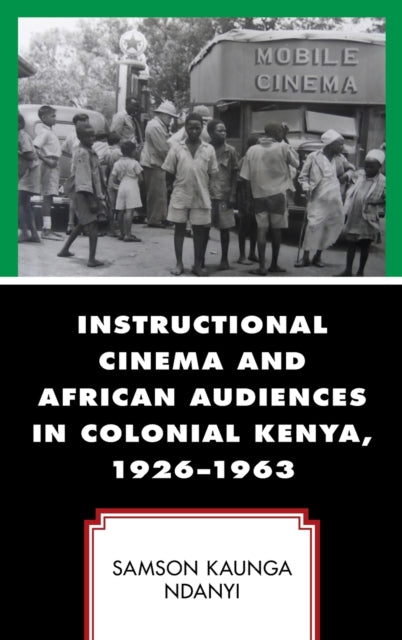
In Instructional Cinema and African Audiences in Colonial Kenya, 1926–1963, the author challenges the colonial logic that films made for African audiences in Kenya influenced them to embrace certain elements of western civilization while Africans had nothing to offer in return. The author argues that African viewers were active participants in the discourse of cinema in Kenya, using unorthodox means to protest mediocre films and force the colonial government to reconsider its film production. This reconsideration was framed as a bidirectional approach, where both sides appropriated the space to negotiate power and actualize their abstract ideas.
Format: Hardback
Length: 176 pages
Publication date: 15 March 2022
Publisher: Lexington Books
In Instructional Cinema and African Audiences in Colonial Kenya, 1926-1963, the author challenges the colonial notion that films created for African audiences in Kenya influenced them to adopt certain aspects of Western civilization, while Africans had nothing to offer in return. The author presents this logic as a one-sided approach, suggesting that Africans were mere passive recipients of colonial programs. However, the author argues that African viewers were active participants in the discourse of cinema in Kenya. By employing unconventional methods to protest mediocre films lacking fundamental elements of film production, African spectators compelled the colonial government to reevaluate its filmmaking approach. The author frames this reevaluation as a bidirectional approach.
Instructional cinema initially emerged as a tool to "educate" and "modernize" Africans, but it gradually evolved into a contested space of cultural and political power, a space that both sides appropriated to negotiate power and realize their abstract ideas.
Films produced for African audiences in Kenya played a significant role in shaping their cultural identities and challenging the colonial order. They provided a platform for Africans to express their perspectives, experiences, and aspirations, often challenging the dominant narratives propagated by the colonial government. Through their active engagement with cinema, African viewers contributed to the development of a vibrant film culture that reflected their unique experiences and perspectives.
One of the key ways in which African viewers contested the colonial logic was through their participation in film screenings and discussions. They organized screenings in community centers, schools, and other public spaces, where they could critique films and engage in discussions about their meanings and implications. These discussions often led to the development of new perspectives and the questioning of established beliefs and norms.
African viewers also used unconventional methods to protest mediocre films and force the colonial government to reconsider its filmmaking approach. They boycotted films that they perceived as offensive or irrelevant, organized demonstrations and protests, and even created their own films to challenge the dominant narrative. These actions not only highlighted the lack of quality in colonial-era films but also demonstrated the power of African viewers to shape the discourse of cinema in Kenya.
The bidirectional approach to filmmaking that emerged in Kenya during the colonial era was a result of the active participation of African viewers. It recognized the importance of including African perspectives and experiences in the filmmaking process and allowed for a more nuanced and authentic representation of African culture. This approach not only contributed to the development of a more inclusive and representative cinema but also played a role in shaping the cultural and political landscape of Kenya during the colonial period.
In conclusion, Instructional Cinema and African Audiences in Colonial Kenya, 1926-1963, highlights the active participation of African viewers in the discourse of cinema in Kenya. By challenging the colonial logic and employing unconventional methods to protest mediocre films, African spectators forced the colonial government to reevaluate its filmmaking approach and recognize the importance of including African perspectives and experiences in the filmmaking process. This bidirectional approach to filmmaking not only contributed to the development of a more inclusive and representative cinema but also played a role in shaping the cultural and political landscape of Kenya during the colonial period.
Dimension: 229 x 152 (mm)
ISBN-13: 9781793649249
UK and International shipping information
UK and International shipping information
UK Delivery and returns information:
- Delivery within 2 - 3 days when ordering in the UK.
- Shipping fee for UK customers from £2.39. Fully tracked shipping service available.
- Returns policy: Return within 30 days of receipt for full refund.
International deliveries:
Shulph Ink now ships to Australia, Belgium, Canada, France, Germany, Ireland, Italy, India, Luxembourg Saudi Arabia, Singapore, Spain, Netherlands, New Zealand, United Arab Emirates, United States of America.
- Delivery times: within 5 - 10 days for international orders.
- Shipping fee: charges vary for overseas orders. Only tracked services are available for most international orders. Some countries have untracked shipping options.
- Customs charges: If ordering to addresses outside the United Kingdom, you may or may not incur additional customs and duties fees during local delivery.