Dr Alice Taylor
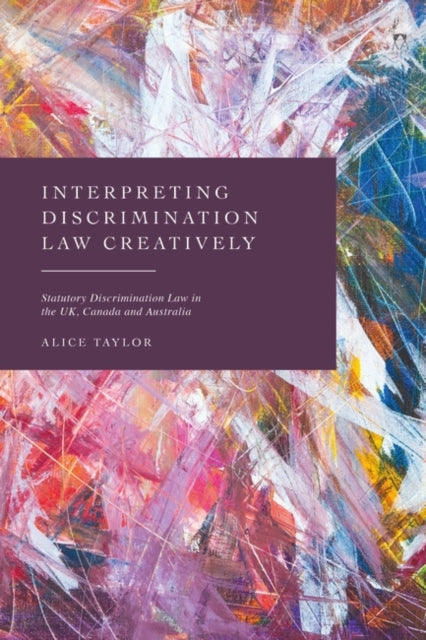
Interpreting Discrimination Law Creatively: Statutory Discrimination Law in the UK, Canada and Australia
Interpreting Discrimination Law Creatively: Statutory Discrimination Law in the UK, Canada and Australia
💎 Earn 477 Points (£4.77) on this item.
We can order this item for you. Delivery usually takes about 4 to 6 weeks.
This item is not held in our immediate stock. We will order it for you after checkout.
Estimated delivery: About 4 to 6 weeks
- Condition: Brand new
- UK Delivery times: Usually arrives within 2 - 3 working days
- UK Shipping: Fee starts at £2.39. Subject to product weight & dimension
Bulk ordering. Want 15 or more copies? Get a personalised quote and bigger discounts. Learn more about bulk orders.
Couldn't load pickup availability
- More about Interpreting Discrimination Law Creatively: Statutory Discrimination Law in the UK, Canada and Australia
The book explores the judiciary's role in achieving substantive equality using statutory discrimination law, comparing the interpretation of non-discrimination rights in the UK, Canada, and Australia. It argues that differences in case law are explained by the way in which the appropriate role for the courts in rights review, norm elaboration, and institutional competence is conceived in each jurisdiction.
Format: Hardback
Length: 264 pages
Publication date: 24 August 2023
Publisher: Bloomsbury Publishing PLC
The judiciary plays a crucial role in achieving substantive equality through the use of statutory discrimination law. While the normative literature suggests that courts should adopt a more substantive interpretation of discrimination laws, the extent to which this has occurred varies. This book addresses this issue by exploring the idea of a creative interpretation of discrimination law to achieve substantive results. The author compares the interpretation of non-discrimination rights in the UK, Canada, and Australia, highlighting the differences in doctrine that have developed due to the way in which the appropriate role for the courts in rights review, norm elaboration, and institutional competence is conceived in each jurisdiction. The book provides valuable reading for academics, policy makers, and those researching discrimination law and statutory human rights.
The judiciary's Role in Achieving Substantive Equality through Statutory Discrimination Law
The judiciary plays a crucial role in achieving substantive equality through the use of statutory discrimination law. While the normative literature suggests that courts should adopt a more substantive interpretation of discrimination laws, the extent to which this has occurred varies. This book addresses this issue by exploring the idea of a creative interpretation of discrimination law to achieve substantive results.
The author takes a comparative approach to the interpretation of non-discrimination rights by considering the interpretation of statutory discrimination law in the UK, Canada, and Australia. The book explores the differences in doctrine that have developed by considering key controversies in discrimination law: Who does discrimination law protect? What is discrimination? When can discrimination be justified?
The author argues that differences in the case law in each jurisdiction are explained by the way in which the appropriate role for the courts in rights review, norm elaboration, and institutional competence is conceived in each studied jurisdiction. The book provides valuable reading for academics, policy makers, and those researching discrimination law and statutory human rights.
The Normative Literature on Statutory Discrimination Law
The normative literature on statutory discrimination law suggests that courts should adopt a more substantive interpretation of discrimination laws to achieve substantive equality. This interpretation requires courts to consider the underlying purpose of the law and to apply it in a way that promotes equality. However, the extent to which this has occurred is variable.
One of the main challenges to achieving substantive equality through statutory discrimination law is the fact that discrimination laws are often complex and difficult to interpret. This can lead to inconsistent application of the law and to the perpetuation of discrimination.
To address this challenge, the author proposes a creative interpretation of discrimination law. This interpretation involves looking beyond the literal meaning of the law and considering the broader social and political context in which the law operates. The author argues that this approach can help to promote equality by addressing the underlying causes of discrimination.
The Creative Interpretation of Statutory Discrimination Law
The creative interpretation of statutory discrimination law involves looking beyond the literal meaning of the law and considering the broader social and political context in which the law operates. This approach can help to promote equality by addressing the underlying causes of discrimination.
One of the key challenges to achieving substantive equality through statutory discrimination law is the fact that discrimination laws are often complex and difficult to interpret. This can lead to inconsistent application of the law and to the perpetuation of discrimination.
To address this challenge, the author proposes a creative interpretation of discrimination law. This interpretation involves looking beyond the literal meaning of the law and considering the broader social and political context in which the law operates. The author argues that this approach can help to promote equality by addressing the underlying causes of discrimination.
The author takes a comparative approach to the interpretation of non-discrimination rights by considering the interpretation of statutory discrimination law in the UK, Canada, and Australia. The book explores the differences in doctrine that have developed by considering key controversies in discrimination law: Who does discrimination law protect? What is discrimination? When can discrimination be justified?
The author argues that differences in the case law in each jurisdiction are explained by the way in which the appropriate role for the courts in rights review, norm elaboration, and institutional competence is conceived in each studied jurisdiction. The book provides valuable reading for academics, policy makers, and those researching discrimination law and statutory human rights.
Conclusion
The judiciary plays a crucial role in achieving substantive equality through the use of statutory discrimination law. While the normative literature suggests that courts should adopt a more substantive interpretation of discrimination laws, the extent to which this has occurred varies. This book addresses this issue by exploring the idea of a creative interpretation of discrimination law to achieve substantive results. The author takes a comparative approach to the interpretation of non-discrimination rights by considering the interpretation of statutory discrimination law in the UK, Canada, and Australia. The book provides valuable reading for academics, policy makers, and those researching discrimination law and statutory human rights.
Dimension: 234 x 156 (mm)
ISBN-13: 9781509952922
UK and International shipping information
UK and International shipping information
UK Delivery and returns information:
- Delivery within 2 - 3 days when ordering in the UK.
- Shipping fee for UK customers from £2.39. Fully tracked shipping service available.
- Returns policy: Return within 30 days of receipt for full refund.
International deliveries:
Shulph Ink now ships to Australia, Belgium, Canada, France, Germany, Ireland, Italy, India, Luxembourg Saudi Arabia, Singapore, Spain, Netherlands, New Zealand, United Arab Emirates, United States of America.
- Delivery times: within 5 - 10 days for international orders.
- Shipping fee: charges vary for overseas orders. Only tracked services are available for most international orders. Some countries have untracked shipping options.
- Customs charges: If ordering to addresses outside the United Kingdom, you may or may not incur additional customs and duties fees during local delivery.