Shulph Ink
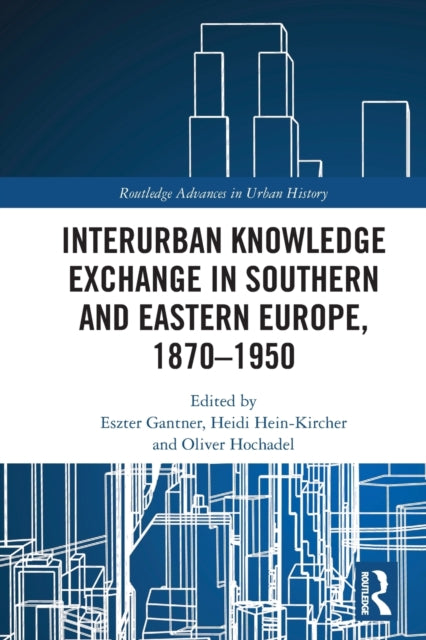
Interurban Knowledge Exchange in Southern and Eastern Europe, 1870-1950
Interurban Knowledge Exchange in Southern and Eastern Europe, 1870-1950
💎 Earn 226 Points (£2.26) on this item.
YOU SAVE £2.69
- Condition: Brand new
- UK Delivery times: Usually arrives within 2 - 3 working days
- UK Shipping: Fee starts at £3.89. Subject to product weight & dimension
Bulk ordering. Want 15 or more copies? Get a personalised quote and bigger discounts. Learn more about bulk orders.
Couldn't load pickup availability
- More about Interurban Knowledge Exchange in Southern and Eastern Europe, 1870-1950
This edited volume challenges the notion that Southern and Eastern European cities were forced to emulate the metropolises of London, Paris, or Vienna in the early 1900s. It demonstrates that these cities pursued their own modernization agendas and sought best practices abroad to address urban planning and public health issues. The solutions they adopted were often innovative and tailored to the specific needs of their urban spaces. However, this transnational municipalism sometimes clashed with the forging of urban and national identities, highlighting the tensions between the universal and the local. The book appeals to scholars from various disciplines and provides a fresh interurban perspective on the history of Eastern and Southern Europe.
Format: Paperback / softback
Length: 318 pages
Publication date: 01 August 2022
Publisher: Taylor & Francis Ltd
Around 1900, cities in Southern and Eastern Europe were persistently labeled backward and delayed, allegedly having no alternative but to follow the role model of the metropolises of London, Paris, or Vienna. However, this edited volume fundamentally questions this assumption. It demonstrates that cities as diverse as Barcelona, Berdyansk, Budapest, Lviv, Milan, Moscow, Prague, Warsaw, and Zagreb pursued their own agendas of modernization. In order to solve their pressing problems related to urban planning and public health, these cities sought best practices abroad. The solutions they gleaned from other cities were eclectic, tailored to fit the specific needs of a given urban space, and often innovative. This applied urban knowledge was generated through interurban networks and multi-directional exchanges.
Yet, in the period around 1900, this transnational municipalism often clashed with the forging of urban and national identities, highlighting the tensions between the universal and the local. This interurban perspective helps to overcome nationalist perspectives in historiography and outdated notions of center and periphery. This volume will appeal to scholars from a wide range of disciplines, including urban historians, historians of Eastern and Southern Europe, historians of science and medicine, and scholars interested in transnational connections.
Weight: 610g
Dimension: 229 x 152 (mm)
ISBN-13: 9780367609580
UK and International shipping information
UK and International shipping information
We deliver throughout the United Kingdom and to 128 countries and territories worldwide, including the United States, Australia, Canada, Germany, Spain and France.