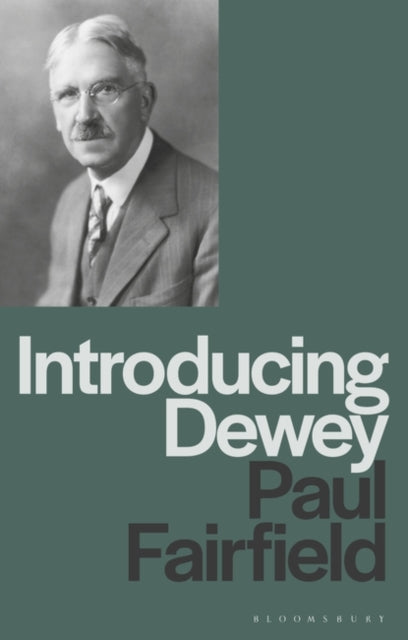
Professor PaulFairfield
Introducing Dewey
Introducing Dewey
We can order this item for you. Delivery usually takes about 4 to 6 weeks.
This item is not held in our immediate stock. We will order it for you after checkout.
Estimated delivery: About 4 to 6 weeks
YOU SAVE £8.70
- Condition: Brand new
- UK Delivery times: Usually arrives within 2 - 3 working days
- UK Shipping: Fee starts at £3.89. Subject to product weight & dimension
Bulk ordering. Want 15 or more copies? Get a personalised quote and bigger discounts. Learn more about bulk orders.
Couldn't load pickup availability
- More about Introducing Dewey
Introducing John Dewey is an introduction to one of the most influential philosophers in American history, examining his post-Hegelian idealism, pragmatic experimentalism, ethics, political theory, philosophy of education, aesthetics, and philosophy of religion. It situates his thought in the context of his time and personal biography and discusses his work as a public intellectual.
Format: Hardback
Length: 240 pages
Publication date: 22 February 2024
Publisher: Bloomsbury Publishing PLC
This comprehensive introduction to one of the most influential philosophers in American history delves into every significant aspect of John Dewey's philosophy, encompassing his early post-Hegelian idealism, pragmatic experimentalism, and profound views on ethics, political theory, philosophy of education, aesthetics, and philosophy of religion. It contextualizes Dewey's thought within the historical backdrop of his time (1859-1952) and personal biography, while also exploring his remarkable role as America's foremost public intellectual during the first half of the 20th century. With a particular emphasis on how Dewey's ideas can be applied to real-life situations and their profound relevance to the contemporary moment, Introducing Dewey serves as an invaluable starting point for anyone seeking to delve into the profound and enduring legacy of this seminal figure in American philosophy.
Early Life and Education
John Dewey was born on October 20, 1859, in Burlington, Vermont. He was the third child of John Dewey, a farmer, and Lucina Rich. Dewey's early education took place at local schools, where he was known for his curiosity and enthusiasm for learning. However, his formal education was cut short due to financial difficulties, and he was forced to leave school at the age of 14.
Despite his limited formal education, Dewey remained committed to learning and self-improvement. He spent much of his time reading books and attending lectures and debates on various subjects, including philosophy, politics, and education. He also developed a strong interest in naturalism and the works of Charles Darwin.
In 1876, Dewey enrolled at the University of Vermont, where he studied philosophy under the guidance of William James. Dewey was deeply influenced by James's pragmatic philosophy, which emphasized the importance of experience and practical knowledge in understanding the world. He also became interested in the works of John Locke and Immanuel Kant, which further shaped his philosophical outlook.
After completing his undergraduate studies, Dewey worked as a teacher and administrator in various schools in New York City. He also became involved in progressive political movements, advocating for public education and social reform. In 1884, Dewey published his first book, "The Child and the State," which criticized the traditional educational system and advocated for a more democratic and experiential approach to learning.
Post-Hegelian Idealism
In the early 1880s, Dewey began to develop his own philosophical ideas, which were influenced by the works of William James and John Locke. He rejected the traditional philosophical approach of Hegelian idealism, which emphasized the idea of a universal and absolute truth. Instead, Dewey believed that truth was relative to the individual and the context in which they lived.
Dewey's post-Hegelian idealism was characterized by his emphasis on experience and the importance of learning through doing. He believed that the best way to understand the world was to engage with it directly and to experience it for oneself. This approach was reflected in his philosophy of education, which emphasized the importance of hands-on learning and practical experience.
Dewey's post-Hegelian idealism also had a strong influence on his political philosophy. He believed that politics should be based on the interests of the people and that government should be accountable to the people. He advocated for a democratic system of government that would give citizens more control over their own lives and the decisions that affected them.
Pragmatic Experimentalism
In the late 1880s and early 1890s, Dewey began to develop his philosophy of pragmatism, which was characterized by his emphasis on experimentation and the importance of experience. He believed that the best way to understand the world was to experiment with it and to observe the results of different actions.
Dewey's pragmatic experimentalism was reflected in his philosophy of education, which emphasized the importance of learning through experience and the development of practical skills. He believed that education should be focused on the needs of the individual and that it should be tailored to their specific interests and abilities.
Dewey's pragmatic experimentalism also had a strong influence on his political philosophy. He believed that politics should be based on experimentation and that politicians should be willing to try new ideas and policies in order to improve the lives of the people. He advocated for a more democratic and participatory system of government that would give citizens more control over their own lives and the decisions that affected them.
Ethics and Political Theory
Dewey's ethical and political philosophy were deeply influenced by his post-Hegelian idealism and pragmatic experimentalism. He believed that ethics should be based on the interests of the individual and that individuals should be free to pursue their own goals and interests as long as they did not harm others.
Dewey's political philosophy was also influenced by his belief in democracy and the importance of citizen participation. He believed that government should be accountable to the people and that citizens should have the right to participate in the decision-making process. He advocated for a system of government that would give citizens more control over their own lives and the decisions that affected them.
Philosophy of Education
Dewey's philosophy of education was deeply influenced by his post-Hegelian idealism and pragmatic experimentalism. He believed that education should be focused on the needs of the individual and that it should be tailored to their specific interests and abilities.
Dewey's philosophy of education was also influenced by his belief in democracy and the importance of citizen participation. He believed that education should be designed to promote the development of critical thinking and problem-solving skills and that it should be accessible to all individuals, regardless of their background or socioeconomic status.
Dewey's philosophy of education was also deeply influenced by his belief in the importance of experience and the development of practical skills. He believed that education should be focused on the development of real-world skills and that it should be designed to help individuals become more productive and contributing members of society.
Aesthetics
Dewey's philosophy of aesthetics was deeply influenced by his post-Hegelian idealism and pragmatic experimentalism. He believed that art should be used to promote the interests of the individual and that it should be accessible to all individuals, regardless of their background or socioeconomic status.
Dewey's philosophy of aesthetics was also influenced by his belief in democracy and the importance of citizen participation. He believed that art should be used to promote social and political change and that it should be accessible to all individuals, regardless of their political beliefs or social status.
Dewey's philosophy of aesthetics was also deeply influenced by his belief in the importance of experience and the development of practical skills. He believed that art should be used to promote the development of critical thinking and problem-solving skills and that it should be designed to help individuals become more productive and contributing members of society.
Philosophy of Religion
Dewey's philosophy of religion was deeply influenced by his post-Hegelian idealism and pragmatic experimentalism. He believed that religion should be used to promote the interests of the individual and that it should be accessible to all individuals, regardless of their religious beliefs or social status.
Dewey's philosophy of religion was also influenced by his belief in democracy and the importance of citizen participation. He believed that religion should be used to promote social and political change and that it should be accessible to all individuals, regardless of their political beliefs or social status.
Dewey's philosophy of religion was also deeply influenced by his belief in the importance of experience and the development of practical skills. He believed that religion should be used to promote the development of critical thinking and problem-solving skills and that it should be designed to help individuals become more productive and contributing members of society.
Conclusion
John Dewey was a profound philosopher who made significant contributions to the fields of education, ethics, political theory, aesthetics, and philosophy of religion. His post-Hegelian idealism and pragmatic experimentalism were characterized by his emphasis on experience and the importance of learning through doing. He believed that truth was relative to the individual and the context in which they lived and that the best way to understand the world was to engage with it directly and to experience it for oneself.
Dewey's philosophy of education was deeply influenced by his post-Hegelian idealism and pragmatic experimentalism. He believed that education should be focused on the needs of the individual and that it should be tailored to their specific interests and abilities. He also believed that education should be designed to promote the development of critical thinking and problem-solving skills and that it should be accessible to all individuals, regardless of their background or socioeconomic status.
Dewey's philosophy of ethics was deeply influenced by his post-Hegelian idealism and pragmatic experimentalism. He believed that ethics should be based on the interests of the individual and that individuals should be free to pursue their own goals and interests as long as they did not harm others. He also believed that ethics should be guided by a sense of social responsibility and that individuals should be willing to work towards the common good.
Dewey's philosophy of political theory was deeply influenced by his post-Hegelian idealism and pragmatic experimentalism. He believed that politics should be based on the interests of the people and that government should be accountable to the people. He advocated for a democratic system of government that would give citizens more control over their own lives and the decisions that affected them.
Dewey's philosophy of aesthetics was deeply influenced by his post-Hegelian idealism and pragmatic experimentalism. He believed that art should be used to promote the interests of the individual and that it should be accessible to all individuals, regardless of their background or socioeconomic status. He also believed that art should be used to promote social and political change and that it should be accessible to all individuals, regardless of their political beliefs or social status.
Dewey's philosophy of religion was deeply influenced by his post-Hegelian idealism and pragmatic experimentalism. He believed that religion should be used to promote the interests of the individual and that it should be accessible to all individuals, regardless of their religious beliefs or social status. He also believed that religion should be guided by a sense of social responsibility and that individuals should be willing to work towards the common good.
In conclusion, John Dewey was a profound philosopher who made significant contributions to the fields of education, ethics, political theory, aesthetics, and philosophy of religion. His post-Hegelian idealism and pragmatic experimentalism were characterized by his emphasis on experience and the importance of learning through doing. He believed that truth was relative to the individual and the context in which they lived and that the best way to understand the world was to engage with it directly and to experience it for oneself.
Weight: 286g
Dimension: 216 x 138 (mm)
ISBN-13: 9781350297838
UK and International shipping information
UK and International shipping information
We deliver throughout the United Kingdom and to 128 countries and territories worldwide, including the United States, Australia, Canada, Germany, Spain and France.