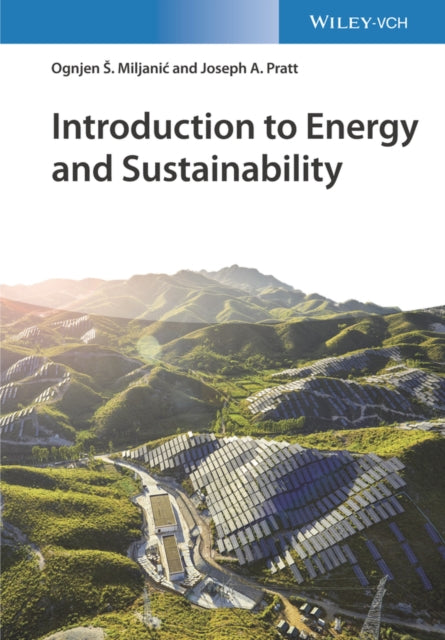
Ognjen S. Miljanic,Joseph A. Pratt
Introduction to Energy and Sustainability
Introduction to Energy and Sustainability
YOU SAVE £23.14
- Condition: Brand new
- UK Delivery times: Usually arrives within 2 - 3 working days
- UK Shipping: Fee starts at £3.89. Subject to product weight & dimension
Bulk ordering. Want 15 or more copies? Get a personalised quote and bigger discounts. Learn more about bulk orders.
Couldn't load pickup availability
- More about Introduction to Energy and Sustainability
This book provides a comprehensive review of energy production and consumption technologies, including their environmental, historical, and regulatory aspects. It covers introductory concepts, energy production, consumption, and the future of energy, and is relevant to students in energy fields and environmentalists.
\n Format: Hardback
\n Length: 608 pages
\n Publication date: 13 October 2021
\n Publisher: Wiley-VCH Verlag GmbH
\n
Energy production and consumption technologies have come a long way in recent years, with advancements in renewable energy sources, energy efficiency, and smart grid technologies. However, there are still challenges to be addressed, such as climate change, energy security, and the need to reduce our dependence on fossil fuels. In this comprehensive review, we will explore the current state of energy production and consumption technologies, including their environmental, historical, and regulatory aspects.
Definitions and Quantification of Energy and Sustainability:
Energy is a fundamental resource that drives our modern world. It is used for various purposes, such as transportation, heating, cooling, and lighting. Sustainability is a concept that emphasizes the need to meet our present needs without compromising the ability of future generations to meet their own needs.
There are several ways to define and quantify energy and sustainability. One common approach is to use energy intensity, which measures the amount of energy required to produce a unit of output. This can be expressed in terms of energy per unit of GDP (energy intensity) or energy per unit of material (material intensity). Another approach is to use renewable energy sources, which are sources of energy that are replenished naturally and do not contribute to greenhouse gas emissions.
Energy Production Technologies:
Fossil Fuels:
Fossil fuels, such as coal, oil, and natural gas, have been the primary source of energy for centuries. They are inexpensive, widely available, and have high energy density, making them suitable for power generation and transportation. However, fossil fuels also contribute to climate change, air pollution, and other environmental problems.
Renewable Energy Sources:
Renewable energy sources, such as solar, wind, hydro, geothermal, and biomass, have gained popularity in recent years as a way to reduce our dependence on fossil fuels and mitigate climate change. Solar energy is generated by converting sunlight into electricity using photovoltaic cells. Wind energy is generated by harnessing the power of wind using wind turbines. Hydro energy is generated by using the energy of moving water to generate electricity. Geothermal energy is generated by using the heat of the earth to generate electricity. Biomass energy is generated by burning organic matter, such as wood, crops, and waste, to generate electricity.
Energy Efficiency:
Energy efficiency is a key component of reducing energy consumption and mitigating climate change. It involves improving the efficiency of energy-consuming devices and systems, such as appliances, lighting, and heating and cooling systems. Energy-efficient technologies can reduce energy consumption by up to 50% or more, which can have significant environmental and economic benefits.
Smart Grid Technologies:
Smart grid technologies are designed to improve the efficiency and reliability of the electricity grid. They involve the use of digital technologies, such as sensors, communication networks, and control systems, to monitor and control energy production and consumption. Smart grids can help to reduce energy waste, improve grid stability, and enable the integration of renewable energy sources into the grid.
Alternative and Future Energy Technologies:
There are many other alternative and future energy technologies that are being developed and tested. These include hydrogen fuel cells, biofuels, and energy storage technologies. Hydrogen fuel cells are a type of energy conversion technology that uses hydrogen to generate electricity. Biofuels are produced from organic matter, such as crops and waste, and can be used to power vehicles and generate electricity. Energy storage technologies, such as batteries and pumped hydro storage, can help to store excess energy for use during times of peak demand.
Sustainable Approaches to Everyday Issues:
Transportation:
Transportation is a major source of greenhouse gas emissions and air pollution. Sustainable approaches to transportation include using public transportation, electric vehicles, and hybrid vehicles. Public transportation can reduce traffic congestion and emissions, while electric vehicles and hybrid vehicles can reduce emissions and improve fuel efficiency.
Urban Planning:
Urban planning is an important factor in reducing energy consumption and mitigating climate change. Sustainable urban planning involves designing cities and towns that are walkable, bikeable, and accessible to public transportation. This can reduce the need for personal vehicles and promote sustainable transportation options.
Home Construction:
Home construction is another area where sustainable practices can be implemented. Sustainable home construction involves using energy-efficient building materials, such as insulation, windows, and doors, and designing homes that are energy-efficient and environmentally friendly. This can reduce energy consumption and greenhouse gas emissions.
Conclusion:
Energy production and consumption technologies have come a long way in recent years, with advancements in renewable energy sources, energy efficiency, and smart grid technologies. However, there are still challenges to be addressed, such as climate change, energy security, and the need to reduce our dependence on fossil fuels. In this comprehensive review, we have explored the current state of energy production and consumption technologies, including their environmental, historical, and regulatory aspects. We have also discussed alternative and future energy technologies, as well as examples of sustainable approaches to everyday issues of transportation, urban planning, and home construction. By implementing sustainable practices and technologies, we can reduce our energy consumption and mitigate climate change, while also promoting a more sustainable and resilient future.
\n Weight: 1276g\n
Dimension: 254 x 180 x 35 (mm)\n
ISBN-13: 9783527345403\n \n
UK and International shipping information
UK and International shipping information
We deliver throughout the United Kingdom and to 128 countries and territories worldwide, including the United States, Australia, Canada, Germany, Spain and France.