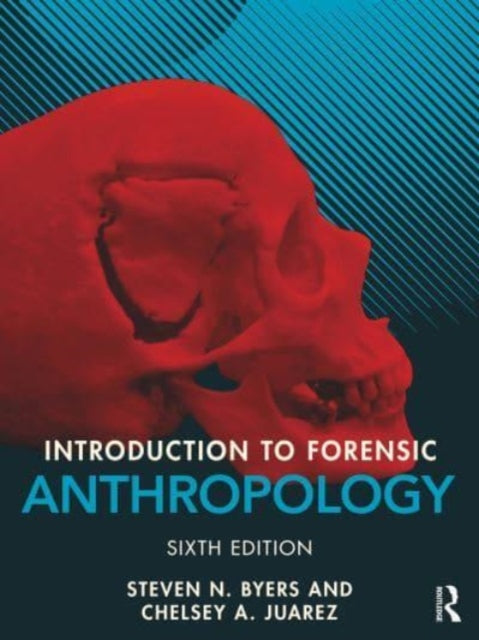
Steven N.Byers,Chelsey A. Juarez
Introduction to Forensic Anthropology
Introduction to Forensic Anthropology
💎 Earn 382 Points (£3.82) on this item.
YOU SAVE £4.54
- Condition: Brand new
- UK Delivery times: Usually arrives within 2 - 3 working days
- UK Shipping: Fee starts at £2.39. Subject to product weight & dimension
Bulk ordering. Want 15 or more copies? Get a personalised quote and bigger discounts. Learn more about bulk orders.
Couldn't load pickup availability
- More about Introduction to Forensic Anthropology
Introduction to Forensic Anthropology is a comprehensive textbook that covers key methods and issues in forensic anthropology, using terminology and best practices recommended by the SWGANTH and ANSI/ACB. It is ideal for a lower-division college-level class for non-majors and majors alike, with features such as boxed case studies, figures, photographs, chapter summaries, student exercises, a glossary, additional reading lists, critical resources, and hands-on application for students.
Format: Paperback / softback
Length: 448 pages
Publication date: 10 May 2023
Publisher: Taylor & Francis Ltd
Forensic anthropology is a field that plays a crucial role in the investigation and resolution of legal matters. It involves the scientific analysis of human remains to determine various aspects such as identity, cause of death, and ancestry. This comprehensive textbook provides a thorough introduction to forensic anthropology, covering key methods and issues in the field.
The textbook is organized into nine chapters, each dedicated to a specific topic. The first chapter provides an overview of forensic anthropology, including its history, scope, and importance. It also introduces the terminology and best practices recommended by the Scientific Working Group for Forensic Anthropology (SWGANTH) and the Anthropology Consensus Body of the American National Standards Institute (ANSI/ACB).
The second chapter focuses on the attribution of ancestry and sex, which is a critical aspect of forensic anthropology. It discusses the methods used to determine an individual's genetic makeup, including DNA analysis, isotope analysis, and physical characteristics. The third chapter explores various forms of bone trauma, such as fractures, dislocations, and amputations, and the methods used to identify and interpret these injuries.
The fourth chapter discusses identification through radiography, which is a widely used method in forensic anthropology. It covers the principles of radiographic imaging, the types of radiographs used in forensic analysis, and the techniques used to interpret them. The fifth chapter focuses on the analysis of human remains, including the extraction and identification of dental remains, the identification of skeletal remains, and the analysis of soft tissue remains.
The sixth chapter discusses the use of probabilities and centiles in forensic anthropology. It introduces the concepts of probability theory and statistical analysis and how they can be applied to forensic investigations. The seventh chapter explores the ethical and legal issues associated with forensic anthropology, including the principles of evidence collection, the admissibility of evidence, and the rights of the accused.
The eighth chapter discusses the future of forensic anthropology, including emerging technologies and techniques, such as virtual reality, 3D printing, and DNA analysis. The ninth chapter provides a comprehensive glossary of terms used in forensic anthropology, as well as additional reading lists and critical resources for further study.
One of the key features of this textbook is its extensive use of figures and photographs. These visual aids help to illustrate the concepts and methods discussed in the text and make it easier for students to understand and retain the information. The textbook also includes chapter summaries and student exercises, which help to reinforce the key points and encourage active learning.
In addition, the textbook includes a companion website that offers further instructor and student resources. The website includes a lab manual that provides hands-on application for students when used with the textbook. It also includes additional readings, case studies, and critical resources that can help students deepen their understanding of the field.
Overall, this textbook is an excellent resource for students studying forensic anthropology. It provides comprehensive coverage of key methods and issues in the field, using terminology and best practices recommended by the SWGANTH and ANSI/ACB. The extensive use of figures and photographs, chapter summaries and student exercises, and companion website make it an engaging and effective tool for teaching and learning. Whether you are a non-major or a major in the field, this textbook is an essential addition to your library.
Dimension: 280 x 210 (mm)
ISBN-13: 9781032255590
Edition number: 6 ed
This item can be found in:
UK and International shipping information
UK and International shipping information
UK Delivery and returns information:
- Delivery within 2 - 3 days when ordering in the UK.
- Shipping fee for UK customers from £2.39. Fully tracked shipping service available.
- Returns policy: Return within 30 days of receipt for full refund.
International deliveries:
Shulph Ink now ships to Australia, Belgium, Canada, France, Germany, Ireland, Italy, India, Luxembourg Saudi Arabia, Singapore, Spain, Netherlands, New Zealand, United Arab Emirates, United States of America.
- Delivery times: within 5 - 10 days for international orders.
- Shipping fee: charges vary for overseas orders. Only tracked services are available for most international orders. Some countries have untracked shipping options.
- Customs charges: If ordering to addresses outside the United Kingdom, you may or may not incur additional customs and duties fees during local delivery.