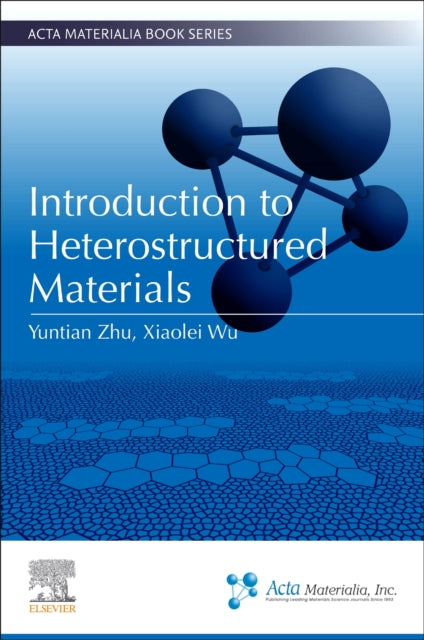
YuntianZhu,XiaoleiWu
Introduction to Heterostructured Materials
Introduction to Heterostructured Materials
💎 Earn 673 Points (£6.73) on this item.
YOU SAVE £11.31
- Condition: Brand new
- UK Delivery times: Usually arrives within 2 - 3 working days
- UK Shipping: Fee starts at £2.39. Subject to product weight & dimension
Bulk ordering. Want 15 or more copies? Get a personalised quote and bigger discounts. Learn more about bulk orders.
Couldn't load pickup availability
- More about Introduction to Heterostructured Materials
Heterostructured Materials is a book that provides an overview of the development,mechanical behaviors,properties,processing,and design principles of these materials. It is intended for graduate students,researchers,senior scientists,engineers,and professors in the field of advanced materials and technologies.
Format: Paperback / softback
Length: 212 pages
Publication date: 15 June 2023
Publisher: Elsevier - Health Sciences Division
Heterostructured materials have emerged as a groundbreaking field in materials science,with a rich history of development dating back to the early 20th century. These materials are composed of two or more distinct constituent materials that are deliberately arranged in a specific configuration to exploit their unique properties. In this comprehensive introduction, we will delve into the historical perspective of the development of heterostructured materials, exploring the key milestones and advancements that have shaped this field.
We will then provide a comprehensive review of the fundamental background on mechanical behaviors and properties of metals and alloys, which form the basis for understanding the behavior of heterostructured materials. This will include an exploration of the principles governing the deformation and strengthening of materials, as well as the effects of microstructural features on their mechanical properties.
Next, we will delve into the definition and fundamental principles of heterostructured materials. We will discuss the key characteristics that define these materials, such as their composition, structure, and properties. We will also explore the deformation behavior of heterostructured materials, including the mechanisms that govern their deformation and the factors that influence their mechanical response.
Furthermore, we will examine the processing and properties of heterostructured materials. We will discuss the various techniques used to fabricate these materials, such as epitaxy, solid-state synthesis, and nanotechnology. We will also explore the key properties that make heterostructured materials valuable in various applications, such as electronic devices, energy storage systems, and optical materials.
In addition to the theoretical aspects, we will also discuss various design principles that govern the development of heterostructured materials. We will explore the role of material selection, microstructural engineering, and interface design in enhancing the performance and properties of these materials. We will also discuss the challenges and opportunities associated with the industrial production of heterostructured materials, including the need for scalable manufacturing processes and the development of cost-effective materials.
Finally, we will highlight the significant impact of heterostructured materials on various industries, including electronics, energy, and transportation. We will discuss the applications of these materials in developing advanced technologies, such as high-performance electronic devices, energy-efficient solar cells, and lightweight materials for automotive applications.
In conclusion, heterostructured materials have revolutionized the field of materials science, offering superior mechanical and/or physical properties that are not accessible to their conventional homogeneous counterparts. These materials are also conducive to large-scale industrial production at low cost, making them an essential component of many modern technologies. By understanding the historical perspective, fundamental principles, processing, properties, and design principles of heterostructured materials, we can unlock the full potential of these materials and drive their development into the future.
Heterostructured materials have emerged as a groundbreaking field in materials science, with a rich history of development dating back to the early 20th century. These materials are composed of two or more distinct constituent materials that are deliberately arranged in a specific configuration to exploit their unique properties. In this comprehensive introduction, we will delve into the historical perspective of the development of heterostructured materials, exploring the key milestones and advancements that have shaped this field.
We will then provide a comprehensive review of the fundamental background on mechanical behaviors and properties of metals and alloys, which form the basis for understanding the behavior of heterostructured materials. This will include an exploration of the principles governing the deformation and strengthening of materials, as well as the effects of microstructural features on their mechanical properties.
Next, we will delve into the definition and fundamental principles of heterostructured materials. We will discuss the key characteristics that define these materials, such as their composition, structure, and properties. We will also explore the deformation behavior of heterostructured materials, including the mechanisms that govern their deformation and the factors that influence their mechanical response.
Furthermore, we will examine the processing and properties of heterostructured materials. We will discuss the various techniques used to fabricate these materials, such as epitaxy, solid-state synthesis, and nanotechnology. We will also explore the key properties that make heterostructured materials valuable in various applications, such as electronic devices, energy storage systems, and optical materials.
In addition to the theoretical aspects, we will also discuss various design principles that govern the development of heterostructured materials. We will explore the role of material selection, microstructural engineering, and interface design in enhancing the performance and properties of these materials. We will also discuss the challenges and opportunities associated with the industrial production of heterostructured materials, including the need for scalable manufacturing processes and the development of cost-effective materials.
Finally, we will highlight the significant impact of heterostructured materials on various industries, including electronics, energy, and transportation. We will discuss the applications of these materials in developing advanced technologies, such as high-performance electronic devices, energy-efficient solar cells, and lightweight materials for automotive applications.
In conclusion, heterostructured materials have revolutionized the field of materials science, offering superior mechanical and/or physical properties that are not accessible to their conventional homogeneous counterparts. These materials are also conducive to large-scale industrial production at low cost, making them an essential component of many modern technologies. By understanding the historical perspective, fundamental principles, processing, properties, and design principles of heterostructured materials, we can unlock the full potential of these materials and drive their development into the future.
Weight: 358g
Dimension: 152 x 228 x 15 (mm)
ISBN-13: 9780323993265
This item can be found in:
UK and International shipping information
UK and International shipping information
UK Delivery and returns information:
- Delivery within 2 - 3 days when ordering in the UK.
- Shipping fee for UK customers from £2.39. Fully tracked shipping service available.
- Returns policy: Return within 30 days of receipt for full refund.
International deliveries:
Shulph Ink now ships to Australia, Belgium, Canada, France, Germany, Ireland, Italy, India, Luxembourg Saudi Arabia, Singapore, Spain, Netherlands, New Zealand, United Arab Emirates, United States of America.
- Delivery times: within 5 - 10 days for international orders.
- Shipping fee: charges vary for overseas orders. Only tracked services are available for most international orders. Some countries have untracked shipping options.
- Customs charges: If ordering to addresses outside the United Kingdom, you may or may not incur additional customs and duties fees during local delivery.