Shulph Ink
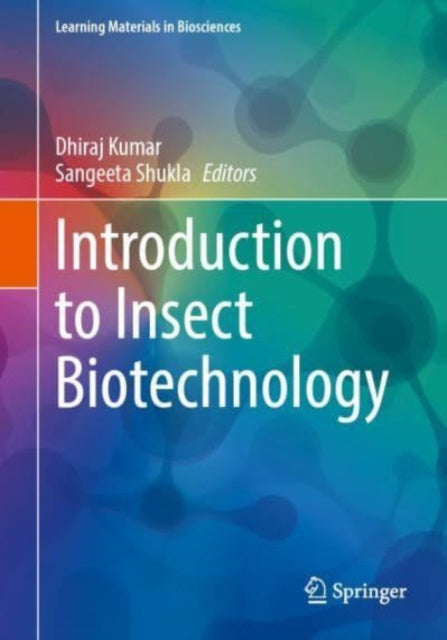
Introduction to Insect Biotechnology
Introduction to Insect Biotechnology
💎 Earn 247 Points (£2.47) on this item.
YOU SAVE £10.44
- Condition: Brand new
- UK Delivery times: Usually arrives within 2 - 3 working days
- UK Shipping: Fee starts at £2.39. Subject to product weight & dimension
Bulk ordering. Want 15 or more copies? Get a personalised quote and bigger discounts. Learn more about bulk orders.
Couldn't load pickup availability
- More about Introduction to Insect Biotechnology
In a concise manner, this textbook covers the fundamentals and applications of insect biotechnology, focusing on economically important insects like silkworm, lac, and honey bee. It discusses recent developments in the field, such as metagenomics and proteomics, and the production of transgenic products using insects. It is aimed at students and researchers in molecular biology, biotechnology, and entomology.
Format: Paperback / softback
Length: 136 pages
Publication date: 13 May 2023
Publisher: Springer International Publishing AG
This comprehensive textbook provides a concise yet thorough introduction to the fundamentals and applications of insect biotechnology. It focuses on globally significant insects like the silkworm, lac, and honey bee, highlighting their economic importance. The book endeavors to cover the latest advancements in this rapidly evolving field, such as the utilization of metagenomics and proteomics to discover genes and enzymes with potential applications in various industrial and biomedical sectors. Additionally, it explores the use of insects as platforms for the production of transgenic products, which is discussed in a dedicated chapter. Designed for students and researchers in molecular biology, biotechnology, and entomology, this book offers a valuable resource for those seeking to gain familiarity with the emerging field of insect biotechnology.
Introduction:
Insect biotechnology is a rapidly growing field that encompasses the utilization of insects for various purposes, including agriculture, medicine, and industry. With the increasing demand for sustainable and environmentally friendly solutions, insect biotechnology offers a promising alternative to traditional methods. In this textbook, we will explore the fundamentals and applications of insect biotechnology, focusing on economically important insects like the silkworm, lac, and honey bee.
Economic Importance of Insects:
Insects play a vital role in the economy of many countries around the world. Silkworms, for instance, are the primary producers of silk, a valuable natural fiber used in the production of clothing, accessories, and other textile products. Lac insects are used in the production of lacquer, a traditional Chinese varnish used for decorative purposes. Honey bees are important pollinators for many crops, and their honey is a valuable source of food and medicine.
Silkworm Biotechnology:
Silkworm biotechnology is a significant area of research and development. Silkworms are known for their ability to produce high-quality silk fibers, and researchers are exploring ways to enhance their silk production through genetic engineering. One of the key techniques used in silkworm biotechnology is the identification and characterization of genes involved in silk production. This involves the use of advanced genetic tools such as next-generation sequencing and bioinformatics to analyze the silkworm genome and identify candidate genes for manipulation.
Lac Insect Biotechnology:
Lac insects are also important in the production of lacquer, a traditional Chinese varnish used for decorative purposes. Researchers are exploring ways to improve the efficiency of lacquer production through genetic engineering. One of the challenges in lacquer production is the slow growth rate of the insects, which can lead to low yields. By identifying and manipulating genes involved in insect growth and development, researchers hope to enhance the growth rate and yield of lac insects.
Honey Bee Biotechnology:
Honey bees are important pollinators for many crops, and their decline has been a major concern for agriculture. Researchers are exploring ways to enhance honey bee health and productivity through genetic engineering. One of the key techniques used in honey bee biotechnology is the identification and characterization of genes involved in pollination and honey production. This involves the use of advanced genetic tools such as CRISPR-Cas9 to modify the honey bee genome and enhance these traits.
Conclusion:
Insect biotechnology has the potential to revolutionize various industries and improve our quality of life. By harnessing the genetic potential of insects, we can develop sustainable and environmentally friendly solutions to meet the growing demand for natural products. However, there are also ethical and societal considerations that need to be addressed, such as the potential impact on biodiversity and the use of insects in food and medicine. As with any new technology, it is important to approach insect biotechnology with caution and to ensure that it is used responsibly and ethically.
Weight: 261g
Dimension: 240 x 168 (mm)
ISBN-13: 9783031267758
Edition number: 1st ed. 2023
This item can be found in:
UK and International shipping information
UK and International shipping information
UK Delivery and returns information:
- Delivery within 2 - 3 days when ordering in the UK.
- Shipping fee for UK customers from £2.39. Fully tracked shipping service available.
- Returns policy: Return within 30 days of receipt for full refund.
International deliveries:
Shulph Ink now ships to Australia, Belgium, Canada, France, Germany, Ireland, Italy, India, Luxembourg Saudi Arabia, Singapore, Spain, Netherlands, New Zealand, United Arab Emirates, United States of America.
- Delivery times: within 5 - 10 days for international orders.
- Shipping fee: charges vary for overseas orders. Only tracked services are available for most international orders. Some countries have untracked shipping options.
- Customs charges: If ordering to addresses outside the United Kingdom, you may or may not incur additional customs and duties fees during local delivery.