Martha London
Invasive Species: Famine Weed
Invasive Species: Famine Weed
We can order this item for you. Delivery usually takes about 4 to 6 weeks.
This item is not held in our immediate stock. We will order it for you after checkout.
Estimated delivery: About 4 to 6 weeks
YOU SAVE £10.11
- Condition: Brand new
- UK Delivery times: Usually arrives within 2 - 3 working days
- UK Shipping: Fee starts at £3.89. Subject to product weight & dimension
Bulk ordering. Want 15 or more copies? Get a personalised quote and bigger discounts. Learn more about bulk orders.
Couldn't load pickup availability
- More about Invasive Species: Famine Weed
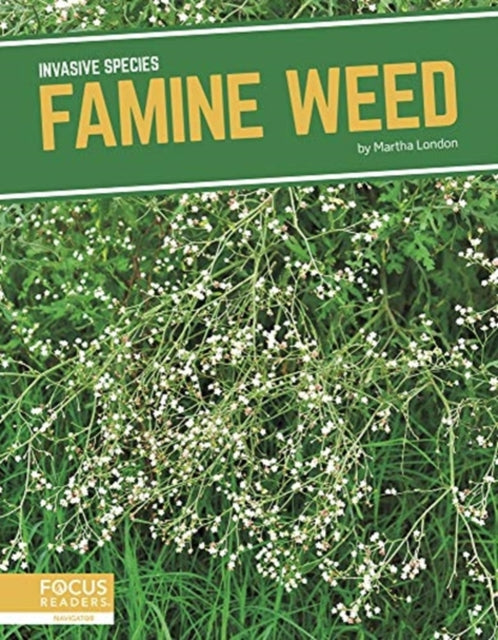
Famine weed is an invasive species that threatens ecosystems, and humans have contributed to its spread. This book provides information on the species, its threats, and management efforts. It includes a table of contents, infographics, sidebars, a "Thats Amazing!” feature, quiz questions, a glossary, additional resources, and an index.
\n Format: Hardback
\n Length: 32 pages
\n Publication date: 01 August 2021
\n Publisher: North Star Editions
\n
Famine weed, an invasive species that has been introduced to many environments around the world, has a complex history and a multifaceted impact on ecosystems. Its origins can be traced back to Europe in the late 1800s, where it was initially brought as a crop for livestock feed. However, due to its aggressive growth and ability to outcompete native species, famine weed has become a problematic invasive species in many parts of the world.
One of the primary ways that famine weed has spread is through human activities. It was often introduced accidentally during transportation or agricultural practices, such as the planting of crops or the spread of seeds. Additionally, humans have played a role in promoting the spread of famine weed by harvesting it for use in herbal remedies or as a food source.
The threats posed by famine weed to ecosystems are significant. It can outcompete native species, reducing biodiversity and altering the structure of ecosystems. Famine weed also has the potential to cause soil erosion, which can lead to the loss of fertile land and increased flooding. Moreover, famine weed can produce toxic compounds that can harm wildlife and humans, making it a dangerous species to manage.
To address the challenges posed by famine weed, various efforts are being taken. These include the use of biological control methods, such as the introduction of natural predators or parasites that feed on famine weed. Additionally, manual removal of famine weed is being carried out in some areas, particularly in sensitive ecosystems or areas where it has become established.
In addition to its impact on ecosystems, famine weed also has economic implications. It can reduce crop yields and livestock production, leading to losses for farmers and agricultural industries. Moreover, famine weed can create a nuisance in public spaces, such as parks and beaches, causing discomfort and reducing recreational opportunities.
Despite these challenges, there are also opportunities for managing famine weed. For example, some studies have shown that famine weed can be used as a source of renewable energy, such as through the production of biofuel. Additionally, famine weed has potential medicinal properties, and its extracts are being studied for their potential health benefits.
In conclusion, famine weed is a complex invasive species that has a significant impact on ecosystems around the world. Its origins can be traced back to Europe in the late 1800s, and it has spread through human activities, including transportation, agriculture, and harvesting. The threats posed by famine weed to ecosystems are significant, including outcompeting native species, causing soil erosion, and producing toxic compounds. However, there are also efforts being taken to manage famine weed, including the use of biological control methods and manual removal. Additionally, famine weed has potential economic implications, such as reducing crop yields and livestock production, and creating a nuisance in public spaces. Despite these challenges, there are also opportunities for managing famine weed, such as using it as a source of renewable energy and studying its medicinal properties.
Famine Weed: An Invasive Species with Complex Origins and Multifaceted Impact
\n Weight: 250g\n
Dimension: 184 x 236 x 10 (mm)\n
ISBN-13: 9781644938560\n \n
UK and International shipping information
UK and International shipping information
We deliver throughout the United Kingdom and to 128 countries and territories worldwide, including the United States, Australia, Canada, Germany, Spain and France.