Emma Huddleston
Invasive Species: Tiger Mosquitoes
Invasive Species: Tiger Mosquitoes
We can order this item for you. Delivery usually takes about 4 to 6 weeks.
This item is not held in our immediate stock. We will order it for you after checkout.
Estimated delivery: About 4 to 6 weeks
YOU SAVE £3.47
- Condition: Brand new
- UK Delivery times: Usually arrives within 2 - 3 working days
- UK Shipping: Fee starts at £3.89. Subject to product weight & dimension
Bulk ordering. Want 15 or more copies? Get a personalised quote and bigger discounts. Learn more about bulk orders.
Couldn't load pickup availability
- More about Invasive Species: Tiger Mosquitoes
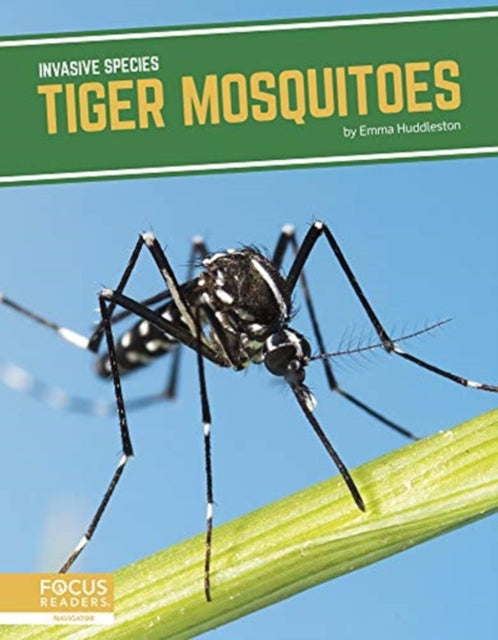
The book explores the role of tiger mosquitoes in introduced environments, how humans helped spread the species, the threats they pose to ecosystems, and efforts being taken to manage them.
Format: Paperback / softback
Length: 32 pages
Publication date: 01 August 2021
Publisher: North Star Editions
The impact of tiger mosquitoes on introduced environments, the role of humans in their spread, the threats they pose to ecosystems, and the efforts being made to manage them are all explored in this title. Additionally, the book includes a table of contents, two infographics, informative sidebars, a "Thats Amazing!" special feature, quiz questions, a glossary, additional resources, and an index. This Focus Readers title is designed for students in grades 3-5 with reading levels of grades 4-7 and interest levels of grades 4-7.
Tiger mosquitoes, also known as Aedes albopictus, are a species of mosquito that has been introduced to many parts of the world through human activities. These mosquitoes are known for their aggressive biting behavior and their ability to spread diseases such as dengue fever, chikungunya, and Zika virus.
The first recorded case of tiger mosquitoes in the United States was in 1985 in Miami, Florida. Since then, the species has spread rapidly throughout the southern United States and has also been found in other parts of the country, including Texas, California, and Hawaii.
Tiger mosquitoes are particularly problematic in urban areas where they can breed in small water sources such as gutters, bird baths, and even empty containers. They are also attracted to humans and animals, which makes them a threat to public health.
One of the main ways that tiger mosquitoes spread is through the transportation of goods and people. When people travel to areas where tiger mosquitoes are present, they can bring the mosquitoes back with them in their luggage or on their bodies. This can lead to the establishment of new populations of mosquitoes in areas where they were not previously found.
Another way that tiger mosquitoes spread is through the movement of birds. Tiger mosquitoes can lay their eggs in bird nests, and the larvae can feed on the birds and their eggs. When the birds migrate, they can carry the mosquitoes with them to new areas, where they can establish new populations.
Tiger mosquitoes also pose a threat to ecosystems. They can feed on a wide range of animals, including birds, reptiles, and mammals. This can lead to a decline in the populations of these animals and can have a negative impact on the balance of ecosystems.
In response to the threat posed by tiger mosquitoes, many governments and organizations are taking steps to manage the species. These steps include:
Implementing mosquito control programs: These programs involve the use of insecticides, larvicides, and other methods to control mosquito populations.
Improving sanitation: This involves removing standing water sources, such as gutters and bird baths, and ensuring that homes and businesses have proper drainage systems.
Educating the public: This involves raising awareness about the risks posed by tiger mosquitoes and the steps that can be taken to prevent their spread.
Research and development: Researchers are working to develop new methods of controlling tiger mosquitoes, such as genetically modified mosquitoes that are less likely to spread diseases.
In conclusion, tiger mosquitoes are a species of mosquito that has been introduced to many parts of the world through human activities. These mosquitoes are known for their aggressive biting behavior and their ability to spread diseases such as dengue fever, chikungunya, and Zika virus. Tiger mosquitoes are particularly problematic in urban areas where they can breed in small water sources and are attracted to humans and animals.
In response to the threat posed by tiger mosquitoes, many governments and organizations are taking steps to manage the species. These steps include implementing mosquito control programs, improving sanitation, educating the public, and conducting research and development. By working together, we can reduce the impact of tiger mosquitoes on public health and ecosystems and protect the environment for future generations.
Weight: 94g
Dimension: 173 x 228 x 7 (mm)
ISBN-13: 9781644939055
UK and International shipping information
UK and International shipping information
We deliver throughout the United Kingdom and to 128 countries and territories worldwide, including the United States, Australia, Canada, Germany, Spain and France.