Jonathan Strassfeld
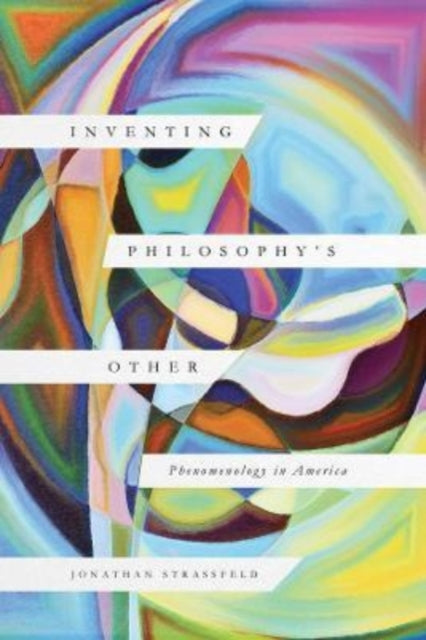
Inventing Philosophy's Other: Phenomenology in America
Inventing Philosophy's Other: Phenomenology in America
💎 Earn 114 Points (£1.14) on this item.
YOU SAVE £1.15
- Condition: Brand new
- UK Delivery times: Usually arrives within 2 - 3 working days
- UK Shipping: Fee starts at £2.39. Subject to product weight & dimension
Bulk ordering. Want 15 or more copies? Get a personalised quote and bigger discounts. Learn more about bulk orders.
Couldn't load pickup availability
- More about Inventing Philosophy's Other: Phenomenology in America
Phenomenology and "continental philosophy" are influential but overlooked in American philosophy departments. Jonathan Strassfeld's book Inventing Philosophys Other explores this absence, showing how everyday institutional practices shaped twentieth-century academic discourse. He examines the lives and works of key phenomenologists and offers a fresh introduction to the philosophy.
Format: Paperback / softback
Length: 352 pages
Publication date: 14 October 2022
Publisher: The University of Chicago Press
Phenomenology, a philosophical discipline that delves into the study of human experiences and consciousness, has garnered significant attention in Europe and other parts of the world, but it has received relatively limited recognition in American philosophy. Despite its profound impact on intellectual movements like existentialism, post-structuralism, and deconstruction, phenomenology has been largely overlooked in American academic circles. In his book Inventing Philosophys Other, Jonathan Strassfeld delves into this absence, shedding light on how everyday institutional practices have played a crucial role in shaping the development of twentieth-century academic discourse.
Conventional wisdom suggests that phenomenology's lack of presence in American philosophy is due to its obscurity or irrelevance to American philosophical traditions. Strassfeld challenges this narrative by undertaking the first comprehensive historical study of phenomenology in the United States. Through his examination of the lives and works of prominent phenomenologists such as Marjorie Grene, Alfred Schütz, Hubert Dreyfus, and Iris Marion Young, as well as providing a fresh introduction to phenomenological philosophy, Strassfeld seeks to rectify the neglect of this important discipline.
Phenomenology emerged in the early twentieth century as a response to the challenges posed by the rise of scientific rationalism and the decline of traditional metaphysical beliefs. It emphasizes the importance of subjective experiences and the role of intuition and imagination in understanding the world. Phenomenologists argue that traditional philosophical methods, which rely on abstract reasoning and logical analysis, fail to capture the richness and complexity of human experiences.
One of the key figures in the development of phenomenology was the German philosopher Edmund Husserl. Husserl's work, particularly his masterpiece The Cartesian Meditations, sought to establish a new foundation for philosophy by grounding it in the study of human consciousness. He argued that consciousness is not an abstract concept but is deeply embedded in the physical world and is shaped by our sensory experiences and the way we interpret them.
Husserl's ideas were influential in the development of existentialism, a philosophical movement that emerged in the aftermath of World War II. Existentialism emphasizes the individual's freedom and responsibility for creating meaning in their lives. It emphasizes the importance of authenticity, courage, and the pursuit of self-discovery. Existentialist thinkers such as Sartre, Nietzsche, and Heidegger drew on phenomenology to develop their own philosophical frameworks.
Post-structuralism, another intellectual movement that emerged in the late twentieth century, is also deeply indebted to phenomenology. Post-structuralists argue that traditional philosophical frameworks are based on binary oppositions and that these structures are perpetuated by power and ideology. They seek to undermine these structures by analyzing language, discourse, and power relations. Post-structuralist thinkers such as Derrida, Foucault, and Lacan drew on phenomenology to develop their own philosophical frameworks.
Deconstruction, a philosophical movement that emerged in the 1960s, is also closely related to phenomenology. Deconstructionists argue that language and meaning are not fixed or stable but are constantly shifting and changing. They seek to expose the underlying structures of language and meaning that perpetuate power and oppression. Deconstructionists such as Derrida, Barthes, and Deleuze drew on phenomenology to develop their own philosophical frameworks.
Despite the profound influence of phenomenology on intellectual movements like existentialism, post-structuralism, and deconstruction, it has received relatively limited attention in American philosophy. This absence can be attributed to several factors. One of the main reasons is the dominance of analytic philosophy in American academic circles. Analytic philosophy focuses on abstract reasoning and logical analysis and tends to prioritize the study of traditional philosophical topics such as metaphysics, epistemology, and ethics. Phenomenology, on the other hand, is more concerned with the study of human experiences and consciousness and is often seen as more subjective and experiential.
Another factor contributing to phenomenology's absence in American philosophy is the lack of institutional support. Phenomenology is not a mainstream discipline in American universities, and there are few dedicated phenomenology departments or programs. This lack of institutional support can make it difficult for phenomenologists to gain tenure, publish their work, and attract students to their programs.
Despite these challenges, phenomenology has continued to exert a significant influence on American philosophy. Many American philosophers have drawn on phenomenological ideas to develop their own philosophical frameworks. For example, feminist philosopher Judith Butler has used phenomenology to analyze the construction of gender and sexuality, while philosopher John Searle has used phenomenology to develop a theory of consciousness.
In conclusion, phenomenology's absence from the philosophical mainstream in the United States reflects its obscurity or irrelevance to American philosophical traditions. However, Jonathan Strassfeld's book Inventing Philosophys Other sheds light on how everyday institutional practices have played a crucial role in shaping the development of twentieth-century academic discourse. By examining the lives and works of phenomenologists such as Marjorie Grene, Alfred Schütz, Hubert Dreyfus, and Iris Marion Young, as well as providing a fresh introduction to phenomenological philosophy, Strassfeld seeks to rectify the neglect of this important discipline. Phenomenology is a philosophical discipline that delves into the study of human experiences and consciousness, and its influence on intellectual movements like existentialism, post-structuralism, and deconstruction cannot be overstated. While it has received limited recognition in American academic circles, phenomenology has continued to exert a significant influence on American philosophy, and its importance will likely continue to grow in the future.
Dimension: 229 x 152 x 23 (mm)
ISBN-13: 9780226821597
Edition number: 1
This item can be found in:
UK and International shipping information
UK and International shipping information
UK Delivery and returns information:
- Delivery within 2 - 3 days when ordering in the UK.
- Shipping fee for UK customers from £2.39. Fully tracked shipping service available.
- Returns policy: Return within 30 days of receipt for full refund.
International deliveries:
Shulph Ink now ships to Australia, Belgium, Canada, France, Germany, Ireland, Italy, India, Luxembourg Saudi Arabia, Singapore, Spain, Netherlands, New Zealand, United Arab Emirates, United States of America.
- Delivery times: within 5 - 10 days for international orders.
- Shipping fee: charges vary for overseas orders. Only tracked services are available for most international orders. Some countries have untracked shipping options.
- Customs charges: If ordering to addresses outside the United Kingdom, you may or may not incur additional customs and duties fees during local delivery.