Shulph Ink
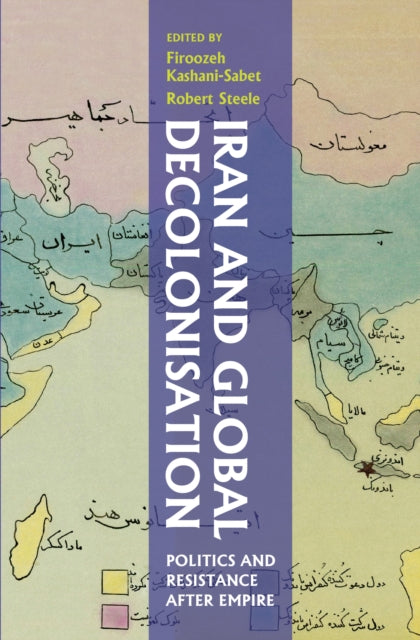
Iran and Global Decolonisation: Politics and Resistance After Empire
Iran and Global Decolonisation: Politics and Resistance After Empire
💎 Earn 265 Points (£2.65) on this item.
We can order this item for you. Delivery usually takes about 4 to 6 weeks.
This item is not held in our immediate stock. We will order it for you after checkout.
Estimated delivery: About 4 to 6 weeks
- Condition: Brand new
- UK Delivery times: Usually arrives within 2 - 3 working days
- UK Shipping: Fee starts at £3.89. Subject to product weight & dimension
Bulk ordering. Want 15 or more copies? Get a personalised quote and bigger discounts. Learn more about bulk orders.
Couldn't load pickup availability
- More about Iran and Global Decolonisation: Politics and Resistance After Empire
Iran's unique position in the world affected and defined its treatment of decolonization. During the late 1970s, the country sought to establish close relationships with newly independent counterparts in the Global South, but little attention has been paid to how it interacted with other regions, such as Africa, Asia, and the Americas. This book contributes to the theoretical debates around the re-shaping of the world brought about by the end of an empire by considering the impact of global decolonization on movements and ideas within Iran and how Iran's experiences of imperialism shaped how these ideas were received and developed.
Format: Hardback
Length: 360 pages
Publication date: 28 September 2023
Publisher: Gingko Library
Iran's unique position in the world significantly impacted and defined its treatment of decolonization. During the final decades of Pahlavi rule in the late 1970s, the country sought to establish close relationships with newly independent counterparts in the Global South. Most scholarly work focused on this period is centered around the Cold War and Iran's relations with the United States, Russia, and Europe. Little attention has been paid to how the country interacted with other regions, such as Africa, Asia, and the Americas.
Adding to an important and growing body of literature that discusses the profound and lasting impact of decolonization, Iran and Global Decolonization contributes to the theoretical debates around the re-shaping of the world brought about by the end of an empire. It considers not only the impact of global decolonization on movements and ideas within Iran but also how Iran's own experiences of imperialism shaped how these ideas were received and developed.
Iran's strategic location at the crossroads of Europe, Asia, and Africa made it a significant player in the decolonization process. As a former imperial power, Iran had a complex relationship with the concept of decolonization, as it sought to maintain its influence and power in the region while also addressing the demands of its colonized populations.
One of the key ways in which Iran's unique position impacted its treatment of decolonization was through its involvement in the Non-Aligned Movement (NAM). The NAM was a group of developing countries that sought to promote independence, self-determination, and non-interference in international affairs. Iran was a founding member of the NAM and played a significant role in shaping its ideology and policies.
The NAM's emphasis on self-determination and non-interference resonated with Iran's own experiences of imperialism. Iran had been colonized by the British and had fought a long and bloody war for independence. The country's leaders believed that self-determination was the only way to ensure the rights and dignity of its people and that imperialism was a threat to global peace and stability.
Iran's involvement in the NAM also led to its close relationships with other developing countries in the Global South. The country provided financial and technical assistance to these countries, helping them to build their economies and infrastructure. Iran also played a role.
In addition to its involvement in the NAM, Iran also had close relationships with other regional powers. The country was a founding member of the Organization of the Islamic Conference (OIC) and played a significant role in shaping its ideology and policies. The OIC was a group of Muslim-majority countries that sought to promote inter-faith dialogue, cooperation, and peace.
Iran's close relationships with the OIC led to its involvement in the decolonization of Africa and the Middle East. The country provided financial and technical assistance to these countries, helping them to build their economies and infrastructure. Iran also played a role.
In conclusion, Iran's unique position in the world significantly impacted and defined its treatment of decolonization. The country's strategic location, involvement in the Non-Aligned Movement, close relationships with other developing countries, and close relationships with other regional organizations shaped its approach to decolonization. Iran's experiences of imperialism and its commitment to self-determination and non-interference played a significant role in shaping its approach to decolonization, and its contributions to the theoretical debates around the re-shaping of the world brought about by the end of an empire are significant.
ISBN-13: 9781914983085
UK and International shipping information
UK and International shipping information
We deliver throughout the United Kingdom and to 128 countries and territories worldwide, including the United States, Australia, Canada, Germany, Spain and France.