Mahan Abedin
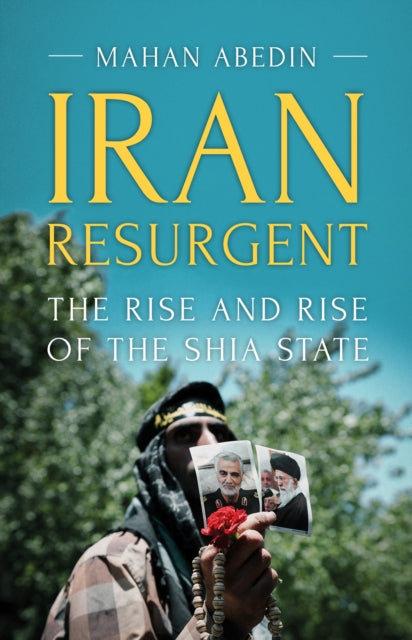
Iran Resurgent: The Rise and Rise of the Shia State
Iran Resurgent: The Rise and Rise of the Shia State
💎 Earn 123 Points (£1.23) on this item.
We can order this item for you. Delivery usually takes about 4 to 6 weeks.
This item is not held in our immediate stock. We will order it for you after checkout.
Estimated delivery: About 4 to 6 weeks
YOU SAVE £5.22
- Condition: Brand new
- UK Delivery times: Usually arrives within 2 - 3 working days
- UK Shipping: Fee starts at £2.39. Subject to product weight & dimension
Bulk ordering. Want 15 or more copies? Get a personalised quote and bigger discounts. Learn more about bulk orders.
Couldn't load pickup availability
- More about Iran Resurgent: The Rise and Rise of the Shia State
Iran has emerged as a leading regional power, projecting influence throughout the Middle East and parts of Central Asia. The landmark nuclear deal of 2015 limits Iran's nuclear program but doesn't dismantle it. With internal politics stabilizing, Iran is set to continue on a path of regional strategic growth. However, the risk of military confrontation with the US remains due to tensions. This book argues that Iran has developed diplomatic strength and credible military capability to deter a full-scale assault, but limited clashes could have far-reaching consequences for regional security.
Format: Paperback / softback
Length: 272 pages
Publication date: 30 May 2019
Publisher: C Hurst & Co Publishers Ltd
Iran has undergone a remarkable transformation, emerging from decades of isolation and struggle to establish itself as a dominant regional power, if not the pre-eminent one. Its influence extends far beyond its borders, spanning the Middle East and parts of Central Asia. Moreover, Iran's diplomatic efforts are actively engaged on the global stage, with long-term projects in Africa and South America. The landmark nuclear deal of July 2015 was a significant achievement, resulting from Iran's successful negotiations with several world powers to reach a mutually acceptable agreement. While the nuclear deal imposes restrictions on Iran's nuclear program for at least a decade, it does not irreversibly dismantle any part of it. With internal Iranian politics stabilizing under the leadership of President Rouhani, the country is poised to continue its trajectory of regional strategic growth. However, the Trump administration's determination to contain Iran's regional influence raises concerns about the risk of military confrontation.
This book makes a compelling argument that Iran has developed sufficient diplomatic strength and credible military capabilities to deter a full-scale US military assault. However, without a significant reduction in tensions, there remains a risk of limited clashes with far-reaching consequences for regional security.
The nuclear deal has played a pivotal role in shaping Iran's regional position. By agreeing to limit its nuclear program, Iran has gained international legitimacy and reduced the economic and political pressure it faced. This has allowed it to focus on expanding its influence in the region, particularly through its support for various militant groups and proxy wars.
At the same time, the Trump administration's approach to Iran has been characterized by a combination of sanctions and rhetoric, aimed at constraining its regional influence. The administration has withdrawn from the nuclear deal and imposed new sanctions on Iran, which have further strained its economy and weakened its political position.
The risk of military confrontation between the US and Iran is a complex and multifaceted issue. On the one hand, Iran's military capabilities are limited, particularly when compared to the US's vast resources and advanced technology. However, Iran has demonstrated its willingness to use its military force.
In recent years, Iran has conducted several military operations in the region, including missile strikes on Saudi Arabia and Iraq, and support for militant groups in Syria and Yemen. These actions have raised concerns about the potential for regional instability and conflict.
On the other hand, the US has a strong military presence in the region, including bases in Saudi Arabia, Iraq, and Israel. The US has also demonstrated its willingness to use force to protect its interests, including the assassination of Iranian military leader Qassem Soleimani in 2020.
The risk of military confrontation between the US and Iran is highest in the context of a regional conflict. For example, the ongoing conflict in Syria has seen Iran support various militant groups, including the Syrian Democratic Forces (SDF), which are opposed to the government of Bashar al-Assad. The SDF has received significant military support from the US, including weapons and training.
Similarly, the conflict in Yemen has seen Iran support the Houthi rebels, who are also opposed to the government of Abd Rabbuh Mansur Hadi. The Houthis have been able to seize control of large parts of the country, including the capital, Sanaa.
In addition to these conflicts, there are also concerns about the potential for a conflict between Israel and Iran. Israel has long accused Iran of pursuing a nuclear weapons program, and has taken steps.
In conclusion, Iran has emerged from decades of isolation and struggle to become a leading regional power. Its influence extends far beyond its borders, and its diplomatic efforts are actively engaged on the global stage. The landmark nuclear deal of July 2015 was a significant achievement, but there remains a risk of limited clashes with far-reaching consequences for regional security. The Trump administration's determination to contain Iran's regional influence raises concerns about the risk of military confrontation. While Iran's military capabilities are limited, its willingness to use its military is a concern. The risk of military confrontation is highest in the context of a regional conflict, such as the ongoing conflicts in Syria and Yemen, or a potential conflict between Israel and Iran. It is important for policymakers to work towards
To reduce the risk of military confrontation, it is important for policymakers to work towards a diplomatic solution to the ongoing conflicts in Syria and Yemen, and to pursue a policy of containment towards Iran. This may involve engaging in direct negotiations with Iran, and seeking to find common ground between the US and Iran's interests in the region. It may also involve working to strengthen regional security institutions, such as the Arab League and the Organization of Islamic Cooperation, to promote stability and prevent the spread of extremist
In addition, it is important for the international community to recognize the importance of regional stability and to work towards regionalize the conflict resolution process. This may involve providing support to local actors, such as the SDF and the Houthi rebels, to promote their political and economic development, and to promote human rights. It may also involve providing humanitarian rights.
Finally, it is important for the international community to prioritize the protection of human rights. This may involve providing humanitarian assistance to those affected by the conflict, and to promote the rule.
Weight: 386g
Dimension: 213 x 136 x 18 (mm)
ISBN-13: 9781849049559
UK and International shipping information
UK and International shipping information
UK Delivery and returns information:
- Delivery within 2 - 3 days when ordering in the UK.
- Shipping fee for UK customers from £2.39. Fully tracked shipping service available.
- Returns policy: Return within 30 days of receipt for full refund.
International deliveries:
Shulph Ink now ships to Australia, Belgium, Canada, France, Germany, Ireland, Italy, India, Luxembourg Saudi Arabia, Singapore, Spain, Netherlands, New Zealand, United Arab Emirates, United States of America.
- Delivery times: within 5 - 10 days for international orders.
- Shipping fee: charges vary for overseas orders. Only tracked services are available for most international orders. Some countries have untracked shipping options.
- Customs charges: If ordering to addresses outside the United Kingdom, you may or may not incur additional customs and duties fees during local delivery.