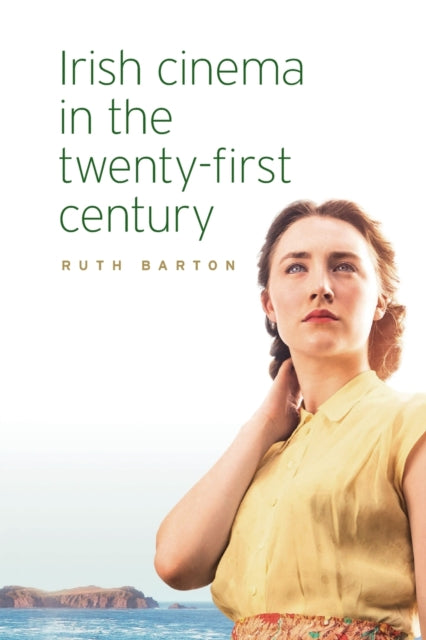
Ruth Barton
Irish Cinema in the Twenty-First Century
Irish Cinema in the Twenty-First Century
We can order this item for you. Delivery usually takes about 4 to 6 weeks.
This item is not held in our immediate stock. We will order it for you after checkout.
Estimated delivery: About 4 to 6 weeks
YOU SAVE £2.90
- Condition: Brand new
- UK Delivery times: Usually arrives within 2 - 3 working days
- UK Shipping: Fee starts at £3.89. Subject to product weight & dimension
Bulk ordering. Want 15 or more copies? Get a personalised quote and bigger discounts. Learn more about bulk orders.
Couldn't load pickup availability
- More about Irish Cinema in the Twenty-First Century
This book provides an accessible and comprehensive overview of contemporary Irish cinema, covering new genres, gender representations, and historical events, and featuring established and emerging auteurs.
Format: Paperback / softback
Length: 248 pages
Publication date: 25 March 2019
Publisher: Manchester University Press
This book provides a comprehensive and accessible overview of contemporary Irish cinema, catering to the needs of academics specializing in film studies and Irish studies. In response to the evolving dynamics of the Irish production landscape, it encompasses chapters on emerging Irish genres such as creative documentary, animation, and horror. These chapters delve into the shifting representations of rural and urban spaces, while consistently prioritizing gender representations. Furthermore, the book explores how Irish historical events, ranging from the Civil War to the Troubles, and the portrayal of the traumatic narrative of clerical sexual abuse have been depicted in recent films. It encompasses a diverse range of works by established auteurs like Neil Jordan and Jim Sheridan, as well as emerging talents, including the Academy Award-winning Lenny Abrahamson. By offering a thorough exploration of Irish cinema's past and present, this book serves as a valuable resource for students and scholars seeking to understand the rich and diverse landscape of this vibrant film industry.
Introduction:
Contemporary Irish cinema has witnessed a remarkable resurgence in recent years, with a growing number of films achieving international acclaim and recognition. This book aims to provide a comprehensive and accessible overview of this vibrant film industry, catering to the needs of academics specializing in film studies and Irish studies. In response to the evolving dynamics of the Irish production landscape, it encompasses chapters on emerging Irish genres such as creative documentary, animation, and horror. These chapters delve into the shifting representations of rural and urban spaces, while consistently prioritizing gender representations. Furthermore, the book explores how Irish historical events, ranging from the Civil War to the Troubles, and the portrayal of the traumatic narrative of clerical sexual abuse have been depicted in recent films. It encompasses a diverse range of works by established auteurs like Neil Jordan and Jim Sheridan, as well as emerging talents, including the Academy Award-winning Lenny Abrahamson. By offering a thorough exploration of Irish cinema's past and present, this book serves as a valuable resource for students and scholars seeking to understand the rich and diverse landscape of this vibrant film industry.
Emerging Irish Genres:
One of the most notable trends in contemporary Irish cinema is the emergence of new Irish genres. Creative documentary, in particular, has gained significant traction, with filmmakers exploring innovative storytelling techniques to capture the essence of Irish society and culture. Animation has also emerged as a powerful medium, with studios producing stunning visual narratives that often tackle complex social issues. Horror, too, has found a niche in Irish cinema, with filmmakers using the genre to explore dark themes and psychological trauma. These new genres have not only contributed to the diversity of Irish cinema but have also helped to establish it as a significant player on the global stage.
Shifting Representations of the Countryside and the City:
Another significant aspect of contemporary Irish cinema is the shifting representations of the countryside and the city. Films have often depicted the rural landscape as a place of isolation and hardship, while the city has been portrayed as a hub of modernity and opportunity. However, recent films have challenged these stereotypes, highlighting the complexities and diversity of both rural and urban spaces. For example, films like "The Quiet Man" have depicted the rural landscape as a place of beauty and tranquility, while "Intermission" has explored the urban landscape as a site of chaos and uncertainty. These films have helped to broaden the audience's understanding of Irish society.
Gender Representations:
Gender representations in contemporary Irish cinema have also been a topic of significant interest. Films have often portrayed women as vulnerable and dependent, while men have been depicted as strong and independent. However, recent films have challenged these stereotypes, highlighting the complexities and diversity of gender roles in Irish society. For example, films like "Brooklyn" have depicted women as strong and independent, while "The Lobster" has explored the gender roles of men in a society that values conformity. These films have helped to promote gender equality and challenge traditional gender norms.
Irish Historical Events:
Irish historical events have also played a significant role in contemporary Irish cinema. Films have often depicted the Civil War, the Troubles, and the aftermath of the Celtic Tiger as defining moments in Irish history. However, recent films have taken a more nuanced approach, exploring the personal experiences and struggles of individuals caught up in these events. For example, films like "The Wind That Shakes the Barley" have depicted the Civil War as a struggle for independence, while "The Secret Life of Walter Mitty" has explored the psychological effects of the Troubles on individuals. These films have helped to promote a deeper understanding of Irish history.
Conclusion:
In conclusion, contemporary Irish cinema has undergone a remarkable transformation in recent years, with new genres, shifting representations of the countryside and the city, and a focus on gender representations emerging as key trends. These developments have helped to establish Irish cinema as a significant player on the global stage, and have contributed to a broader understanding of Irish society and culture. As the industry continues to evolve, it will be interesting to see how these trends continue to shape the future of Irish cinema.
Weight: 406g
Dimension: 159 x 233 x 18 (mm)
ISBN-13: 9781526124449
UK and International shipping information
UK and International shipping information
We deliver throughout the United Kingdom and to 128 countries and territories worldwide, including the United States, Australia, Canada, Germany, Spain and France.