Emily Sohn
Is It a Food Web or a Food Chain?
Is It a Food Web or a Food Chain?
💎 Earn 57 Points (£0.57) on this item.
YOU SAVE £2.46
- Condition: Brand new
- UK Delivery times: Usually arrives within 2 - 3 working days
- UK Shipping: Fee starts at £2.39. Subject to product weight & dimension
Bulk ordering. Want 15 or more copies? Get a personalised quote and bigger discounts. Learn more about bulk orders.
Couldn't load pickup availability
- More about Is It a Food Web or a Food Chain?
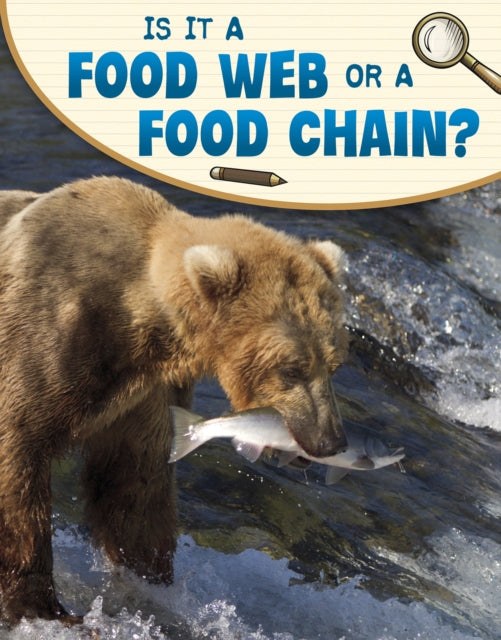
Energy flows from one living thing to another through food chains and food webs. Animals eat plants, and other animals eat those animals, and so on.
Format: Hardback
Length: 32 pages
Publication date: 23 June 2022
Publisher: Capstone Global Library Ltd
A seed gracefully descends from a majestic plant, its potential for growth and transformation unfolding before it. However, this delicate journey is abruptly halted as a curious mouse ventures upon the seed, driven by its innate hunger. In a swift and predatory act, the mouse consumes the seed, its taste buds savoring the newfound nourishment. Yet, the cycle of life continues as fate intervenes, and the mouse becomes the prey of a wise and watchful owl. With a silent swoop, the owl captures the mouse, its powerful talons securing its capture. As the owl prepares to savor the feast, a remarkable transformation takes place. Through a complex series of metabolic processes, the owl harnesses the energy stored within the mouse's body, converting it into the fuel that sustains its own existence. In this intricate dance of life, energy flows from one living creature to another, a delicate web of interdependence woven throughout the natural world.
The food chain, a fundamental concept in ecology, represents the linear transfer of energy from one organism to another. At the base of the chain, we find the producers, such as plants, algae, and some bacteria, which utilize sunlight, carbon dioxide, and water to synthesize nutrients from the environment. These producers are the foundation of the food web, as they provide sustenance for a multitude of organisms.
As the energy from the producers flows through the food chain, it undergoes various transformations. Primary consumers, such as herbivores, graze on the producers and consume their nutrients. These consumers, in turn, become prey for secondary consumers, known as carnivores or predators. The energy captured by the primary consumers is then transferred to the secondary consumers, who have a higher metabolic rate and require more energy to survive.
The food chain extends beyond the simple transfer of energy. It also plays a crucial role in maintaining the balance and stability of ecosystems. Each organism within the chain contributes to the overall health and functioning of the ecosystem. For example, herbivores help control plant populations, preventing them from becoming overgrown and dominating the ecosystem. In turn, the presence of herbivores provides habitat and food for other organisms, such as birds and insects.
However, the food chain is not a linear process, and disruptions can occur at any level. For instance, if a key producer species becomes extinct or is overhunted, it can lead to a ripple effect throughout the food chain. This can result in a decrease in the availability of nutrients, which can affect the growth and survival of other organisms. Similarly, changes in climate, such as droughts or floods, can also impact the food chain by altering the availability of resources and affecting the behavior of organisms.
To mitigate the effects of these disruptions, conservation efforts are crucial. Protecting and preserving habitats, implementing sustainable practices, and promoting responsible wildlife management are all important steps in maintaining the health and stability of ecosystems. By understanding the food chain and its importance, we can work towards creating a more sustainable and resilient world for future generations.
In addition to the food chain, another important concept in ecology is the food web. The food web represents the interconnectedness of organisms within an ecosystem and the flow of energy and nutrients between them. Unlike the food chain, which focuses on the linear transfer of energy, the food web considers the complex relationships and interactions between different species.
The food web is characterized by a network of interconnected food chains and trophic levels. At the base of the food web are the producers, followed by primary consumers, secondary consumers, and tertiary consumers. Each level of the food web plays a unique role in the ecosystem.
Primary consumers, such as herbivores, consume the producers and transform their nutrients into energy. These consumers are then consumed by secondary consumers, such as carnivores or omnivores, who in turn consume the primary consumers. The energy captured by the secondary consumers is then transferred to the tertiary consumers, who have a higher metabolic rate and require even more energy to survive.
The food web also includes decomposers, such as fungi and bacteria, which break down the organic matter and waste products produced by other organisms. These decomposers play a crucial role in recycling nutrients and maintaining the balance of the ecosystem. They also contribute to the production of soil, which is essential for plant growth and the survival of other organisms.
The food web is not static, and it can change over time due to various factors, such as habitat destruction, climate change, and human activities. For example, deforestation can lead to the loss of habitat for many species, disrupting the food web and leading to a decrease in biodiversity. Climate change can also affect the food web by altering the distribution and abundance of species and affecting the timing of important life events, such as reproduction and migration.
To address the challenges posed by these changes, conservation efforts are again crucial. Protecting and restoring habitats, implementing sustainable practices, and promoting responsible wildlife management are all important steps in maintaining the health and stability of ecosystems. By understanding the food web and its importance, we can work towards creating a more sustainable and resilient world for future generations.
In conclusion, the food chain and food web are two fundamental concepts in ecology that play a crucial role in understanding the flow of energy and nutrients within an ecosystem. The food chain represents the linear transfer of energy from producers to consumers, while the food web considers the complex relationships and interactions between different species. By understanding these concepts and implementing conservation efforts, we can work towards creating a more sustainable and resilient world for future generations.
Weight: 264g
Dimension: 179 x 236 x 10 (mm)
ISBN-13: 9781398225312
This item can be found in:
UK and International shipping information
UK and International shipping information
UK Delivery and returns information:
- Delivery within 2 - 3 days when ordering in the UK.
- Shipping fee for UK customers from £2.39. Fully tracked shipping service available.
- Returns policy: Return within 30 days of receipt for full refund.
International deliveries:
Shulph Ink now ships to Australia, Belgium, Canada, France, Germany, Ireland, Italy, India, Luxembourg Saudi Arabia, Singapore, Spain, Netherlands, New Zealand, United Arab Emirates, United States of America.
- Delivery times: within 5 - 10 days for international orders.
- Shipping fee: charges vary for overseas orders. Only tracked services are available for most international orders. Some countries have untracked shipping options.
- Customs charges: If ordering to addresses outside the United Kingdom, you may or may not incur additional customs and duties fees during local delivery.