MonikaPesthy-Simon
Isaac, Iphigeneia, and Ignatius: Martyrdom and Human Sacrifice
Isaac, Iphigeneia, and Ignatius: Martyrdom and Human Sacrifice
💎 Earn 302 Points (£3.02) on this item.
We can order this item for you. Delivery usually takes about 4 to 6 weeks.
This item is not held in our immediate stock. We will order it for you after checkout.
Estimated delivery: About 4 to 6 weeks
YOU SAVE £3.58
- Condition: Brand new
- UK Delivery times: Usually arrives within 2 - 3 working days
- UK Shipping: Fee starts at £2.39. Subject to product weight & dimension
Bulk ordering. Want 15 or more copies? Get a personalised quote and bigger discounts. Learn more about bulk orders.
Couldn't load pickup availability
- More about Isaac, Iphigeneia, and Ignatius: Martyrdom and Human Sacrifice
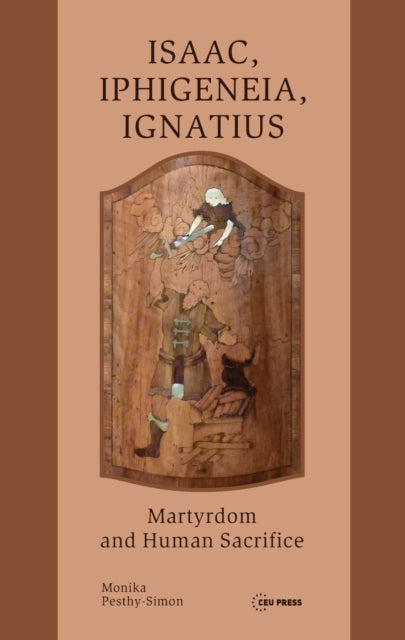
The author investigates martyrdom as a (voluntary) human sacrifice and demonstrates how human sacrifice has been turned into martyrdom. The two emblematic figures of this transformation are Iphigeneia and Isaac. Pesthy argues that all peoples in the environment in which Christianity came into being are characterized by an ambiguous and hypocritical attitude toward human sacrifice, which survives in Christianity in which martyrs replace the human sacrifice of olden days. Our feelings about martyrs can be very different, but a strong motivation is needed to accept or seek death.
Format: Hardback
Length: 260 pages
Publication date: 17 January 2025
Publisher: Central European University Press
The meaning of the martyrs' sacrifice is a complex and multifaceted topic that has been the subject of inquiry for centuries. At its core, martyrdom is a voluntary human sacrifice, where individuals offer themselves up to death in the name of a higher cause or belief. The concept of martyrdom has its roots in ancient times, with examples such as the sacrifice of Iphigeneia and Isaac in Greek mythology. However, the idea of martyrdom took on a new significance in the Christian context, where it became associated with the death of Jesus Christ. While the sacrifice of Jesus was seen as a one-time and eternal event, the idea of martyrdom suggests that new sacrifices are necessary from time to time. This raises several questions about the nature of the martyr's sacrifice and its relationship to the divinity. One of the key questions is whether the martyr imitates Christ. Pesthy argues that the martyr's sacrifice is a form of imitation, where the martyr seeks to emulate the example of Jesus and his willingness to give up his life for others. This imitation is not just a physical act but also a spiritual one, where the martyr seeks to live a life of self-sacrifice and devotion to a higher cause. Another important aspect of the martyr's sacrifice is the underlying concept of divinity. Pesthy suggests that the martyr's sacrifice is a way of expressing the divine nature of human beings. Human beings are created in the image of God and are called to live a life of holiness and righteousness. However, human beings are also prone to sin and temptation, and the martyr's sacrifice is a way of overcoming these weaknesses and demonstrating the power of the divine. In present times, the ideas of martyrdom and sacrifice continue to have a significant impact on society. While the practice of martyrdom has declined in many parts of the world, the idea of sacrifice remains a powerful force in human life. Many people are inspired by the stories of martyrs and are motivated to live a life of self-sacrifice and devotion to a higher cause. However, the idea of sacrifice can also be problematic, as it can lead to a sense of entitlement and a disregard for the needs of others. Pesthy argues that the key to understanding the meaning of the martyrs' sacrifice is to recognize the ambiguity and hypocrisy of human sacrifice. While people may condemn human sacrifice in theory, they often accept, admire, and practice it in concrete cases. This hypocrisy is a reflection of the human condition, where we are both capable of great good and great evil. Pesthy suggests that the martyr's sacrifice is a way of transcending this hypocrisy and demonstrating the true nature of the divine. In conclusion, the meaning of the martyrs' sacrifice is a complex and multifaceted topic that has been the subject of inquiry for centuries. While the sacrifice of Jesus Christ was a one-time and eternal event, the idea of martyrdom suggests that new sacrifices are necessary from time to time. The martyr's sacrifice is a form of imitation, where the martyr seeks to emulate the example of Jesus and his willingness to give up his life for others. The underlying concept of divinity is also important, as the martyr's sacrifice is a way of expressing the divine nature of human beings. In present times, the ideas of martyrdom and sacrifice continue to have a significant impact on society, and it is important to recognize the ambiguity and hypocrisy of human sacrifice. By transcending this hypocrisy, we can demonstrate the true nature of the divine and inspire others to live a life of self-sacrifice and devotion to a higher cause.
Weight: 486g
Dimension: 165 x 237 x 16 (mm)
ISBN-13: 9789633861639
UK and International shipping information
UK and International shipping information
UK Delivery and returns information:
- Delivery within 2 - 3 days when ordering in the UK.
- Shipping fee for UK customers from £2.39. Fully tracked shipping service available.
- Returns policy: Return within 30 days of receipt for full refund.
International deliveries:
Shulph Ink now ships to Australia, Belgium, Canada, France, Germany, Ireland, Italy, India, Luxembourg Saudi Arabia, Singapore, Spain, Netherlands, New Zealand, United Arab Emirates, United States of America.
- Delivery times: within 5 - 10 days for international orders.
- Shipping fee: charges vary for overseas orders. Only tracked services are available for most international orders. Some countries have untracked shipping options.
- Customs charges: If ordering to addresses outside the United Kingdom, you may or may not incur additional customs and duties fees during local delivery.