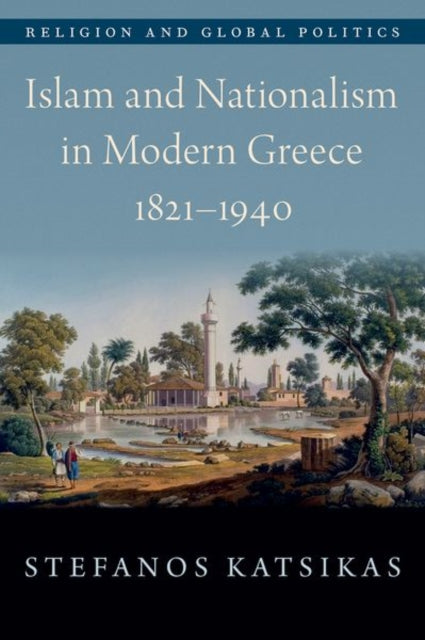
StefanosKatsikas
Islam and Nationalism in Modern Greece, 1821-1940
Islam and Nationalism in Modern Greece, 1821-1940
💎 Earn 544 Points (£5.44) on this item.
We can order this item for you. Delivery usually takes about 4 to 6 weeks.
This item is not held in our immediate stock. We will order it for you after checkout.
Estimated delivery: About 4 to 6 weeks
- Condition: Brand new
- UK Delivery times: Usually arrives within 2 - 3 working days
- UK Shipping: Fee starts at £2.39. Subject to product weight & dimension
Bulk ordering. Want 15 or more copies? Get a personalised quote and bigger discounts. Learn more about bulk orders.
Couldn't load pickup availability
- More about Islam and Nationalism in Modern Greece, 1821-1940
Islam and Nationalism in Modern Greece, 1821-1940, explores how state rule influenced the development of the Muslim population's collective identity as a minority and affected Muslim relations with the Greek authorities and Orthodox Christians. It was the first country in the Balkans to become an independent state and a pioneer in experimenting with minority issues. Religion remained a defining element in the political, social, and cultural life of the post-Ottoman Balkans, but only as long as there were strong institutions and the political framework to support and maintain religious diversity.
Format: Hardback
Length: 320 pages
Publication date: 23 March 2022
Publisher: Oxford University Press Inc
Drawing from a wide range of archival and secondary Greek, Bulgarian, Ottoman, and Turkish sources, Islam and Nationalism in Modern Greece, 1821-1940 explores the way in which the Muslim populations of Greece were ruled by state authorities from the time of Greece's political emancipation from the Ottoman Empire in the 1820s until the country's entrance into the Second World War, in October 1940. The book examines how state rule influenced the development of the Muslim population's collective identity as a minority and affected Muslim relations with the Greek authorities and Orthodox Christians. Greece was the first country in the Balkans to become an independent state and a pioneer in experimenting with minority issues. Greece's ruling framework and many state administrative measures and patterns would serve as templates in other Christian Orthodox Balkan states with Muslim minorities (Bulgaria, Romania, Serbia, Cyprus). Muslim religious officials were empowered with authority which they did not have in Ottoman times, and aspects of the Islamic law (Sharia) were incorporated into the state legal system to be used for Muslim family and property affairs. Religion remained a defining element in the political, social, and cultural life of the post-Ottoman Balkans; Stefanos Katsikas explores the role religious nationalism and public institutions have played in the development and preservation of religious and ethnic identity. Religion remains a key element of individual and collective identity but only as long as there are strong institutions and the political framework to support and maintain religious diversity.
Drawing from a wide range of archival and secondary Greek, Bulgarian, Ottoman, and Turkish sources, Islam and Nationalism in Modern Greece, 1821-1940 explores the way in which the Muslim populations of Greece were ruled by state authorities
authorities from the time of Greece's political emancipation from the Ottoman Empire in the 1820s until the country's entrance into the Second World War, in October 1940.
The book examines how state rule influenced the development of the Muslim population's collective identity as a minority and affected Muslim relations with the Greek authorities and Orthodox Christians.
Greece was the first country in the Balkans to become an independent state and a pioneer in experimenting with minority issues.
Greece's ruling framework and many state administrative measures and patterns would serve as templates in other Christian Orthodox Balkan states with Muslim minorities (Bulgaria, Romania, Serbia, Cyprus).
Muslim religious officials were empowered with authority and authority which they did not have in Ottoman times, and aspects of the Islamic law (Sharia) were incorporated into the state legal system to be used for Muslim family and property affairs.
Religion remained a defining element in the political, social, and cultural life of the post-Ottoman Balkans; Stefanos Katsikas explores the role religious nationalism and public institutions have played in the development and preservation of religious and ethnic identity.
Religion remains a key element of individual and collective identity but only as long as there are strong institutions and the political framework to support and maintain religious diversity.
Weight: 566g
Dimension: 260 x 161 x 23 (mm)
ISBN-13: 9780190652005
UK and International shipping information
UK and International shipping information
UK Delivery and returns information:
- Delivery within 2 - 3 days when ordering in the UK.
- Shipping fee for UK customers from £2.39. Fully tracked shipping service available.
- Returns policy: Return within 30 days of receipt for full refund.
International deliveries:
Shulph Ink now ships to Australia, Belgium, Canada, France, Germany, Ireland, Italy, India, Luxembourg Saudi Arabia, Singapore, Spain, Netherlands, New Zealand, United Arab Emirates, United States of America.
- Delivery times: within 5 - 10 days for international orders.
- Shipping fee: charges vary for overseas orders. Only tracked services are available for most international orders. Some countries have untracked shipping options.
- Customs charges: If ordering to addresses outside the United Kingdom, you may or may not incur additional customs and duties fees during local delivery.