Lisa J. Amstutz
Islands
Islands
💎 Earn 37 Points (£0.37) on this item.
YOU SAVE £0.40
- Condition: Brand new
- UK Delivery times: Usually arrives within 2 - 3 working days
- UK Shipping: Fee starts at £2.39. Subject to product weight & dimension
Bulk ordering. Want 15 or more copies? Get a personalised quote and bigger discounts. Learn more about bulk orders.
Couldn't load pickup availability
- More about Islands
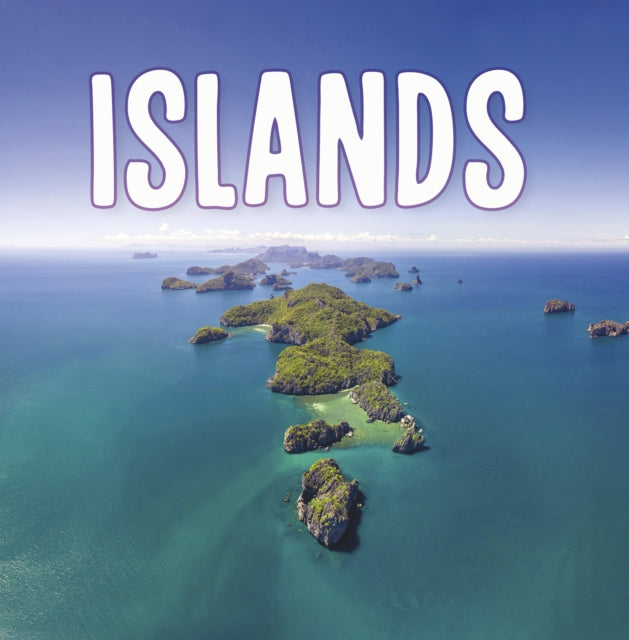
Water surrounds all islands, but volcanoes and corals also shape them. Some islands are old, while others are new.
\n Format: Paperback / softback
\n Length: 24 pages
\n Publication date: 22 July 2021
\n Publisher: Capstone Global Library Ltd
\n
All islands, magnificent landforms that grace our planet, are encircled by the vast expanse of water. However, there is a fascinating depth to these remarkable creations that extends beyond their mere presence. Volcanoes, powerful forces of nature, have played a significant role in shaping some islands, while corals have contributed to the formation of others. These islands span a wide range of ages, from ancient relics to young wonders, each with its unique characteristics and story.
For beginning readers, embarking on a journey to explore the world of islands is an exciting adventure. In this comprehensive guide, we aim to provide all the essential information you need to know about these captivating landforms. Let us delve into their characteristics, formation processes, and the diverse locations where they can be found throughout our planet.
Islands are diverse in size, shape, and composition. They can range from small, isolated patches of land to vast continents, such as Greenland and Australia. Islands can also be classified based on their geological features, such as volcanic islands, coral islands, and atoll islands. Each type of island has its own distinct characteristics and formation processes.
Volcanic islands, for instance, are formed by the eruption of molten rock from the Earth's mantle. These islands are characterized by rugged terrain, steep slopes, and volcanic activity. Volcanic islands are often rich in minerals and resources, making them valuable to humans. Examples of volcanic islands include Hawaii, Iceland, and Japan.
Coral islands, on the other hand, are formed by the growth of coral reefs, which are colonies of tiny organisms called coral polyps. Coral reefs are typically found in warm, tropical waters and provide a habitat for a wide variety of marine life. Coral islands are often known for their beautiful beaches, clear waters, and vibrant coral reefs. Examples of coral islands include the Maldives, the Great Barrier Reef, and the Seychelles.
Atoll islands, also known as ring islands, are formed by the accumulation of coral debris and sand around a central lagoon. Atoll islands are typically located in the Pacific and Indian Oceans and are known for their clear waters, beautiful beaches, and abundant marine life. Examples of atoll islands include the Maldives, the Galapagos Islands, and the Cook Islands.
In addition to their geological features, islands can also be classified based on their environmental conditions. For example, some islands are located in the Arctic Circle, where they experience extreme cold and harsh winters. Others are located in the tropics, where they experience warm, humid climates and abundant rainfall.
Islands also play a crucial role in the global ecosystem. They provide a habitat for a wide variety of plant and animal species, many of which are unique to these environments. Islands also serve as important carbon sinks, absorbing and storing carbon dioxide from the atmosphere. This helps to mitigate the effects of climate change and promote a healthy environment.
Exploring the world of islands is a fascinating journey that offers endless opportunities for discovery and learning. From the rugged landscapes of volcanic islands to the vibrant coral reefs of coral islands, each island has its own unique beauty and charm. By gaining a deeper understanding of these important landforms, we can appreciate the diversity and complexity of our planet and the critical role that islands play in shaping our world.
In conclusion, islands are not just mere landforms surrounded by water. They are dynamic and diverse ecosystems that have been shaped by a combination of geological processes, environmental conditions, and human activities. By exploring the world of islands, we can gain a deeper appreciation for the beauty and importance of these remarkable landforms and the critical role they play in our planet's ecosystem.
Characteristics of Islands:
Islands come in a wide range of sizes, shapes, and compositions, each with its own unique characteristics. Some islands are small and isolated, while others are vast and encompass entire continents. Islands can be classified based on their geological features, such as volcanic islands, coral islands, and atoll islands.
Volcanic islands are formed by the eruption of molten rock from the Earth's mantle. These islands are characterized by rugged terrain, steep slopes, and volcanic activity. Volcanic islands are often rich in minerals and resources, making them valuable to humans. Examples of volcanic islands include Hawaii, Iceland, and Japan.
Coral islands are formed by the growth of coral reefs, which are colonies of tiny organisms called coral polyps. Coral reefs are typically found in warm, tropical waters and provide a habitat for a wide variety of marine life. Coral islands are often known for their beautiful beaches, clear waters, and vibrant coral reefs. Examples of coral islands include the Maldives, the Great Barrier Reef, and the Seychelles.
Atoll islands, also known as ring islands, are formed by the accumulation of coral debris and sand around a central lagoon. Atoll islands are typically located in the Pacific and Indian Oceans and are known for their clear waters, beautiful beaches, and abundant marine life. Examples of atoll islands include the Maldives, the Galapagos Islands, and the Cook Islands.
In addition to their geological features, islands can also be classified based on their environmental conditions. For example, some islands are located in the Arctic Circle, where they experience extreme cold and harsh winters. Others are located in the tropics, where they experience warm, humid climates and abundant rainfall.
Islands also play a crucial role in the global ecosystem. They provide a habitat for a wide variety of plant and animal species, many of which are unique to these environments. Islands also serve as important carbon sinks, absorbing and storing carbon dioxide from the atmosphere. This helps to mitigate the effects of climate change and promote a healthy environment.
Formation of Islands:
The formation of islands is a complex process that involves a combination of geological processes, environmental conditions, and human activities. Volcanic islands, for instance, are formed by the eruption of molten rock from the Earth's mantle. The molten rock cools and solidifies, forming a new landmass that rises above the ocean surface. Over time, the landmass continues to grow and erode, forming a volcanic island.
Coral islands, on the other hand, are formed by the growth of coral reefs, which are colonies of tiny organisms called coral polyps. Coral reefs are typically found in warm, tropical waters and provide a habitat for a wide variety of marine life. As the coral polyps grow and die, they accumulate and form a reef, which eventually rises above the ocean surface and forms a coral island.
Atoll islands, also known as ring islands, are formed by the accumulation of coral debris and sand around a central lagoon. As the coral debris and sand accumulate, they form a ring-shaped island that is surrounded by a lagoon. Over time, the lagoon may fill with sediment, forming a larger island.
In addition to these natural processes, human activities can also play a role in the formation of islands. For example, islands can be created through the construction of artificial islands, such as oil rigs or floating cities. Islands can also be created through the dredging of sand and sediment from the ocean floor, which can be used to create new landforms or expand existing ones.
Location of Islands:
Islands can be found throughout the world, in a wide range of environments and climates. Some islands are located in the Arctic Circle, where they experience extreme cold and harsh winters. Others are located in the tropics, where they experience warm, humid climates and abundant rainfall.
Islands can also be found in a variety of oceanic environments, including the Pacific Ocean, the Atlantic Ocean, the Indian Ocean, and the Southern Ocean. Each ocean has its own unique characteristics and features, which can influence the formation and characteristics of the islands that are located within it.
In conclusion, islands are not just mere landforms surrounded by water. They are dynamic and diverse ecosystems that have been shaped by a combination of geological processes, environmental conditions, and human activities. By exploring the world of islands, we can gain a deeper appreciation for the beauty and importance of these remarkable landforms and the critical role they play in our planet's ecosystem.
\n Weight: 86g\n
Dimension: 199 x 202 x 5 (mm)\n
ISBN-13: 9781398202771\n \n
This item can be found in:
UK and International shipping information
UK and International shipping information
UK Delivery and returns information:
- Delivery within 2 - 3 days when ordering in the UK.
- Shipping fee for UK customers from £2.39. Fully tracked shipping service available.
- Returns policy: Return within 30 days of receipt for full refund.
International deliveries:
Shulph Ink now ships to Australia, Belgium, Canada, France, Germany, Ireland, Italy, India, Luxembourg Saudi Arabia, Singapore, Spain, Netherlands, New Zealand, United Arab Emirates, United States of America.
- Delivery times: within 5 - 10 days for international orders.
- Shipping fee: charges vary for overseas orders. Only tracked services are available for most international orders. Some countries have untracked shipping options.
- Customs charges: If ordering to addresses outside the United Kingdom, you may or may not incur additional customs and duties fees during local delivery.