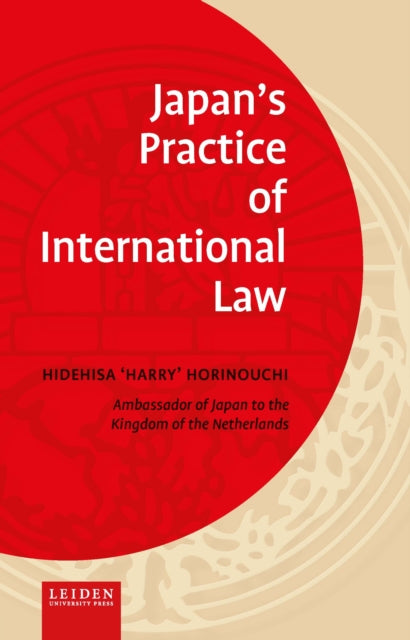
Hidehisa Horinouchi
Japan’s Practice of International Law
Japan’s Practice of International Law
💎 Earn 102 Points (£1.02) on this item.
YOU SAVE £3.51
- Condition: Brand new
- UK Delivery times: Usually arrives within 2 - 3 working days
- UK Shipping: Fee starts at £2.39. Subject to product weight & dimension
Bulk ordering. Want 15 or more copies? Get a personalised quote and bigger discounts. Learn more about bulk orders.
Couldn't load pickup availability
- More about Japan’s Practice of International Law
Diplomacy is a series of crises, and international law is the navigational beacon for a nation. This book is a collection of articles on six selected international legal issues concerning Japan, addressing various issues such as self-defence, post-war legal issues, chemical weapons, the law of the sea, consular immunities, and hijacking. It provides a legal documentary through which the reader can look into the minds of Japanese officials challenged by one crisis after another.
Format: Paperback / softback
Length: 135 pages
Publication date: 01 September 2022
Publisher: Leiden University Press
Diplomacy is a complex and dynamic field that involves navigating a series of crises and challenges. International law serves as the navigational beacon for nations, providing a framework for peaceful coexistence and resolving disputes. This book, a collection of articles on six selected international legal issues concerning Japan, offers a valuable insight into the country's legal landscape.
The first article, titled "Self-Defense and International Law," explores Japan's approach to self-defense in the context of international law. It discusses the legal basis for Japan's right to self-defense, including the United Nations Charter and the principles of international law. The article also examines the challenges that Japan faces in exercising its right to self-defense, such as the potential for escalation and the need to comply with international humanitarian law.
The second article, "Post-War Legal Issues," examines the legal consequences of Japan's defeat in World War II. It discusses the legal framework for reparations, war crimes trials, and the establishment of the International Criminal Court. The article also explores the challenges that Japan faces in implementing these legal obligations, such as the lack of cooperation from other countries.
The third article, "Chemical Weapons and International Law," examines the legal implications of the use of chemical weapons. It discusses the international conventions and treaties that prohibit the use of chemical weapons, as well as the legal mechanisms for enforcing these prohibitions. The article also examines the challenges that Japan faces in implementing these legal obligations, such as the lack of access to chemical weapons.
The fourth article, "The Law of the Sea and International Law," examines the legal framework for the use of the sea and the protection of marine resources. It discusses the international conventions and treaties that govern the use of the sea, as well as the legal mechanisms for enforcing these obligations. The article also examines the challenges that Japan faces in implementing these legal obligations, such as the need to protect its exclusive economic zone.
The fifth article, "Consular Immunities and International Law," examines the legal status of consular officials and the protection they receive under international law. It discusses the international conventions and treaties that govern consular immunities, as well as the legal mechanisms for enforcing these obligations. The article also examines the challenges that Japan faces in implementing these legal obligations, such as the need to protect its diplomatic missions.
The sixth article, "Hijacking and International Law," examines the legal framework for the prevention and prosecution of hijacking. It discusses the international conventions and treaties that govern hijacking, as well as the legal mechanisms for enforcing these obligations. The article also examines the challenges that Japan faces in implementing these legal obligations, such as the need to prevent hijacking and to prosecute hijackers.
Overall, this book provides a comprehensive and insightful overview of Japan's legal landscape. It highlights the challenges that Japan faces in implementing international law and the efforts that the country has made to address these challenges. The articles are written by experts in the field and provide a wealth of information and analysis.
In conclusion, this book is a valuable resource for anyone interested in international law and the legal landscape of Japan. It provides a comprehensive and insightful overview of the country's legal issues and the efforts that the country has made to address these challenges. The articles are written by experts in the field and provide a wealth of information and analysis. Whether you are a student, a lawyer, or a policymaker, this book will help you to better understand the legal issues that affect Japan and the world.
Weight: 178g
Dimension: 135 x 211 x 10 (mm)
ISBN-13: 9789087283964
This item can be found in:
UK and International shipping information
UK and International shipping information
UK Delivery and returns information:
- Delivery within 2 - 3 days when ordering in the UK.
- Shipping fee for UK customers from £2.39. Fully tracked shipping service available.
- Returns policy: Return within 30 days of receipt for full refund.
International deliveries:
Shulph Ink now ships to Australia, Belgium, Canada, France, Germany, Ireland, Italy, India, Luxembourg Saudi Arabia, Singapore, Spain, Netherlands, New Zealand, United Arab Emirates, United States of America.
- Delivery times: within 5 - 10 days for international orders.
- Shipping fee: charges vary for overseas orders. Only tracked services are available for most international orders. Some countries have untracked shipping options.
- Customs charges: If ordering to addresses outside the United Kingdom, you may or may not incur additional customs and duties fees during local delivery.