Eitan Oren
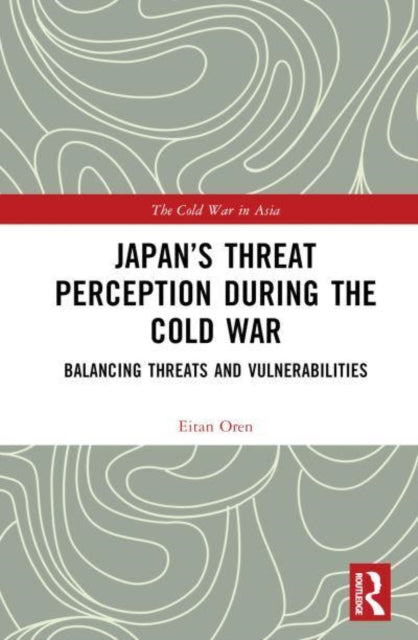
Japan's Threat Perception during the Cold War: A Psychological Account
Japan's Threat Perception during the Cold War: A Psychological Account
💎 Earn 689 Points (£6.89) on this item.
We can order this item for you. Delivery usually takes about 4 to 6 weeks.
This item is not held in our immediate stock. We will order it for you after checkout.
Estimated delivery: About 4 to 6 weeks
YOU SAVE £8.18
- Condition: Brand new
- UK Delivery times: Usually arrives within 2 - 3 working days
- UK Shipping: Fee starts at £3.89. Subject to product weight & dimension
Bulk ordering. Want 15 or more copies? Get a personalised quote and bigger discounts. Learn more about bulk orders.
Couldn't load pickup availability
- More about Japan's Threat Perception during the Cold War: A Psychological Account
Oren examines Japan's threat perception during the Cold War, challenging the notion that they were shielded from threats due to American military protection. He shows how security threats pervaded Japanese strategic thinking, providing valuable insights into Japan's evolution and strategic calculus in the current era of rivalry between China and the US.
Format: Hardback
Length: 142 pages
Publication date: 10 February 2023
Publisher: Taylor & Francis Ltd
Oren delves into a comprehensive re-examination of Japan's threat perception during the initial two decades of the Cold War, utilizing a diverse array of source materials, many of which were previously unavailable in English or have only recently been declassified. It is a commonly held belief that during this period, Japan was largely protected from external threats due to the American military umbrella, the regional balance of power, Japan's geographical isolation, and the domestic reluctance towards militarism. Oren challenges this notion, revealing how security concerns permeated Japanese strategic thinking during this era.
By dismantling this misconception, Oren provides valuable insights into how Japan's threat perception has evolved both during and after the Cold War, and enhances our understanding of Tokyo's strategic calculations in the current context of the rivalry between China and the United States. This book holds immense value for scholars of Japanese history and contemporary international relations alike.
The book explores a range of topics, including Japan's perception of the Soviet Union and the United States, the development of Japanese military capabilities, and the role of ideology in shaping Japanese security policy. Oren utilizes a wealth of primary sources, including government documents, military reports, and personal memoirs, to provide a detailed and nuanced account of Japan's security challenges during the Cold War.
One of the key findings of the book is that Japan's threat perception was not limited to traditional military threats. Oren argues that Japan also considered economic, political, and cultural factors as potential threats to its national security. For example, Japan was concerned about the spread of communism and the influence of the Soviet Union in Asia, and it also developed a strong military presence in order to protect its economic interests in the region.
Another important aspect of the book is its analysis of the role of ideology in shaping Japanese security policy. Oren argues that Japan's post-World War II ideology, which emphasized the importance of peace, stability, and cooperation, played a significant role in shaping its security policy during the Cold War. However, as the Soviet Union and the United States became increasingly competitive, Japan's ideology began to evolve, and it became more willing to assert its national interests through military means.
The book also provides a valuable insight into the internal dynamics of Japanese politics and society during the Cold War. Oren explores the role of the military, the government, and the public in shaping Japanese security policy, and he shows how these different actors often had conflicting perspectives and priorities. This complexity adds to the difficulty of understanding Japan's security policy during this period.
Overall, Oren's book is a significant contribution to the study of Japanese history and contemporary international relations. It provides a detailed and nuanced account of Japan's threat perception during the Cold War, and it challenges the widely held misconception that Japan was largely shielded from external threats. By examining the various factors that shaped Japan's security policy, the book enables us to better understand the complex dynamics of Japan's strategic calculus in the current international environment.
Weight: 348g
Dimension: 162 x 242 x 16 (mm)
ISBN-13: 9781032148298
UK and International shipping information
UK and International shipping information
We deliver throughout the United Kingdom and to 128 countries and territories worldwide, including the United States, Australia, Canada, Germany, Spain and France.