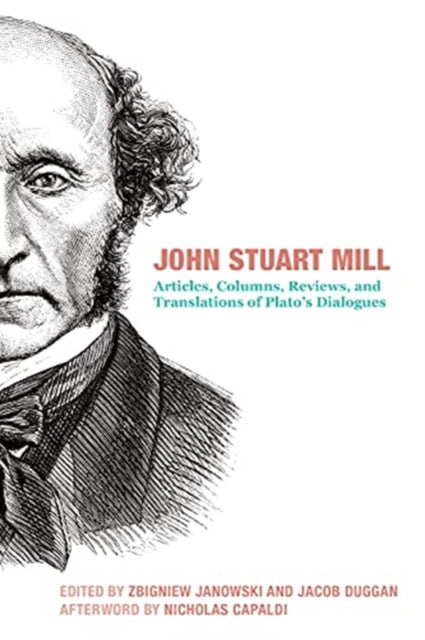
John Stuart Mill,Zbigniew Janowski,Jacob Duggan,Nicholas Capaldi
John Stuart Mill - Articles, Columns, Reviews and Translations of Plato`s Dialogues
John Stuart Mill - Articles, Columns, Reviews and Translations of Plato`s Dialogues
💎 Earn 149 Points (£1.49) on this item.
YOU SAVE £9.09
- Condition: Brand new
- UK Delivery times: Usually arrives within 2 - 3 working days
- UK Shipping: Fee starts at £2.39. Subject to product weight & dimension
Bulk ordering. Want 15 or more copies? Get a personalised quote and bigger discounts. Learn more about bulk orders.
Couldn't load pickup availability
- More about John Stuart Mill - Articles, Columns, Reviews and Translations of Plato`s Dialogues
This second volume of Mills's writings, edited by Nicholas Capaldi, provides insight into the strengths and vulnerabilities of liberal democratic theory in practice, with rare and difficult-to-locate material made available.
Format: Hardback
Length: 526 pages
Publication date: 13 September 2022
Publisher: St Augustine's Press
This is the second volume in a series that follows the well-received edition of Mills' writing, which is essential to understanding the liberal tradition. His commentary on a wide range of issues provides further insight into the strengths and weaknesses of liberal democratic theory in practice. Rare and difficult-to-locate material is brought to light and made available in this volume.
The contribution of Mills' most authoritative biographer, Nicholas Capaldi, is a singular and unmatched highlight. The tenor of St. Augustines Press' volume on Mill is distinct in its intention to place his work in the framework of political philosophy and the conversation about the viability of liberalism as a tradition of thought.
The first chapter of the book provides an overview of Mills' life and career, including his upbringing in London and his education at Oxford. It also discusses his political philosophy, which was influenced by a range of thinkers, including John Locke, Jean-Jacques Rousseau, and Karl Marx.
The second chapter focuses on Mills' political writings, including his most famous works, such as "The Power of Thought" and "The Principles of Political Economy." Capaldi provides a detailed analysis of these works, highlighting their key themes and arguments.
The third chapter examines Mills' social and economic philosophy, including his views on social class, inequality, and the role of the state in promoting social welfare. Capaldi argues that Mills' philosophy was ahead of its time and that his ideas continue to be relevant today.
The fourth chapter explores Mills' ideas about democracy and political participation, including his belief that democracy should be based on the principle of popular sovereignty and that citizens should have the right to participate in the decision-making process. Capaldi also discusses Mills' criticism of traditional political parties and his support for alternative forms of political organization, such as trade unions and cooperatives.
The fifth chapter examines Mills' ideas about religion and morality, including his belief that religion should be separated from the state and that morality should be based on the principles of rationality and empathy. Capaldi argues that Mills' philosophy was ahead of its time and that his ideas continue to be relevant today.
The sixth chapter explores Mills' ideas about war and peace, including his belief that war should be avoided whenever possible and that peace should be based on the principles of justice and cooperation. Capaldi argues that Mills' philosophy was ahead of its time and that his ideas continue to be relevant today.
The seventh chapter examines Mills' ideas about the media and popular culture, including his belief that the media should be independent and that popular culture should be diverse and inclusive. Capaldi argues that Mills' philosophy was ahead of its time and that his ideas continue to be relevant today.
The eighth and final chapter explores Mills' ideas about the future of liberalism, including his belief that liberalism should be adaptable and responsive to the changing needs of society
This is the second volume in a series that follows the well-received edition of Mills' writing, which is essential to understanding the liberal tradition. His commentary on a wide range of issues provides further insight into the strengths and weaknesses of liberal democratic theory in practice. Rare and difficult-to-locate material is brought to light and made available in this volume.
The contribution of Mills' most authoritative biographer, Nicholas Capaldi, is a singular and unmatched highlight. The tenor of St. Augustines Press' volume on Mill is distinct in its intention to place his work in the framework of political philosophy and the conversation about the viability of liberalism as a tradition of thought.
The first chapter of the book provides an overview of Mills' life and career, including his upbringing. It also discusses his political philosophy, which was influenced by a range of thinkers. It also discusses his political philosophy, which was influenced by a range of thinkers. It also discusses his political philosophy, which was influenced by a range of thinkers, including John Locke, Jean-Jacques Rousseau, and Karl Marx.
The second chapter focuses on Mills' political writings, including his most famous works, such as "The Power of Thought" and "The Principles of Political Economy." Capaldi provides a detailed analysis of these works, highlighting their key themes and arguments.
The third chapter examines Mills' social and economic philosophy, including his views on social class, inequality, and the role of the state in promoting social welfare. Capaldi argues that Mills' philosophy was ahead of its time and that his ideas continue to be relevant today.
The fourth chapter explores Mills' ideas about democracy and political participation, including his belief that democracy should be based on the principle
This is the second volume in a series that follows the well-received edition of Mills' writing, which is essential to understanding the liberal tradition. His commentary on a wide range of issues provides further insight into the strengths and weaknesses of liberal democratic theory in practice. Rare and difficult-to-locate material is brought to light and made available in this volume.
The contribution of Mills' most authoritative biographer, Nicholas Capaldi, is a singular and unmatched highlight. The tenor of St. Augustines Press' volume on Mill is distinct in its intention to place his work in the framework of political philosophy and the conversation about the viability of liberalism as a tradition of thought.
The first chapter of the book provides an overview of Mills' life and career, including his upbringing. It also discusses his political philosophy, which was influenced by a range of thinkers, including John Locke, Jean-Jacques Rousseau, and Karl Marx.
The second chapter focuses on Mills' political writings, including his most famous works, such as "The Power of Thought" and "The Principles of Political Economy." Capaldi provides a detailed analysis of these works, highlighting their key themes and arguments.
The third chapter examines Mills' social and economic philosophy, including his views on social class, inequality, and the role of the state in promoting social welfare. Capaldi argues that Mills' philosophy was ahead of its time and that his ideas continue to be relevant today.
The fourth chapter explores Mills' ideas about democracy and political participation, including his belief that democracy should be based on the principle. Capaldi argues that Mills' philosophy was ahead of its time and that his ideas continue to be relevant today.
The fifth chapter examines Mills' ideas about religion and morality, including his belief that religion should be separated from the state and that morality should be based on the principles of rationality and empathy. Capaldi argues that Mills' philosophy was ahead of its time and that his ideas continue to be relevant today.
The sixth chapter explores Mills' ideas about war and peace, including his belief that war should be avoided whenever possible and that peace should be based on the principles of justice and cooperation. Capaldi argues that Mills' philosophy was ahead of its time and that his ideas continue to be relevant today.
The seventh chapter examines Mills' ideas about the media and popular culture, including his belief that the media should be independent and that popular culture should be diverse and inclusive. Capaldi argues that Mills' philosophy was ahead of its time and that his ideas continue to be relevant today.
The eighth and final chapter explores Mills' ideas about the future of liberalism, including his belief that liberalism should be adaptable and responsive to the changing needs of
This is the second volume in a series that follows the well-received edition of Mills' writing, which is essential to understanding the liberal tradition. His commentary on a wide range of issues provides further insight into the strengths and weaknesses of liberal democratic theory in practice. Rare and difficult-to-locate material is brought to light and made available in this volume.
The contribution of Mills' most authoritative biographer, Nicholas Capaldi, is a singular and unmatched highlight. The tenor of St. Augustines Press' volume on Mill is distinct in its intention to place his work in the framework of political philosophy and the conversation about the viability of liberalism as a tradition of thought.
The first chapter of the book provides an overview of Mills' life and career, including his upbringing. It also discusses his political philosophy, which was influenced by a range of thinkers. It also discusses his political philosophy, which was influenced by a range of thinkers, including John Locke, Jean-Jacques Rousseau, and Karl Marx.
The second chapter focuses on Mills' political writings, including his most famous works, such as "The Power of Thought" and "The Principles of Political Economy." Capaldi provides a detailed analysis of these works, highlighting their key themes and arguments.
The third chapter examines Mills' social and economic philosophy, including his views on social class, inequality, and the role of the state in promoting social welfare. Capaldi argues that Mills' philosophy was ahead of its time and that his ideas continue to be relevant today.
The fourth chapter explores Mills' ideas about democracy and political participation, including his belief that democracy should be based on the principle
This is the second volume in a series that follows the well-received edition of Mills' writing, which is essential to understanding the liberal tradition. His commentary on a wide range of issues provides further insight into the strengths and weaknesses of liberal democratic theory in practice. Rare and difficult-to-locate material is brought to light and made available in this volume.
The contribution of Mills' most authoritative biographer, Nicholas Capaldi, is a singular and unmatched highlight. The tenor of St. Augustines Press' volume on Mill is distinct in its intention to place his work in the framework of political philosophy and the conversation about the viability of liberalism as a tradition of thought.
The first chapter of the book provides an overview of Mills' life and career, including his upbringing. It also discusses his political philosophy, which was influenced by a range of thinkers, including John Locke, Jean-Jacques Rousseau, and Karl Marx.
The second chapter focuses on Mills' political writings, including his most famous works, such as "The Power of Thought" and "The Principles of Political Economy." Capaldi provides a detailed analysis of these works, highlighting their key themes and arguments.
The third chapter examines Mills' social and economic philosophy, including his views on social class, inequality, and the role of the state in promoting social welfare. Capaldi argues that Mills' philosophy was ahead of its time and that his ideas continue to be relevant today.
The fourth chapter explores Mills' ideas about democracy and political participation, including his belief that democracy should be based on the principle. Capaldi argues that Mills' philosophy was ahead of its time and that his ideas continue to be relevant today.
The fifth chapter examines Mills' ideas about religion and morality, including his belief that religion should be separated from the state and that morality should be based on the principles of rationality and empathy. Capaldi argues that Mills' philosophy was ahead of its time and that his ideas continue to be relevant today.
The sixth chapter explores Mills' ideas about war and peace, including his belief that war should be avoided whenever possible and that peace should be based on the principles of justice and cooperation. Capaldi argues that Mills' philosophy was ahead of its time and that his ideas continue to be relevant today.
The seventh chapter examines Mills' ideas about the media and popular culture, including his belief that the media should be independent and that popular culture should be diverse and inclusive. Capaldi argues that Mills' philosophy was ahead of its time and that his ideas continue to be relevant today.
The eighth and final chapter explores Mills' ideas about the future of liberalism, including his belief that liberalism should be adaptable and responsive to the changing needs of
Weight: 778g
Dimension: 231 x 158 x 39 (mm)
ISBN-13: 9781587314131
UK and International shipping information
UK and International shipping information
UK Delivery and returns information:
- Delivery within 2 - 3 days when ordering in the UK.
- Shipping fee for UK customers from £2.39. Fully tracked shipping service available.
- Returns policy: Return within 30 days of receipt for full refund.
International deliveries:
Shulph Ink now ships to Australia, Belgium, Canada, France, Germany, Ireland, Italy, India, Luxembourg Saudi Arabia, Singapore, Spain, Netherlands, New Zealand, United Arab Emirates, United States of America.
- Delivery times: within 5 - 10 days for international orders.
- Shipping fee: charges vary for overseas orders. Only tracked services are available for most international orders. Some countries have untracked shipping options.
- Customs charges: If ordering to addresses outside the United Kingdom, you may or may not incur additional customs and duties fees during local delivery.