Sumantra Bose
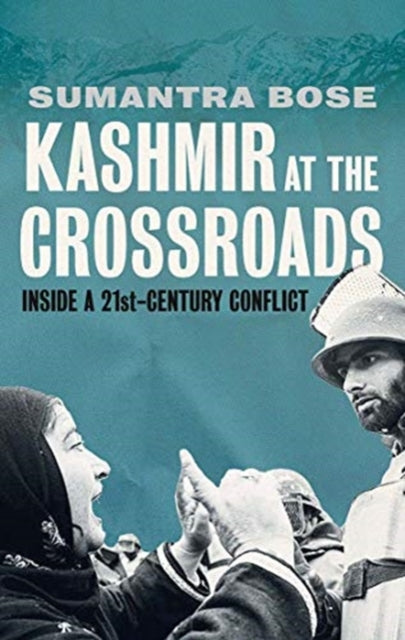
Kashmir at the Crossroads: Inside a 21st-Century Conflict
Kashmir at the Crossroads: Inside a 21st-Century Conflict
💎 Earn 95 Points (£0.95) on this item.
YOU SAVE £0.96
- Condition: Brand new
- UK Delivery times: Usually arrives within 2 - 3 working days
- UK Shipping: Fee starts at £2.39. Subject to product weight & dimension
Bulk ordering. Want 15 or more copies? Get a personalised quote and bigger discounts. Learn more about bulk orders.
Couldn't load pickup availability
- More about Kashmir at the Crossroads: Inside a 21st-Century Conflict
The India-Pakistan dispute over Kashmir has resulted in 60,000 deaths since 1990, and in 2019, the conflict entered a dangerous new phase when the Hindu nationalist government of India repealed the autonomous status of Jammu and Kashmir and divided it into two territories subject to direct rule from New Delhi. Sumantra Bose's book examines the conflict from its origins to the present, exploring the global context and the human tragedy of the people caught in the dispute. He asks whether a compromise settlement is still possible given the ascendancy of Hindu nationalism in India and the complex geopolitical context.
Format: Hardback
Length: 352 pages
Publication date: 19 October 2021
Publisher: Yale University Press
The India-Pakistan conflict over Kashmir is one of the world's most incendiary conflicts, with a death toll of at least 60,000 people since 1990. In 2019, the conflict entered a dangerous new phase when India's Hindu nationalist government, under Narendra Modi, repealed the autonomous status of Jammu and Kashmir and divided it into two territories subject to New Delhi's direct rule. This move was accompanied by mass arrests and lengthy suspension of mobile and internet services.
In this definitive account, Sumantra Bose examines the conflict in Kashmir from its origins to the present volatile juncture. He explores the global context of the current situation, including China's growing role, as well as the human tragedy of the people caught in the bitter dispute. Drawing on three decades of field experience in Kashmir, Bose asks whether a compromise settlement is still possible given the ascendancy of Hindu nationalism in India and the complex geopolitical context.
The India-Pakistan conflict over Kashmir has a long and complex history, dating back to the partition of India in 1947. The region has been a source of tension and conflict between the two countries since then, with both sides claiming sovereignty over the territory. The conflict has been marked by violence, including armed clashes, bombings, and kidnappings, and has caused the displacement of millions of people.
One of the key factors contributing to the conflict is the religious and cultural differences between India and Pakistan. Kashmir is a predominantly Muslim-populated region, and many Muslims believe that they are being persecuted by the Hindu-dominated government in India. This perception has led to a sense of alienation and resentment among the Muslim community, which has been supported by Pakistan's military and political establishment.
Another factor contributing to the conflict is the territorial claims of both India and Pakistan. India claims that Kashmir is an integral part of its territory, while Pakistan claims that it is a disputed territory that should be part of Pakistan. The two countries have fought several wars over the territory, including the 1947-1948 war, the 1965 war, and the 1999 war.
The conflict has also been influenced by the geopolitical interests of other countries, particularly the United States and China. Both countries have a stake in the region due to its strategic location and its potential for oil and gas resources. The United States has supported India in its conflict with Pakistan, providing financial and military assistance, while China has supported Pakistan and has been accused of providing military and economic support to the Pakistani military.
Despite the ongoing conflict, there have been efforts to find a peaceful resolution to the dispute. The most notable of these efforts was the India-Pakistan peace process, which began in 1991 and resulted in the signing of the Shimla Agreement in 1972. The agreement called for the establishment of a Line of Control (LoC) between India and Pakistan, which was intended to prevent further clashes and promote peace and stability in the region.
However, the peace process has faced several challenges, including the rise of Hindu nationalism in India and the rise of militant groups in Pakistan. The Hindu nationalist government in India has been accused of discriminating against Muslims and has been accused of promoting a Hindu-centric agenda in the region. This has led to increased tensions and violence between Muslims and Hindus in the region, and has made it difficult to find a peaceful resolution to the conflict.
Similarly, militant groups in Pakistan, such as the Lashkar-e-Tayyiba and the Jaish-e-Mohammed, have been accused of promoting violence and instability in the region. These groups have been linked to several terrorist attacks in India and have been accused of targeting Muslims and Hindus. This has made it difficult for the peace process to gain traction and has made it difficult for the two countries to engage in meaningful dialogue.
In recent years, the conflict has taken a particularly dangerous turn, with the rise of Narendra Modi's Hindu nationalist government in India. Modi has been accused of promoting a Hindu-centric agenda and has been accused of discriminating against Muslims and other minority groups. This has led to increased tensions and violence between Muslims and Hindus in the region, and has made it difficult for the peace process to gain traction.
In addition, the conflict has been influenced by the global context, particularly the rise of China and the United States as global powers. Both countries have a stake in the region due to its strategic location and its potential for oil and gas resources. The United States has supported India in its conflict with Pakistan, providing financial and military assistance, while China has supported Pakistan and has been accused of providing military and economic support to the Pakistani military.
The conflict has also been influenced by the regional context, particularly the rise of regional powers such as Iran and Saudi Arabia. Both countries have a stake in the region due to its strategic location and its potential for oil and gas resources. The United States has supported India in its conflict with Pakistan, providing financial and military assistance, while China has supported Pakistan and has been accused of providing military and economic support to the Pakistani military.
Despite the ongoing conflict, there are still hopes for a peaceful resolution to the dispute. The most notable of these hopes is the United Nations Security Council Resolution 47, which was adopted in 1948 and calls for the withdrawal of all foreign troops from the region and the holding of a plebiscite to determine the future of Kashmir. However, the resolution has not been implemented, and the conflict continues to simmer.
In conclusion, the India-Pakistan conflict over Kashmir is one of the world's most incendiary conflicts, with a death toll of at least 60,000 people since 1990. The conflict has been marked by violence, displacement, and religious and cultural differences between India and Pakistan. The conflict has also been influenced by the geopolitical interests of other countries, particularly the United States and China. Despite the ongoing conflict, there are still hopes for a peaceful resolution to the dispute, but the challenges to achieving this resolution are significant.
Weight: 750g
Dimension: 165 x 242 x 35 (mm)
ISBN-13: 9780300256871
This item can be found in:
UK and International shipping information
UK and International shipping information
UK Delivery and returns information:
- Delivery within 2 - 3 days when ordering in the UK.
- Shipping fee for UK customers from £2.39. Fully tracked shipping service available.
- Returns policy: Return within 30 days of receipt for full refund.
International deliveries:
Shulph Ink now ships to Australia, Belgium, Canada, France, Germany, Ireland, Italy, India, Luxembourg Saudi Arabia, Singapore, Spain, Netherlands, New Zealand, United Arab Emirates, United States of America.
- Delivery times: within 5 - 10 days for international orders.
- Shipping fee: charges vary for overseas orders. Only tracked services are available for most international orders. Some countries have untracked shipping options.
- Customs charges: If ordering to addresses outside the United Kingdom, you may or may not incur additional customs and duties fees during local delivery.