Elise Gravel
Killer Underwear Invasion!: How to Spot Fake News, Disinformation & Conspiracy Theories
Killer Underwear Invasion!: How to Spot Fake News, Disinformation & Conspiracy Theories
YOU SAVE £3.47
- Condition: Brand new
- UK Delivery times: Usually arrives within 2 - 3 working days
- UK Shipping: Fee starts at £3.89. Subject to product weight & dimension
Bulk ordering. Want 15 or more copies? Get a personalised quote and bigger discounts. Learn more about bulk orders.
Couldn't load pickup availability
- More about Killer Underwear Invasion!: How to Spot Fake News, Disinformation & Conspiracy Theories
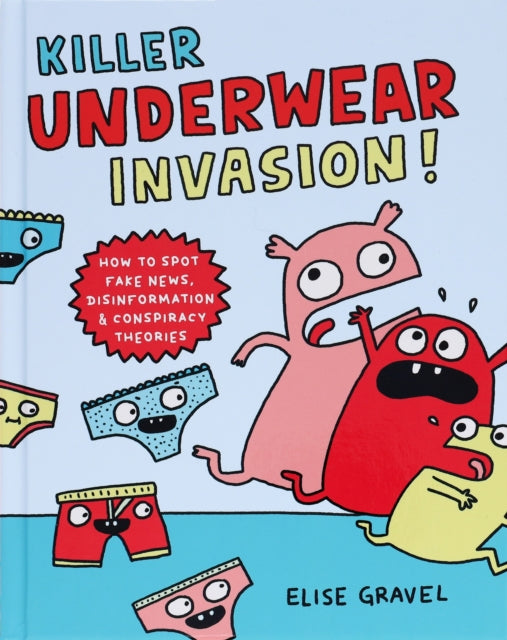
This book teaches young readers how to identify fake news and media literacy skills to interact with global news. With quirky illustrations and a humorous tone, it is a fun and informative way to teach children about this important subject.
Format: Hardback
Length: 104 pages
Publication date: 27 October 2022
Publisher: Chronicle Books
For anyone who has ever encountered outrageous stories like these and wondered whether they were true, this funny, yet informative book breaks down what fake news is, why people spread it, and how to tell what is true and what isn't. With quirky illustrations and a humorous tone, Elise Gravel brings her kid-accessible wit to the increasingly important subject of media literacy and equips younger readers with the skills needed to interact with global news.
Fake news, a term that has become increasingly prevalent in recent years, refers to false or misleading information that is spread widely through various media channels. It can take many forms, from fabricated stories to manipulated images and videos, and often aims to manipulate public opinion or influence political outcomes. The spread of fake news can have serious consequences, including misinformation, confusion, and even harm to individuals and society as a whole. One of the primary reasons why fake news spreads so quickly is the rise of social media and the ease with which information can be shared and disseminated. Social media platforms such as Facebook, Twitter, and Instagram have millions of users, and the algorithms that these platforms use to promote content can amplify false or misleading information. This can lead to a situation where a small number of false stories can be shared millions of times, creating a false perception of reality. Another factor that contributes to the spread of fake news is the lack of media literacy among individuals. Many people are not aware of the techniques used by fake news producers or the importance of fact-checking information before sharing it. This can lead to people taking information at face value, without questioning its accuracy or source. Additionally, the political climate can also play a role in the spread of fake news. In times of uncertainty or crisis, people may be more likely to believe information that aligns with their political beliefs or reinforces their existing biases. This can lead to the spread of false information that can harm the political process and undermine public trust. Despite the challenges posed by fake news, there are steps that individuals and society can take to combat its spread. One of the most important is to develop media literacy skills among individuals. This can include teaching people how to identify false information, how to fact-check information, and how to evaluate the credibility of sources. Additionally, social media platforms and other media outlets can take steps to promote media literacy, such as fact-checking algorithms and labeling false information. Another important step is to promote transparency and accountability in the media. This can include encouraging media outlets to disclose their sources and to fact-check their stories before publishing them. Additionally, governments can implement laws and regulations to prevent the spread of fake news, such as penalties for spreading false information or requiring media outlets to disclose their sources. In conclusion, fake news is a serious issue that can have serious consequences for individuals and society as a whole. It is important to develop media literacy skills, promote transparency and accountability in the media, and take steps to combat the spread of fake news. By doing so, we can create a more informed and trustworthy media environment that can help us make informed decisions and navigate the complex world of global news.
Weight: 488g
Dimension: 242 x 191 x 13 (mm)
ISBN-13: 9781797214917
UK and International shipping information
UK and International shipping information
We deliver throughout the United Kingdom and to 128 countries and territories worldwide, including the United States, Australia, Canada, Germany, Spain and France.