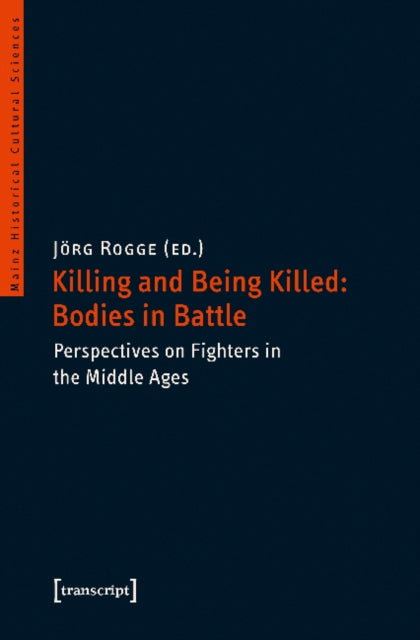
Joerg Rogge
Killing and Being Killed: Bodies in Battle - Perspectives on Fighters in the Middle Ages
Killing and Being Killed: Bodies in Battle - Perspectives on Fighters in the Middle Ages
💎 Earn 140 Points (£1.40) on this item.
We can order this item for you. Delivery usually takes about 4 to 6 weeks.
This item is not held in our immediate stock. We will order it for you after checkout.
Estimated delivery: About 4 to 6 weeks
YOU SAVE £5.92
- Condition: Brand new
- UK Delivery times: Usually arrives within 2 - 3 working days
- UK Shipping: Fee starts at £2.39. Subject to product weight & dimension
Bulk ordering. Want 15 or more copies? Get a personalised quote and bigger discounts. Learn more about bulk orders.
Couldn't load pickup availability
- More about Killing and Being Killed: Bodies in Battle - Perspectives on Fighters in the Middle Ages
Fighters experienced bodily experiences such as wounds, torture, and the risk of death throughout their lifetime, and their bodies were trained, nourished, and prepared for combat. The articles present examples of body techniques of fighters and their perception throughout the Middle Ages, ranging from the Anglo-Scottish borderlands to the Mediterranean World.
Format: Paperback / softback
Length: 272 pages
Publication date: 08 December 2021
Publisher: Transcript Verlag
Fighters throughout history have faced numerous bodily experiences, particularly in violent conflicts. Their bodies were trained, nourished, and prepared for combat, with various techniques and strategies employed to enhance their physical prowess and survival. In this essay, we will explore the various bodily experiences of fighters and their responses to wounds, torture, and the ubiquitous risk of death.
One of the primary bodily experiences of fighters is the training and conditioning of their bodies. Fighters underwent rigorous physical training, including weightlifting, running, and martial arts, to build strength, endurance, and agility. This training was designed to improve their combat skills and increase their chances of victory in battle. In addition to physical training, fighters also received training in tactics, strategy, and leadership, which helped them to work effectively as a team and to make informed decisions in the heat of battle.
Another bodily experience of fighters is the nourishment and preparation of their bodies for combat. Fighters required a high-protein diet to maintain their strength and energy levels, and they often consumed large quantities of meat, fish, and vegetables. In addition to food, fighters also used various supplements and medications to enhance their performance and reduce the risk of injury. For example, some fighters used steroids to increase their muscle mass and strength, while others used painkillers to manage pain and inflammation.
However, the training and preparation of fighters' bodies were not without their risks. Many fighters suffered from injuries, including broken bones, concussions, and even death. These injuries were often the result of intense combat, and they could have long-term consequences for the fighters' health and well-being. In addition to injuries, fighters also faced the risk of torture and other forms of physical abuse. Torture was used as a means of interrogation, punishment, and control, and it could have devastating effects on the mental and physical health of the victims.
Despite the risks and challenges of their bodily experiences, fighters were often able to respond to wounds, torture, and the risk of death in remarkable ways. Many fighters developed a strong sense of resilience and determination, and they were able to push through the pain and suffering to achieve their goals. In some cases, fighters were able to use their injuries as a source of inspiration and motivation, and they continued to fight even after they had been injured.
In addition to the physical experiences of fighters, their bodies were also shaped by the cultural and social context in which they lived. For example, in some cultures, warriors were revered as heroes and were given special privileges and status. In other cultures, warriors were seen as a threat to society and were often persecuted or killed. These cultural and social factors had a significant impact on the way that fighters trained and prepared for combat, and they also had a significant impact on the way that they responded to wounds, torture, and the risk of death.
One of the most significant cultural and social factors that influenced the bodily experiences of fighters was the concept of honor. Honor was a central value in many cultures, and it was often associated with the idea of fighting and dying in battle. Fighters were expected to uphold their honor at all costs, and they were often willing to risk their lives in order to protect their honor or the honor of their family or community. This concept of honor could have both positive and negative consequences for the fighters. On the positive side, honor could inspire fighters to fight bravely and to make sacrifices for their beliefs. On the negative side, honor could lead to violence and aggression, and it could also lead to the mistreatment of others.
Another cultural and social factor that influenced the bodily experiences of fighters was the concept of masculinity. Masculinity was a central value in many cultures, and it was often associated with the idea of strength, power, and aggression. Fighters were expected to embody these qualities, and they were often willing to engage in violent behavior in order to assert their dominance. This concept of masculinity could have both positive and negative consequences for the fighters. On the positive side, masculinity could inspire fighters to be courageous and to take risks in order to achieve their goals. On the negative side, masculinity could lead to violence and aggression, and it could also lead to the mistreatment of others.
In addition to the cultural and social factors that influenced the bodily experiences of fighters, there were also technological factors that had a significant impact on their training and preparation for combat. For example, the development of firearms and other weapons had a significant impact on the way that battles were fought. Firearms allowed fighters to engage in long-range combat, and they also made it easier for them to kill their opponents. However, firearms also had a significant impact on the way that fighters were injured. Firearms were often inaccurate, and they could cause serious injuries to the fighters who were using them.
In response to the risks and challenges of their bodily experiences, fighters developed a range of strategies and techniques to protect themselves and to improve their chances of survival. One of the most important strategies was the use of armor. Armor was used to protect fighters from injury, and it was often made from a variety of materials, including leather, metal, and cloth. Armor could be heavy and cumbersome, but it was often necessary in order to protect fighters from the weapons of their opponents.
In addition to armor, fighters also developed a range of weapons and tactics to improve their combat skills. For example, some fighters used swords, while others used bows and arrows. Some fighters used tactics such as ambushes and surprise attacks to catch their opponents off guard.
However, the use of weapons and tactics also had its risks. Weapons and tactics could be used to inflict harm on innocent people, and they could also lead to the mistreatment of others. In response to these risks, fighters developed a code of conduct that emphasized the importance of treating others with respect and dignity.
In addition to the strategies and techniques that fighters used to protect themselves and to improve their chances of survival, they also developed a range of coping mechanisms to deal with the pain and suffering of wounds, torture, and the risk of death. One of the most important coping mechanisms was the use of meditation and mindfulness. Meditation and mindfulness helped fighters to focus their minds and to reduce the stress and anxiety that they were experiencing.
In addition to meditation and mindfulness, fighters also developed a range of social support networks. These networks included their families, their friends, and their fellow fighters. These networks provided fighters with a sense of belonging and support, and they helped them to cope with the challenges of their lives.
However, the social support networks of fighters were not without their challenges. Many fighters were isolated from their families and their communities, and they were often unable to access the resources that they needed to cope with their injuries and their mental health. In response to these challenges, some organizations and individuals have worked to provide support to fighters and to raise awareness of the issues that they face.
In conclusion, fighters throughout history have faced numerous bodily experiences, particularly in violent conflicts. Their bodies were trained, nourished, and prepared for combat, with various techniques and strategies employed to enhance their physical prowess and survival. Despite the risks and challenges of their bodily experiences, fighters were often able to respond to wounds, torture, and the risk of death in remarkable ways. The cultural and social context in which they lived, the concept of honor, the concept of masculinity, and technological factors all had a significant impact on the way that fighters trained and prepared for combat, and they also had a significant impact on the way that they responded to wounds, torture, and the risk of death. By understanding the bodily experiences of fighters, we can gain a deeper understanding of the human experience and the challenges that we face in our world.
Weight: 372g
Dimension: 150 x 226 x 16 (mm)
ISBN-13: 9783837637830
This item can be found in:
UK and International shipping information
UK and International shipping information
UK Delivery and returns information:
- Delivery within 2 - 3 days when ordering in the UK.
- Shipping fee for UK customers from £2.39. Fully tracked shipping service available.
- Returns policy: Return within 30 days of receipt for full refund.
International deliveries:
Shulph Ink now ships to Australia, Belgium, Canada, France, Germany, Ireland, Italy, India, Luxembourg Saudi Arabia, Singapore, Spain, Netherlands, New Zealand, United Arab Emirates, United States of America.
- Delivery times: within 5 - 10 days for international orders.
- Shipping fee: charges vary for overseas orders. Only tracked services are available for most international orders. Some countries have untracked shipping options.
- Customs charges: If ordering to addresses outside the United Kingdom, you may or may not incur additional customs and duties fees during local delivery.