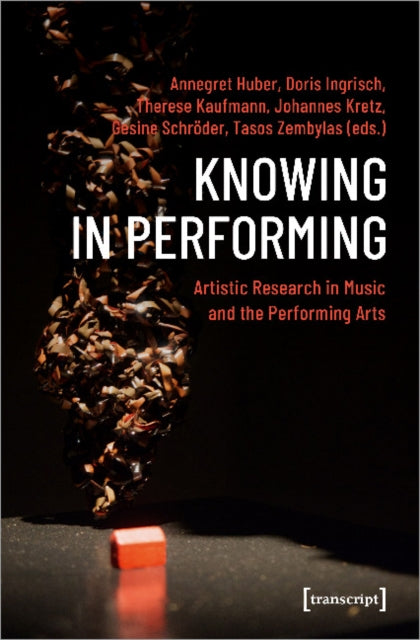
Annegret Huber,Doris Ingrisch,Therese Kaufmann,Johannes Kretz,Gesine Schroeder
Knowing in Performing - Artistic Research in Music and the Performing Arts
Knowing in Performing - Artistic Research in Music and the Performing Arts
💎 Earn 185 Points (£1.85) on this item.
We can order this item for you. Delivery usually takes about 4 to 6 weeks.
This item is not held in our immediate stock. We will order it for you after checkout.
Estimated delivery: About 4 to 6 weeks
YOU SAVE £7.83
- Condition: Brand new
- UK Delivery times: Usually arrives within 2 - 3 working days
- UK Shipping: Fee starts at £3.89. Subject to product weight & dimension
Bulk ordering. Want 15 or more copies? Get a personalised quote and bigger discounts. Learn more about bulk orders.
Couldn't load pickup availability
- More about Knowing in Performing - Artistic Research in Music and the Performing Arts
Performing can be transformed into cognition through dynamic processes of artistic knowledge production in music and the performing arts, which involve processual, embodied, and tacit knowledge development from performative practices. This anthology provides insights for researchers, artists, and decision-makers in the field of artistic research.
Format: Paperback / softback
Length: 210 pages
Publication date: 03 December 2021
Publisher: Transcript Verlag
The transformation of performing into cognition is a fascinating and intricate process that involves the dynamic production of artistic knowledge in music and the performing arts. Understanding the nature of knowledge in performing encompasses the development of processual, embodied, and tacit knowledge through engage in performative practices across various art forms, including music, dance, theater, and film. This anthology serves as a valuable guide for researchers, artists, and decision-makers within and outside the realm of arts universities, highlighting the potential of artistic research as a constantly evolving space for participatory and experimental artistic practices.
In the realm of performing arts, knowledge is not merely acquired through theoretical understanding or academic study. Instead, it emerges through the immersive and experiential nature of artistic practices. Performers engage in a continuous process of learning and adaptation, as they interact with their bodies, other performers, and the audience. Through this interaction, they develop a deep understanding of the nuances and complexities of their art form, which often transcends traditional academic knowledge.
One of the key aspects of knowledge in performing is its embodied nature. Performers often incorporate their physical sensations, emotions, and intuitions into their performances, creating a rich and multi-dimensional experience for the audience. This embodied knowledge is deeply rooted in the performer's body and is intimately connected to their artistic expression. By exploring the relationship between the performer's body and their artistic practice, researchers can gain insights into the processes of knowledge production and transmission.
Another important aspect of knowledge in performing is its tacit nature. Tacit knowledge refers to the kind of knowledge that is difficult to articulate or express verbally. It is often acquired through years of practice, experimentation, and observation. Tacit knowledge is deeply embedded in the performer's body and is often difficult to transfer to others through traditional teaching methods. However, through the use of artistic research methods, such as observation, documentation, and analysis, researchers can uncover and understand the tacit knowledge that exists within performing arts.
The transformation of performing into cognition is not a linear process, but rather a complex and multifaceted one. Performers constantly negotiate between their embodied and tacit knowledge, as they strive to create meaningful and expressive performances. This negotiation often involves a process of experimentation and exploration, as performers try out new techniques, styles, and approaches to their art form. Through this process, they develop new insights and perspectives on their work, which can contribute to the broader field of artistic research.
In conclusion, the transformation of performing into cognition is a fascinating and complex process that involves the dynamic production of artistic knowledge in music and the performing arts. By exploring the field of artistic research as a constantly transforming space for participatory and experimental artistic practices, this anthology points the way forward for researchers, artists, and decision-makers inside and outside universities of the arts. Through the embodiment and tacit nature of knowledge in performing, researchers can gain insights into the processes of knowledge production and transmission, which can ultimately contribute to the advancement of the arts and society as a whole.
Weight: 372g
Dimension: 149 x 224 x 18 (mm)
ISBN-13: 9783837652871
UK and International shipping information
UK and International shipping information
We deliver throughout the United Kingdom and to 128 countries and territories worldwide, including the United States, Australia, Canada, Germany, Spain and France.