Shulph Ink
Laboratory of Her Own: Women and Science in Spanish Culture
Laboratory of Her Own: Women and Science in Spanish Culture
YOU SAVE £17.62
- Condition: Brand new
- UK Delivery times: Usually arrives within 2 - 3 working days
- UK Shipping: Fee starts at £2.39. Subject to product weight & dimension
Bulk ordering. Want 15 or more copies? Get a personalised quote and bigger discounts. Learn more about bulk orders.
Couldn't load pickup availability
- More about Laboratory of Her Own: Women and Science in Spanish Culture
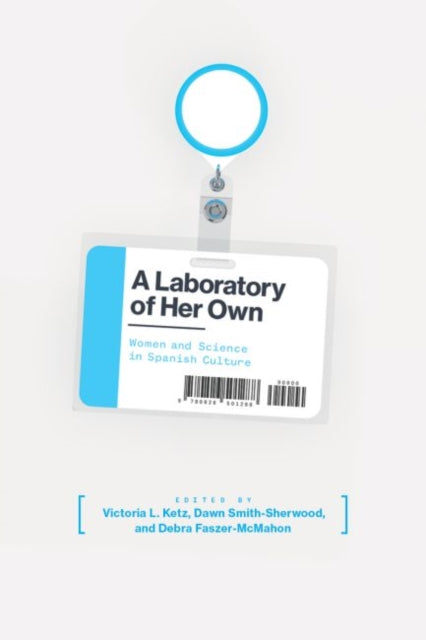
A Laboratory of Her Own explores women's interaction with STEM fields in Spanish culture, highlighting the arts and humanities as avenues for deepening the conversation. It focuses on Spanish female cultural producers' engagement with science and technology, offering diverse representations of the relationships between women, gender, sexuality, race, and the STEM fields.
Format: Paperback / softback
Length: 414 pages
Publication date: 30 December 2020
Publisher: Vanderbilt University Press
A Laboratory of Her Own: Women and Science in Spanish Culture is a comprehensive volume that explores the interaction of women with STEM fields within the context of Spanish cultural production. It highlights the various ways in which the arts and humanities provide avenues for deepening the conversation about women's involvement, exclusion, and representation in the scientific realm. While women's historic exclusion from STEM fields has received increased scrutiny worldwide in recent years, Spanish female cultural producers have long been engaged with science and technology within the cultural realm. Spanish cultural production offers diverse representations of the relationships between women, gender, sexuality, race, and the STEM fields.
The volume focuses on the late nineteenth through the twenty-first centuries and examines STEM topics such as the environment, biodiversity, temporal and spatial theories, medicine and reproductive rights, neuroscience, robotics, artificial intelligence, and quantum physics. These scientific themes and other issues are analyzed in narratives, paintings, poetry, photographs, science fiction, medical literature, translation, newswriting, film, and other forms.
One of the key themes of the volume is the impact of gender norms and political ideologies on women's participation in STEM fields. Spanish cultural production reflects the complex socio-cultural structures that have shaped women's roles in science and technology. For example, during the Spanish nineteenth and twentieth centuries, women were often excluded from higher education and professional opportunities, and their contributions to science and technology were often overlooked or undervalued.
However, Spanish female cultural producers have been working to challenge these norms and ideologies and to promote women's participation in STEM fields. They have created works that explore the experiences of women in science and technology, and that challenge the stereotypes and biases that have been associated with these fields.
One of the most notable examples of this is the work of Spanish artist and scientist Maria Blasco. Blasco is a pioneer in the field of genetics and has made significant contributions to the understanding of cancer and other diseases. Her work has been recognized with numerous awards, and she has been a vocal advocate for women's participation in science and technology.
Another example is the work of Spanish writer and scientist Isabel Allende. Allende is a best-selling author who has written extensively about the intersection of science and literature. Her works include "The House of the Spirits" and "The Island of the Sea Women," which explore the relationship between women and the natural world.
In addition to these individual examples, Spanish cultural production has also been influenced by broader social and political movements. For example, the feminist movement in Spain has played a significant role in promoting women's rights and gender equality. The movement has led to the creation of laws and policies that have made it easier for women to enter STEM fields and to advance in their careers.
However, despite these advances, women still face significant barriers in STEM fields. For example, women are often underrepresented in leadership positions and are paid less than their male counterparts. They are also more likely to be subjected to harassment and discrimination in the workplace.
To address these barriers, Spanish cultural production has been working to promote diversity and inclusion in STEM fields. This has included the creation of programs and initiatives that encourage women to pursue careers in science and technology, and that provide support and resources to those who are already working in these fields.
One of the most notable examples of this is the Women in Science and Technology program at the University of Barcelona. This program provides training and support to women who are interested in pursuing careers in science and technology, and it has helped to increase the number of women in these fields.
In addition to these programs and initiatives, Spanish cultural production has also been used to raise awareness about the importance of women's participation in STEM fields. This has included the creation of films, documentaries, and other media that highlight the contributions of women in science and technology.
For example, the film "Hidden Figures" tells the story of three African-American women who worked as mathematicians at NASA during the Space Race. The film has been praised for its portrayal of the challenges that women faced in the workplace and for its message of empowerment.
Another example is the book "The Beauty of Science" by Maria Blasco. The book explores the beauty of science and the importance of scientific research for society. It has been praised for its accessible writing style and for its ability to inspire young people to pursue careers in science and technology.
In conclusion, A Laboratory of Her Own: Women and Science in Spanish Culture is a comprehensive volume that explores the interaction of women with STEM fields within the context of Spanish cultural production. It highlights the various ways in which the arts and humanities provide avenues for deepening the conversation about women's involvement, exclusion, and representation in the scientific realm. While women's historic exclusion from STEM fields has received increased scrutiny worldwide in recent years, Spanish female cultural producers have long been engaged with science and technology within the cultural realm. Spanish cultural production offers diverse representations of the relationships between women, gender, sexuality, race, and the STEM fields, and it has been used to promote diversity and inclusion in these fields. By continuing to work to promote women's participation in STEM fields, we can help to create a more equitable and sustainable future for all.
Weight: 620g
Dimension: 152 x 229 x 28 (mm)
ISBN-13: 9780826501288
This item can be found in:
UK and International shipping information
UK and International shipping information
UK Delivery and returns information:
- Delivery within 2 - 3 days when ordering in the UK.
- Shipping fee for UK customers from £2.39. Fully tracked shipping service available.
- Returns policy: Return within 30 days of receipt for full refund.
International deliveries:
Shulph Ink now ships to Australia, Belgium, Canada, France, Germany, Ireland, Italy, India, Luxembourg Saudi Arabia, Singapore, Spain, Netherlands, New Zealand, United Arab Emirates, United States of America.
- Delivery times: within 5 - 10 days for international orders.
- Shipping fee: charges vary for overseas orders. Only tracked services are available for most international orders. Some countries have untracked shipping options.
- Customs charges: If ordering to addresses outside the United Kingdom, you may or may not incur additional customs and duties fees during local delivery.