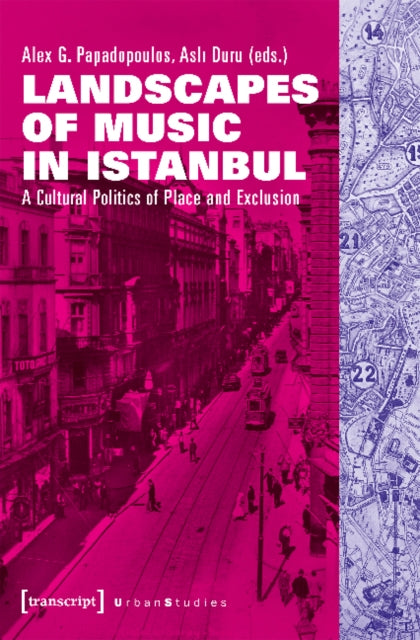
Alex G. Papadopoulos,Asli Duru
Landscapes of Music in Istanbul - A Cultural Politics of Place and Exclusion
Landscapes of Music in Istanbul - A Cultural Politics of Place and Exclusion
💎 Earn 161 Points (£1.61) on this item.
We can order this item for you. Delivery usually takes about 4 to 6 weeks.
This item is not held in our immediate stock. We will order it for you after checkout.
Estimated delivery: About 4 to 6 weeks
YOU SAVE £6.79
- Condition: Brand new
- UK Delivery times: Usually arrives within 2 - 3 working days
- UK Shipping: Fee starts at £2.39. Subject to product weight & dimension
Bulk ordering. Want 15 or more copies? Get a personalised quote and bigger discounts. Learn more about bulk orders.
Couldn't load pickup availability
- More about Landscapes of Music in Istanbul - A Cultural Politics of Place and Exclusion
This volume explores the landscapes of music, community, and exclusion in Istanbul through four case studies: rembetika, Asiks, Zakir/Alevi tradition, and hip-hop.
Format: Paperback / softback
Length: 192 pages
Publication date: 08 December 2021
Publisher: Transcript Verlag
Istanbul is a vibrant city that is home to a rich and diverse range of everyday expressions, including music, place, urban politics, and inclusion/exclusion. This book delves into the intricate landscapes of music, community, and exclusion across a century and a half, offering a comprehensive analysis of these critical aspects of urban life.
The interdisciplinary team of scholars and artists behind this volume brings together a wealth of knowledge and expertise to explore the multifaceted nature of music, community, and exclusion. Through four compelling case studies, they shed light on the diverse musical traditions, cultural practices, and social dynamics that shape Istanbul's urban landscape.
The first case study focuses on the rembetika, a genre of music that originated in the late 19th century in the Ottoman Empire. Rembetika is characterized by its melancholic melodies and lyrics, which often reflect the struggles and hardships of the urban poor. The book explores the rembetika's evolution over the past century and a half, from its humble beginnings in the streets and taverns of Istanbul to its mainstream popularity in the 20th and 21st centuries.
The second case study examines the music of the Asiks, a community of Turkish immigrants who settled in Istanbul in the early 20th century. The Asiks brought with them their own musical traditions, which fused with the local music scene to create a unique blend of sounds and styles. The book explores the Asiks' contributions to Istanbul's music scene, as well as the challenges they faced in maintaining their cultural identity in a rapidly changing city.
The third case study explores the Zakir/Alevi tradition, a religious and cultural tradition that originated in the 13th century in Anatolia. Zakir/Alevi communities are known for their distinctive music, dance, and rituals, which are deeply intertwined with their spiritual beliefs. The book examines the Zakir/Alevi tradition's presence in Istanbul, including its historical roots, its current practices, and its role in shaping the city's cultural landscape.
The fourth case study focuses on hip-hop, a genre of music that emerged in the 1970s in the United States and has since gained popularity around the world. Hip-hop has been particularly influential in Istanbul, where it has been used as a platform for social and political activism, as well as for expressing the experiences of marginalized communities. The book explores the hip-hop scene in Istanbul, including its local artists, producers, and fans, as well as its impact on the city's cultural and social landscape.
In addition to these case studies, the book also includes a series of essays that explore the broader themes of music, community, and exclusion in Istanbul. These essays offer a deeper understanding of the historical, social, and cultural factors that have shaped these expressions, and they provide insights into the challenges and opportunities that arise from their intersection.
Overall, this book is a valuable contribution to the field of urban studies, musicology, and cultural anthropology. It offers a rich and nuanced perspective on the complex dynamics of music, community, and exclusion in Istanbul, and it provides a framework for understanding these phenomena in other urban contexts. By exploring the intersections of music, place, urban politics, and inclusion/exclusion, this book offers a new way exclusion for understanding the complexities of urban life and the ways in which music can play a vital role in shaping our understanding of these phenomena.
Istanbul is a vibrant city that is home to a rich and diverse range of everyday expressions, including music, place, urban politics, and inclusion/exclusion. This book delves into the intricate landscapes of music, community, and exclusion across a century and a half, offering a comprehensive analysis of these critical aspects of urban life.
The interdisciplinary team of scholars and artists behind this volume brings together a wealth of knowledge and expertise to explore the multifaceted nature of music, community, and exclusion. Through four compelling case studies, they shed light on the diverse musical traditions, cultural practices, and social dynamics that shape Istanbul's urban landscape.
The first case study focuses on the rembetika, a genre of music that originated in the late 19th century in the Ottoman Empire. Rembetika is characterized by its melancholic melodies and lyrics, which often reflect the struggles and hardships of the urban poor. The book explores the rembetika's evolution over the past century and a half, from its humble beginnings in the streets and taverns of Istanbul to its mainstream popularity in the 20th and 21st centuries.
The second case study examines the music of the Asiks, a community of Turkish immigrants who settled in Istanbul in the early 20th century. The Asiks brought with them their own musical traditions, which fused with the local music scene to create a unique blend of sounds and styles. The book explores the Asiks' contributions to Istanbul's music scene, as well as the challenges they faced in maintaining their cultural identity in a rapidly changing city.
The third case study explores the Zakir/Alevi tradition, a religious and cultural tradition that originated in the 13th century in Anatolia. Zakir/Alevi communities are known for their distinctive music, dance, and rituals, which are deeply intertwined with their spiritual beliefs. The book examines the Zakir/Alevi tradition's presence in Istanbul, including its historical roots.
The fourth case study focuses on hip-hop, a genre of music that emerged in the 1970s in the United States and has since gained popularity around the world. Hip-hop has been particularly influential in Istanbul, where it has been used as a platform for social and political activism, as well as for expressing the experiences of marginalized communities. The book explores the hip-hop scene in Istanbul, including its local artists, producers, and fans, as well as its impact on the city's cultural and social landscape.
In addition to these case studies, the book also includes a series of essays that explore the broader the broader themes of music, community, and exclusion in Istanbul. These essays offer a deeper understanding of the historical, social, and cultural factors that have shaped these expressions, and they provide insights into the challenges and opportunities that arise from their intersection.
Overall, this book is a valuable contribution to the field of urban studies, musicology, and cultural anthropology. It offers a rich and nuanced perspective on the complex dynamics of music, community, and exclusion in Istanbul, and it provides a framework for understanding these phenomena in other urban contexts. By exploring the intersections of music, place, urban politics, and inclusion/exclusion, this book offers a new understanding of the complexities of urban life and the ways in which music can play a vital role in shaping our understanding of these phenomena.
Weight: 666g
Dimension: 226 x 147 x 15 (mm)
ISBN-13: 9783837633580
This item can be found in:
UK and International shipping information
UK and International shipping information
UK Delivery and returns information:
- Delivery within 2 - 3 days when ordering in the UK.
- Shipping fee for UK customers from £2.39. Fully tracked shipping service available.
- Returns policy: Return within 30 days of receipt for full refund.
International deliveries:
Shulph Ink now ships to Australia, Belgium, Canada, France, Germany, Ireland, Italy, India, Luxembourg Saudi Arabia, Singapore, Spain, Netherlands, New Zealand, United Arab Emirates, United States of America.
- Delivery times: within 5 - 10 days for international orders.
- Shipping fee: charges vary for overseas orders. Only tracked services are available for most international orders. Some countries have untracked shipping options.
- Customs charges: If ordering to addresses outside the United Kingdom, you may or may not incur additional customs and duties fees during local delivery.