Shulph Ink
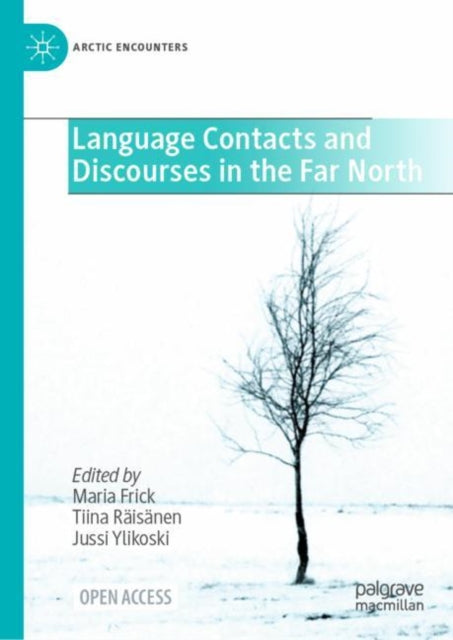
Language Contacts and Discourses in the Far North
Language Contacts and Discourses in the Far North
💎 Earn 185 Points (£1.85) on this item.
We can order this item for you. Delivery usually takes about 4 to 6 weeks.
This item is not held in our immediate stock. We will order it for you after checkout.
Estimated delivery: About 4 to 6 weeks
YOU SAVE £7.83
- Condition: Brand new
- UK Delivery times: Usually arrives within 2 - 3 working days
- UK Shipping: Fee starts at £2.39. Subject to product weight & dimension
Bulk ordering. Want 15 or more copies? Get a personalised quote and bigger discounts. Learn more about bulk orders.
Couldn't load pickup availability
- More about Language Contacts and Discourses in the Far North
The book explores multilingualism in the Far North of Europe, focusing on Finland, Sweden, Norway, and Estonia, with its diverse Uralic and Indo-European languages and changing linguistic situation due to migration and English as the lingua franca. It highlights the dominance of national languages and limited use of indigenous Saami languages, old minority languages, and languages of new immigrants in certain areas or domains.
Format: Hardback
Length: 359 pages
Publication date: 15 December 2023
Publisher: Springer International Publishing AG
The book explores the multilingualism of the Far North of Europe, encompassing Finland, Sweden, Norway, and Estonia, where diverse Uralic and Indo-European languages interact. Migration and English as a lingua franca have transformed the linguistic landscape, with national languages dominating the lives of most inhabitants while indigenous Saami languages, old minority languages, and languages of new immigrants are limited to specific areas or domains. The book delves into the experiences of multilingual individuals, examining how their lives are shaped by the presence of multiple languages.
21st-Century Multilingualism in the Far North of Europe
This open access book sheds light on the multilingualism of the Far North of Europe, encompassing Finland, Sweden, Norway, and Estonia. These countries are characterized by multifaceted contacts between many Uralic and Indo-European languages, resulting in a rich and diverse linguistic landscape. Migration and English as the lingua franca have played a significant role in shaping the linguistic situation, with national languages dominating the lives of most inhabitants while indigenous Saami languages, old minority languages, and languages of new immigrants are limited to certain areas or domains. This volume takes a close look at multilingual individuals and discusses how their lives are affected by different languages.
The National Languages Dominate the Life of Most Inhabitants
The national languages of Finland, Sweden, Norway, and Estonia are the primary languages spoken by the majority of the population. These languages have a long history and are deeply rooted in the culture and identity of the respective countries. They are used in all aspects of daily life, including education, government, business, and social interactions. The national languages are also the official languages of these countries, which means that they are used in legal and administrative proceedings. However, the use of indigenous Saami languages, old minority languages, and the languages of new immigrants is limited to certain areas or domains.
Migration and English as the Lingua Franca
Migration has played a significant role in the multilingualism of the Far North of Europe. Many people from different parts of the world have moved to these countries in search of work, education, or a better life. This has led to the introduction of new languages into the region, including English, which has become the lingua franca in many areas. English is used in business, education, and government, and it has also become the language of choice for many immigrants. However, the use of English as the lingua franca has also led to the decline of some indigenous languages, as many people prefer to speak English rather than their native language.
Indigenous Saami Languages, Old Minority Languages, and Languages of New Immigrants
Indigenous Saami languages are spoken by the indigenous people of the Far North of Europe, including the Sami people of Finland, Sweden, Norway, and Russia. These languages have a rich history and are deeply rooted in the culture and identity of the respective communities. However, the use of indigenous Saami languages is limited to certain areas or domains, such as the Sami homelands in Finland, Sweden, and Norway. Old minority languages are also spoken in these countries, including Finnish, Swedish, and Norwegian, which are the official languages of Finland, Sweden, and Norway. These languages are used in certain areas or domains, such as education and government, but they are not widely spoken by the general population. The languages of new immigrants are also spoken in these countries, including Arabic, Chinese, and Spanish, among others. These languages are used by immigrants who have recently arrived in the country and are not widely spoken by the general population.
The Impact of Multilingualism on Individuals
Multilingualism has a significant impact on individuals. It can enhance cognitive development, improve communication skills, and increase cultural awareness. However, it can also be challenging for individuals to navigate different languages and cultures. Multilingual individuals may face difficulties in accessing education, government services, and the job market, and they may also experience discrimination or prejudice based on their language. To address these challenges, governments and organizations are working to promote multilingualism and to provide language learning opportunities for individuals. This can include language classes, language exchange programs, and the use of language technologies.
Conclusion
In conclusion, the Far North of Europe is a region with a rich and diverse linguistic landscape. Migration and English as the lingua franca have played a significant role in shaping the linguistic situation, with national languages dominating the lives of most inhabitants while indigenous Saami languages, old minority languages, and languages of new immigrants are limited to certain areas or domains. Multilingualism has a significant impact on individuals, and governments and organizations are working to promote multilingualism and to provide language learning opportunities for individuals. By doing so, we can create a more inclusive and diverse society that values and respects the diversity of languages and cultures.
Dimension: 210 x 148 (mm)
ISBN-13: 9783031429781
Edition number: 1st ed. 2023
This item can be found in:
UK and International shipping information
UK and International shipping information
UK Delivery and returns information:
- Delivery within 2 - 3 days when ordering in the UK.
- Shipping fee for UK customers from £2.39. Fully tracked shipping service available.
- Returns policy: Return within 30 days of receipt for full refund.
International deliveries:
Shulph Ink now ships to Australia, Belgium, Canada, France, Germany, Ireland, Italy, India, Luxembourg Saudi Arabia, Singapore, Spain, Netherlands, New Zealand, United Arab Emirates, United States of America.
- Delivery times: within 5 - 10 days for international orders.
- Shipping fee: charges vary for overseas orders. Only tracked services are available for most international orders. Some countries have untracked shipping options.
- Customs charges: If ordering to addresses outside the United Kingdom, you may or may not incur additional customs and duties fees during local delivery.