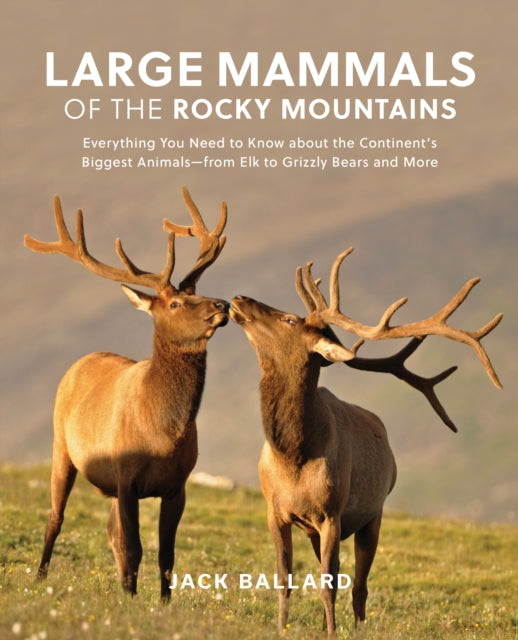
Jack Ballard
Large Mammals of the Rocky Mountains: Everything You Need to Know about the Continent's Biggest Animals-from Elk to Grizzly Bears and More
Large Mammals of the Rocky Mountains: Everything You Need to Know about the Continent's Biggest Animals-from Elk to Grizzly Bears and More
💎 Earn 138 Points (£1.38) on this item.
YOU SAVE £2.32
- Condition: Brand new
- UK Delivery times: Usually arrives within 2 - 3 working days
- UK Shipping: Fee starts at £2.39. Subject to product weight & dimension
Bulk ordering. Want 15 or more copies? Get a personalised quote and bigger discounts. Learn more about bulk orders.
Couldn't load pickup availability
- More about Large Mammals of the Rocky Mountains: Everything You Need to Know about the Continent's Biggest Animals-from Elk to Grizzly Bears and More
The book provides in-depth information about big mammals of the Rocky Mountains, including their habitats, diets, behaviors, and more, with over 400 full-color photographs.
Format: Paperback / softback
Length: 440 pages
Publication date: 01 July 2018
Publisher: Rowman & Littlefield
The Rocky Mountains are home to a diverse array of large mammals, each with its unique characteristics and behaviors. In this comprehensive guide, we will explore the fascinating world of elk, grizzly bears, wolves, bison, black bears, moose, bighorn sheep, mountain lions, and whitetail deer.
Elk, also known aswapiti, are the largest members of the deer family and are native to the Rocky Mountains. They are known for their impressive antlers, which can grow up to three feet in length. Elk are herbivores and feed on a variety of plants, including grasses, sedges, and wildflowers. They are highly social animals and often gather in large herds, which can number in the thousands. Elk are also known for their distinctive calls, which include a lowing sound and a bleating sound.
Grizzly bears, also known as grizzlies, are the largest terrestrial carnivores in North America. They are native to the Rocky Mountains and are known for their powerful jaws and keen sense of smell. Grizzly bears are apex predators and feed on a variety of animals, including elk, deer, and bison. They are also known for their aggressive behavior and are capable of attacking humans if they feel threatened. Grizzly bears are important for maintaining the balance of ecosystems in the Rocky Mountains and are protected under the Endangered Species Act.
Wolves are also native to the Rocky Mountains and are important for maintaining the balance of ecosystems. They are carnivores and feed on a variety of animals, including elk, deer, and bison. Wolves are highly social animals and often travel in packs, which can number in the hundreds. They are also known for their distinctive howling sound, which is used to communicate with other members of the pack.
Bison, also known as buffalo, are the largest land mammals in North America. They are native to the Rocky Mountains and are known for their impressive size and strength. Bison are herbivores and feed on a variety of plants, including grasses, sedges, and wildflowers. They are important for maintaining the health of ecosystems in the Rocky Mountains and are often used as a form of livestock management.
Black bears, also known as grizzlies, are the smaller of the two bear species in North America. They are native to the Rocky Mountains and are known for their distinctive black fur and long snout. Black bears are omnivores and feed on a variety of animals, including berries, nuts, and insects. They are also known for their playful behavior and are often seen playing with their cubs.
Moose, also known as elk, are the largest members of the deer family and are native to the Rocky Mountains. They are known for their impressive antlers, which can grow up to six feet in length. Moose are herbivores and feed on a variety of plants, including grasses, sedges, and wildflowers. They are also known for their distinctive odor, which is often described as musky or earthy.
Bighorn sheep, also known as bighorn rams, are native to the Rocky Mountains and are known for their impressive horns. Bighorn sheep are herbivores and feed on a variety of plants, including grasses, sedges, and wildflowers. They are also known for their agility and are able to climb steep slopes and cliffs. Bighorn sheep are important for maintaining the health of ecosystems in the Rocky Mountains and are protected under the Endangered Species Act.
Mountain lions, also known as cougars, are the largest cat species in North America. They are native to the Rocky Mountains and are known for their powerful jaws and keen sense of smell. Mountain lions are apex predators and feed on a variety of animals, including deer, elk, and bison. They are also known for their stealthy behavior and are often able to hunt their prey without being seen.
Whitetail deer, also known as whitetails, are native to the Rocky Mountains and are known for their distinctive white tails. Whitetail deer are herbivores and feed on a variety of plants, including grasses, sedges, and wildflowers. They are also known for their agility and are able to run quickly. Whitetail deer are important for maintaining the health of ecosystems in the Rocky Mountains and are often hunted for sport.
In addition to their physical characteristics, these large mammals also have unique behaviors and adaptations that help them survive in the Rocky Mountains. Elk, for example, are known for their migration patterns, which they follow each year in search of food and water. Grizzly bears, on the other hand, are known for their hibernation habits, which they use to conserve energy during the winter months.
Understanding the behavior and habitat of these large mammals is important for conservation efforts in the Rocky Mountains. Conservationists are working to protect these animals and their habitats from threats such as habitat loss, poaching, and climate change. They are also working to promote sustainable tourism and recreation that benefits both the animals and the local communities.
In conclusion, the Rocky Mountains are home to a diverse array of large mammals, each with its unique characteristics and behaviors. From elk and grizzly bears to wolves and bison, these animals are important for maintaining the balance of ecosystems in the Rocky Mountains. By understanding their behavior and habitat, we can work to protect these animals and their habitats for future generations.
Weight: 906g
Dimension: 192 x 235 x 23 (mm)
ISBN-13: 9781493029532
This item can be found in:
UK and International shipping information
UK and International shipping information
UK Delivery and returns information:
- Delivery within 2 - 3 days when ordering in the UK.
- Shipping fee for UK customers from £2.39. Fully tracked shipping service available.
- Returns policy: Return within 30 days of receipt for full refund.
International deliveries:
Shulph Ink now ships to Australia, Belgium, Canada, France, Germany, Ireland, Italy, India, Luxembourg Saudi Arabia, Singapore, Spain, Netherlands, New Zealand, United Arab Emirates, United States of America.
- Delivery times: within 5 - 10 days for international orders.
- Shipping fee: charges vary for overseas orders. Only tracked services are available for most international orders. Some countries have untracked shipping options.
- Customs charges: If ordering to addresses outside the United Kingdom, you may or may not incur additional customs and duties fees during local delivery.