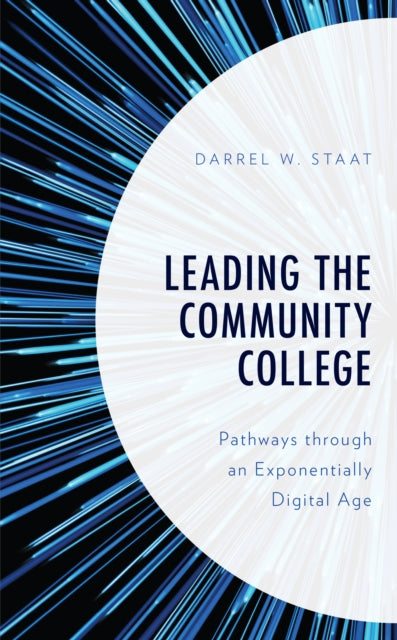
Darrel W. Staat
Leading the Community College: Pathways Through an Exponentially Digital Age
Leading the Community College: Pathways Through an Exponentially Digital Age
💎 Earn 141 Points (£1.41) on this item.
We can order this item for you. Delivery usually takes about 4 to 6 weeks.
This item is not held in our immediate stock. We will order it for you after checkout.
Estimated delivery: About 4 to 6 weeks
YOU SAVE £3.68
- Condition: Brand new
- UK Delivery times: Usually arrives within 2 - 3 working days
- UK Shipping: Fee starts at £2.39. Subject to product weight & dimension
Bulk ordering. Want 15 or more copies? Get a personalised quote and bigger discounts. Learn more about bulk orders.
Couldn't load pickup availability
- More about Leading the Community College: Pathways Through an Exponentially Digital Age
Leading the Community College: Pathways Through an Exponentially Digital Age explains the differences between twentieth and twenty-first century technologies and how the business community is preparing for the exponential stage. It predicts how businesses and community colleges may merge in the future and provides guidance on how to deal with the technologies when they move to the exponential stage.
Format: Paperback / softback
Length: 142 pages
Publication date: 16 March 2022
Publisher: Rowman & Littlefield
Leading the Community College: Pathways Through an Exponentially Digital Age offers a comprehensive exploration of the technological advancements of the twentieth and twenty-first centuries, highlighting the distinct differences between linear and exponential development. It delves into the impact of these technologies on community colleges, encompassing students, faculty, learning methods, staff, and the training provided to the business community. The book predicts a potential merger of businesses and community colleges in the future and emphasizes the importance of each institution conducting its own research to navigate the exponential stage successfully. It serves as a cautionary tale for community college leaders, offering valuable insights and guidance on how to effectively manage and adapt to the rapidly evolving technological landscape.
Leading the Community College: Pathways Through an Exponentially Digital Age
The twentieth and twenty-first centuries have witnessed significant technological advancements that have transformed the way we live, work, and learn. However, the pace of technological change has accelerated exponentially in the twenty-first century, leading to the emergence of new technologies that are reshaping the world in unprecedented ways. This book aims to provide a comprehensive understanding of the differences between the technologies of the twentieth and twenty-first centuries and the impact they have on community colleges.
Linear Development vs. Exponential Development
One of the key differences between the twentieth and twenty-first centuries is the pace of technological development. In the twentieth century, technologies were developed in a linear fashion, with each innovation building upon the previous one. This linear development led to the creation of many useful technologies, such as the telephone, the internet, and the automobile. However, it also had its limitations, such as the inability to keep up with the rapid pace of change and the potential for obsolescence.
In contrast, the twenty-first century has seen the emergence of exponential development, where technologies are developing at an unprecedented rate. This exponential development has led to the creation of new technologies that are transforming industries and changing the way we live. Examples of these technologies include artificial intelligence, blockchain, and the Internet of Things (IoT).
Business Community Preparing for the Exponential Stage
The business community has been quick to recognize the potential of exponential development and has begun preparing for the exponential stage. This preparation has involved investing in research and development, hiring skilled employees, and developing new products and services that can take advantage of the new technologies. For example, many businesses have started to use artificial intelligence to improve their customer service, while others have started to use blockchain to secure their supply chains.
Impact of Exponential Development on Community Colleges
The impact of exponential development on community colleges is significant. On the student side, exponential development has led to the creation of new learning methods that are more engaging and effective. For example, online learning platforms have become increasingly popular, allowing students to access courses from anywhere in the world. Additionally, the use of artificial intelligence and machine learning has enabled students to receive personalized learning experiences that are tailored to their individual needs.
On the faculty side, exponential development has led to the creation of new job opportunities. For example, many colleges are hiring data scientists and software engineers to help them develop and implement new technologies. Additionally, the use of artificial intelligence and machine learning has enabled faculty members to automate certain tasks, such as grading and course management.
On the staff side, exponential development has led to the creation of new job opportunities. For example, many colleges are hiring customer service representatives and IT professionals to help them manage their online presence and provide technical support to students and faculty. Additionally, the use of artificial intelligence and machine learning has enabled staff members to automate certain tasks, such as scheduling and event management.
On the training side, exponential development has led to the creation of new training programs that are designed to help businesses and community colleges adapt to the new technologies. For example, many colleges are offering courses in artificial intelligence, blockchain, and the Internet of Things (IoT). These courses are designed to help businesses and community colleges develop the skills and knowledge they need to take advantage of the new technologies.
Potential Merger of Businesses and Community Colleges
One of the potential outcomes of exponential development is the merger of businesses and community colleges. This merger would allow businesses to access the expertise and resources of community colleges, while community colleges would gain access to the business community's resources and expertise. This merger would also allow businesses and community colleges to collaborate on research and development projects, which would lead to the creation of new technologies and the improvement of existing ones.
However, there are also challenges associated with the merger of businesses and community colleges. For example, businesses may have different priorities and goals than community colleges, which could lead to conflicts. Additionally, community colleges may not have the resources and expertise to compete with businesses in the marketplace.
Importance of Each Institution Developing Its Own Research
To navigate the exponential stage successfully, it is important for each institution to develop its own research. This research will help institutions identify the new technologies that are emerging and the potential impact they will have on their industry. It will also help institutions develop strategies for adapting to the new technologies and developing new products and services that can take advantage of them.
In conclusion, Leading the Community College: Pathways Through an Exponentially Digital Age provides a comprehensive exploration of the technological advancements of the twentieth and twenty-first centuries and the impact they have on community colleges. It highlights the differences between linear and exponential development and the potential merger of businesses and community colleges in the future. It also emphasizes the importance of each institution developing its own research to help guide the colleges to a viable future. By understanding the challenges and opportunities associated with exponential development, community college leaders can develop strategies for navigating the exponential stage successfully and ensuring that their institutions remain relevant in the rapidly evolving technological landscape.
Weight: 191g
Dimension: 208 x 142 x 11 (mm)
ISBN-13: 9781475865301
This item can be found in:
UK and International shipping information
UK and International shipping information
UK Delivery and returns information:
- Delivery within 2 - 3 days when ordering in the UK.
- Shipping fee for UK customers from £2.39. Fully tracked shipping service available.
- Returns policy: Return within 30 days of receipt for full refund.
International deliveries:
Shulph Ink now ships to Australia, Belgium, Canada, France, Germany, Ireland, Italy, India, Luxembourg Saudi Arabia, Singapore, Spain, Netherlands, New Zealand, United Arab Emirates, United States of America.
- Delivery times: within 5 - 10 days for international orders.
- Shipping fee: charges vary for overseas orders. Only tracked services are available for most international orders. Some countries have untracked shipping options.
- Customs charges: If ordering to addresses outside the United Kingdom, you may or may not incur additional customs and duties fees during local delivery.