Shulph Ink
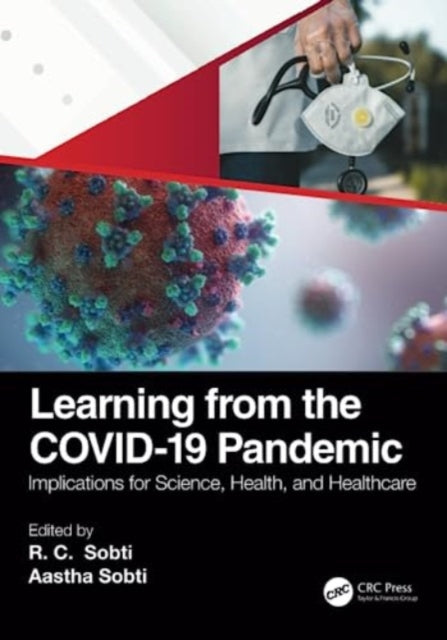
Learning from the COVID-19 Pandemic: Implications for Science, Health, and Healthcare
Learning from the COVID-19 Pandemic: Implications for Science, Health, and Healthcare
💎 Earn 259 Points (£2.59) on this item.
We can order this item for you. Delivery usually takes about 4 to 6 weeks.
This item is not held in our immediate stock. We will order it for you after checkout.
Estimated delivery: About 4 to 6 weeks
YOU SAVE £3.08
- Condition: Brand new
- UK Delivery times: Usually arrives within 2 - 3 working days
- UK Shipping: Fee starts at £2.39. Subject to product weight & dimension
Bulk ordering. Want 15 or more copies? Get a personalised quote and bigger discounts. Learn more about bulk orders.
Couldn't load pickup availability
- More about Learning from the COVID-19 Pandemic: Implications for Science, Health, and Healthcare
COVID-19 was first identified in Wuhan City, China, in December 2019 and quickly spread throughout the country and the world. It caused significant morbidity and mortality, highlighting the vulnerability of healthcare systems and affecting healthcare personnel. The virus can attack various organs, including the brain, and has caused both morbidity and mortality in humans without geographical, cultural, or religious barriers. The emergence of new variants, such as the delta and omicron variants, has aggravated the problem. While the pandemic has subsided, the emergence of subvariants and their hybrids has led to new lockdown measures in some countries. The book highlights the impact of COVID-19 on science, industry, and healthcare systems, and includes chapters on the virus's evolution, strains, preparedness, and the development of vaccines to control the pandemic. It is a key resource for students, teachers, medical personnel, administrators, and the public.
Format: Paperback / softback
Length: 290 pages
Publication date: 05 June 2023
Publisher: Taylor & Francis Ltd
COVID-19, a novel coronavirus, first emerged in Wuhan City, China, in December 2019, quickly spreading throughout Hubei Province and other parts of the country. By February 2020, it had reached a global scale, infecting millions of people and causing a significant number of deaths. The pandemic had far-reaching consequences, impacting various sectors, including healthcare, education, industry, and travel. The virus's ability to infect multiple organs, including the brain, highlighted the vulnerability of healthcare systems worldwide. Healthcare personnel faced immense challenges, and the pandemic exposed the inadequacies of many healthcare systems.
The virus's impact on the gut biota was also observed, emphasizing the complex interplay between the virus and the human body. The virus caused both morbidity and mortality, transcending geographical, cultural, and religious boundaries. The emergence of new variants, driven by mutations, further complicated the situation. The Delta variant, in particular, caused a second wave of infections, resulting in a substantial number of deaths due to factors such as reduced oxygen levels in the blood and other physiological emergencies.
However, the Omicron variant proved to be less lethal, leading to a sense of relief among many. While the pandemic subsided in some regions, the emergence of subvariants, such as BA.1 and BA.2, and their hybrids has sparked a new wave of cases, prompting lockdown measures in places like China. The relaxation of pandemic conditions has raised concerns that the virus may spread to other countries, leading to renewed lockdowns.
The scientific community has responded to the crisis by dedicating significant resources to developing new drugs, repurposing existing drugs for COVID-19 treatment, and accelerating vaccine development. The rapid development of vaccines, including the mRNA vaccines, has been a remarkable achievement, providing hope for ending the pandemic.
However, the journey to containment has not been without challenges. The emergence of new variants has highlighted the need for continued monitoring, research, and adaptation. It has also underscored the importance of global cooperation and solidarity in addressing this global health crisis.
In conclusion, the COVID-19 pandemic has had a profound impact on the world, testing the resilience of healthcare systems, economies, and societies. While the situation has improved in some regions, the threat of new variants and the potential for renewed outbreaks remain. The scientific community's efforts to develop vaccines and treatments have been crucial in mitigating the pandemic's effects, but ongoing efforts and global cooperation are essential to ensure a sustainable and equitable response to this global health crisis.
Dimension: 254 x 178 (mm)
ISBN-13: 9781032416045
This item can be found in:
UK and International shipping information
UK and International shipping information
UK Delivery and returns information:
- Delivery within 2 - 3 days when ordering in the UK.
- Shipping fee for UK customers from £2.39. Fully tracked shipping service available.
- Returns policy: Return within 30 days of receipt for full refund.
International deliveries:
Shulph Ink now ships to Australia, Belgium, Canada, France, Germany, Ireland, Italy, India, Luxembourg Saudi Arabia, Singapore, Spain, Netherlands, New Zealand, United Arab Emirates, United States of America.
- Delivery times: within 5 - 10 days for international orders.
- Shipping fee: charges vary for overseas orders. Only tracked services are available for most international orders. Some countries have untracked shipping options.
- Customs charges: If ordering to addresses outside the United Kingdom, you may or may not incur additional customs and duties fees during local delivery.