Ron Martin,Ben Gardiner,Andy Pike,Peter Sunley,Peter Tyler
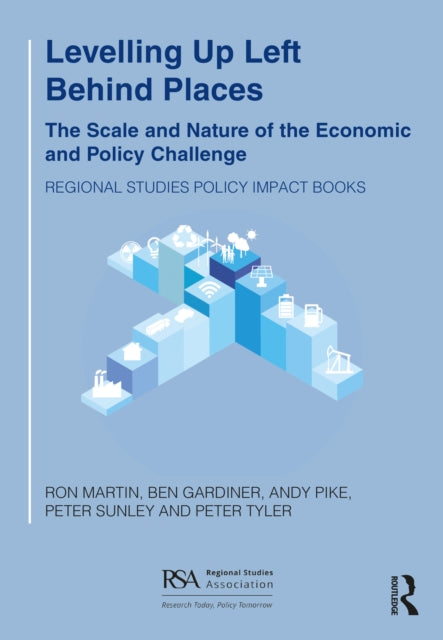
Levelling Up Left Behind Places: The Scale and Nature of the Economic and Policy Challenge
Levelling Up Left Behind Places: The Scale and Nature of the Economic and Policy Challenge
💎 Earn 170 Points (£1.70) on this item.
YOU SAVE £0.84
- Condition: Brand new
- UK Delivery times: Usually arrives within 2 - 3 working days
- UK Shipping: Fee starts at £2.39. Subject to product weight & dimension
Bulk ordering. Want 15 or more copies? Get a personalised quote and bigger discounts. Learn more about bulk orders.
Couldn't load pickup availability
- More about Levelling Up Left Behind Places: The Scale and Nature of the Economic and Policy Challenge
This book explores the predicaments of 'left behind places' and the policy challenge of 'levelling up their economic prosperity. It examines how places have grown apart due to deindustrialization, post-industrial transition, and the global financial crisis and COVID-19 pandemic. It identifies the different types of 'left behind places' and their distinctive economic experiences and highlights the weaknesses of past policies. The book argues for a new, mission-oriented policy model to achieve 'levelling up' and improve the life chances and quality of life of citizens.
Format: Paperback / softback
Length: 136 pages
Publication date: 20 December 2021
Publisher: Taylor & Francis Ltd
This book aims to delve into the predicaments of 'left behind places' and the formidable policy challenge of 'levelling up their economic prosperity. By drawing lessons of broader international significance, it examines how places, including cities, towns, and localities, have experienced a sense of detachment over the past few decades, amidst deindustrialization, post-industrial transition, and the disruptive shocks of the global financial crisis and COVID-19 pandemic. Through the lens of the UK case, the analysis identifies the diverse types of 'left behind places' and their unique economic realities. It scrutinizes the key features of urban and regional institutions and policies to understand the underlying reasons why geographical inequalities persist as an entrenched feature of the UK, hindering the life chances and quality of life of its citizens and impeding national economic progress. The shortcomings of past policies are highlighted, and a compelling case is made for a new, mission-oriented policy model. It is argued that only a radical shift in economic thinking, governance, and management can achieve the 'levelling up' that has become a prominent refrain in the political discourse.
Introduction:
The term 'left behind places' refers to regions or communities that have faced significant economic decline, social exclusion, and limited opportunities compared to their more prosperous counterparts. These places often have a history of industrial decline, a lack of investment, and a concentration of poverty and unemployment. Left behind places can be found across the globe, but they are particularly prevalent in developed countries, where the legacy of industrialization and urbanization has left certain areas behind.
The Policy Challenge:
Levelling up the economic prosperity of left behind places is a complex and multifaceted policy challenge. It requires a comprehensive and integrated approach that addresses the underlying causes of inequality and addresses the specific needs of these regions. The policy challenge is not just about providing economic stimulus or implementing infrastructure projects; it requires a shift in mindset and a commitment to long-term sustainable development.
Theories of Economic Decline:
Several theories have been proposed to explain the economic decline of left behind places. One of the most prominent theories is the 'structuralist' theory, which argues that economic decline is primarily caused by the decline of industries and the loss of jobs. This theory suggests that governments and policymakers should focus on promoting job creation and attracting investment to these regions.
The Role of Urban and Regional Institutions:
Urban and regional institutions play a crucial role in shaping the economic development of places. These institutions include local governments, regional bodies, and economic development agencies. They are responsible for implementing policies that promote economic growth, job creation, and investment. However, the effectiveness of these institutions can vary depending on their capacity, resources, and political will.
The Case of the UK:
The UK is a good example of a country that has faced significant challenges in levelling up its economic prosperity. Many of the country's towns and cities have experienced deindustrialization, post-industrial transition, and the adverse effects of globalization. Left behind places in the UK include former industrial towns, coastal communities, and rural areas.
The Different Types of 'Left Behind Places':
In the UK, there are several different types of 'left behind places'. These include former industrial towns, which have suffered from the decline of manufacturing and the loss of jobs; coastal communities, which have been affected by the decline of fishing and tourism; and rural areas, which have faced challenges in attracting investment and developing sustainable economic opportunities.
The Distinctive Economic Experiences of 'Left Behind Places':
Left behind places have distinctive economic experiences that reflect their specific challenges and opportunities. For example, former industrial towns may have a skilled workforce and a rich history of innovation, but they may also face challenges in adapting to new economic realities and attracting investment. Coastal communities may have natural resources and a strong tourism industry, but they may also be vulnerable to climate change and other environmental challenges.
Reviewing the Key Features of Urban and Regional Institutions and Policies:
To understand why geographical inequalities remain an entrenched feature of the UK, it is important to review the key features of urban and regional institutions and policies. One of the key features of urban and regional institutions is their ability to promote economic growth and job creation. However, these institutions may also be hindered by factors such as bureaucratic inertia, political polarization, and a lack of coordination between different levels of government.
The Weaknesses of Past Policies:
Past policies have often failed to address the specific needs of left behind places. For example, the Thatcher-era policies of deindustrialization and privatization led to the decline of many industrial towns and the loss of jobs. Similarly, the policies of the New Labor government focused on promoting urban regeneration and investment, but they may have neglected the rural and coastal areas.
The Case for a New Policy Model:
In light of the weaknesses of past policies, there is a need for a new policy model that is focused on mission-oriented governance and management. This model should be designed to promote sustainable economic growth, job creation, and social inclusion in all parts of the country. It should also be designed to address the specific needs of left behind places, such as promoting innovation, investing in infrastructure, and supporting local businesses.
Conclusion:
The predicaments of 'left behind places' and the policy challenge of 'levelling up their economic prosperity are complex and multifaceted. However, by drawing lessons from wider international significance and examining the unique economic experiences of left behind places, it is possible to develop a new policy model that is focused on mission-oriented governance and management. This model should be designed to promote sustainable economic growth, job creation, and social inclusion in all parts of the country, and it should be designed to address the specific needs of left behind places, such as promoting innovation, investing in infrastructure, and supporting local businesses.
Weight: 280g
Dimension: 175 x 245 x 11 (mm)
ISBN-13: 9781032244303
This item can be found in:
UK and International shipping information
UK and International shipping information
UK Delivery and returns information:
- Delivery within 2 - 3 days when ordering in the UK.
- Shipping fee for UK customers from £2.39. Fully tracked shipping service available.
- Returns policy: Return within 30 days of receipt for full refund.
International deliveries:
Shulph Ink now ships to Australia, Belgium, Canada, France, Germany, Ireland, Italy, India, Luxembourg Saudi Arabia, Singapore, Spain, Netherlands, New Zealand, United Arab Emirates, United States of America.
- Delivery times: within 5 - 10 days for international orders.
- Shipping fee: charges vary for overseas orders. Only tracked services are available for most international orders. Some countries have untracked shipping options.
- Customs charges: If ordering to addresses outside the United Kingdom, you may or may not incur additional customs and duties fees during local delivery.