Shulph Ink
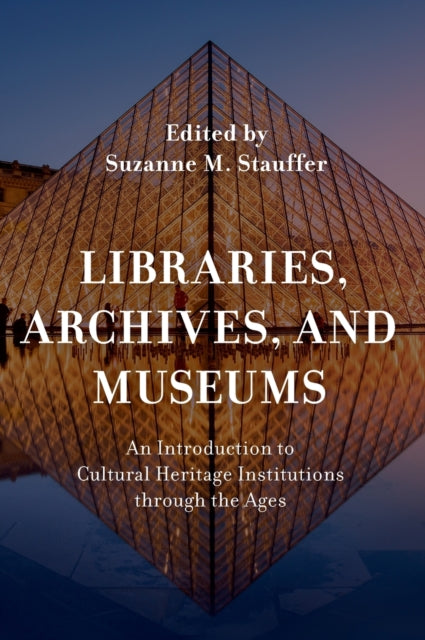
Libraries, Archives, and Museums: An Introduction to Cultural Heritage Institutions through the Ages
Libraries, Archives, and Museums: An Introduction to Cultural Heritage Institutions through the Ages
We can order this item for you. Delivery usually takes about 4 to 6 weeks.
This item is not held in our immediate stock. We will order it for you after checkout.
Estimated delivery: About 4 to 6 weeks
YOU SAVE £13.77
- Condition: Brand new
- UK Delivery times: Usually arrives within 2 - 3 working days
- UK Shipping: Fee starts at £3.89. Subject to product weight & dimension
Bulk ordering. Want 15 or more copies? Get a personalised quote and bigger discounts. Learn more about bulk orders.
Couldn't load pickup availability
- More about Libraries, Archives, and Museums: An Introduction to Cultural Heritage Institutions through the Ages
The book provides a comprehensive background for students and professionals in library, archive, and museum resource management, preservation, and administration.
Format: Hardback
Length: 280 pages
Publication date: 19 August 2021
Publisher: Rowman & Littlefield
The work offers a comprehensive foundation for students and professionals pursuing careers in library, archive, and museum resource management, preservation, and administration. It delves into the historical, theoretical, and practical aspects of these fields, providing a deep understanding of the challenges and opportunities they present.
The book begins by exploring the historical development of libraries, archives, and museums, tracing their evolution from ancient institutions to modern-day centers of knowledge and cultural heritage. It examines the role of these institutions in society, their impact on education, research, and cultural preservation, and the challenges they face in the digital age.
Chapter 1 provides an overview of the theoretical foundations of library, archive, and museum resource management, including principles of organization, classification, preservation, and access. It discusses the importance of metadata, digital preservation, and the management of cultural heritage collections. Chapter 2 explores the practical aspects of resource management, including collection development, acquisition, cataloging, and preservation. It covers the use of technology and digital tools to enhance resource management practices and improve access to information.
Chapter 3 examines the role of libraries, archives, and museums in promoting cultural diversity and social inclusion. It explores the ways in which these institutions can be used to promote cultural awareness, heritage preservation, and social justice. It also discusses the challenges of engaging diverse audiences and creating inclusive spaces.
Chapter 4 focuses on the management of library, archive, and museum resources in the context of international cooperation and collaboration. It examines the role of international organizations, such as the International Council on Monuments and Sites (ICOMOS) and the International Federation of Library Associations (IFLA), in promoting resource management practices and standards. It also discusses the role of cultural diplomacy and the exchange of knowledge in fostering international cooperation.
Chapter 5 explores the future of library, archive, and museum resource management, including emerging trends and challenges. It examines the role of technology, digitalization, and artificial intelligence in shaping the future of these institutions and the ways in which they can adapt to changing societal needs.
In conclusion, this work provides a comprehensive and up-to-date introduction to the fields of library, archive, and museum resource management, preservation, and administration. It is an essential resource for students, professionals, and anyone interested in these fields, offering a deep understanding of the historical, theoretical, and practical aspects of these disciplines.
The work offers a comprehensive foundation for students and professionals pursuing careers in library, archive, and museum resource management, preservation, and administration. It delves into the historical, theoretical, and practical aspects of these fields, providing a deep understanding of the challenges and opportunities they present.
The book begins by exploring the historical development of libraries, archives, and museums, tracing their evolution from ancient institutions to modern-day centers of knowledge and cultural heritage. It examines the role of these institutions in society, their impact on education, research, and cultural preservation, and the challenges they face in the digital age.
Chapter 1 provides an overview of the theoretical foundations of library, archive, and museum resource management, including principles of organization, classification, preservation, and access. It discusses the importance of metadata, digital preservation, and the management of cultural heritage collections. Chapter 2 explores the practical aspects of resource management, including collection development, acquisition, cataloging, and preservation. It covers the use of technology and digital tools to enhance resource management practices and improve access to information.
Chapter 3 examines the role. The role of libraries, archives, and museums in promoting cultural diversity and social inclusion. It explores the ways in which these institutions can be used to promote cultural awareness, heritage preservation, and social justice. It also discusses the challenges of engaging diverse audiences and creating inclusive spaces.
Chapter 4 focuses on the management of library, archive, and museum resources in the context of international cooperation and collaboration. It examines the role. The role of international organizations, such as the International Council on Monuments and Sites (ICOMOS) and the International Federation of Library Associations (IFLA), in promoting resource management practices and standards. It also discusses the role. The role of cultural diplomacy and the exchange of knowledge in fostering international cooperation.
Chapter 5 explores the future of library, archive, and museum resource management, including emerging trends. The role of technology, digitalization, and artificial intelligence in shaping the future of these institutions and the ways in which they can adapt to changing societal needs.
In conclusion, this work provides a comprehensive and up-to-date introduction to the fields of library, archive, and museum resource management, preservation, and administration. It is an essential resource for students, professionals, and anyone interested in these fields, offering a deep understanding of the historical, theoretical, and practical aspects of these disciplines.
Weight: 722g
Dimension: 186 x 262 x 24 (mm)
ISBN-13: 9781538118894
UK and International shipping information
UK and International shipping information
We deliver throughout the United Kingdom and to 128 countries and territories worldwide, including the United States, Australia, Canada, Germany, Spain and France.