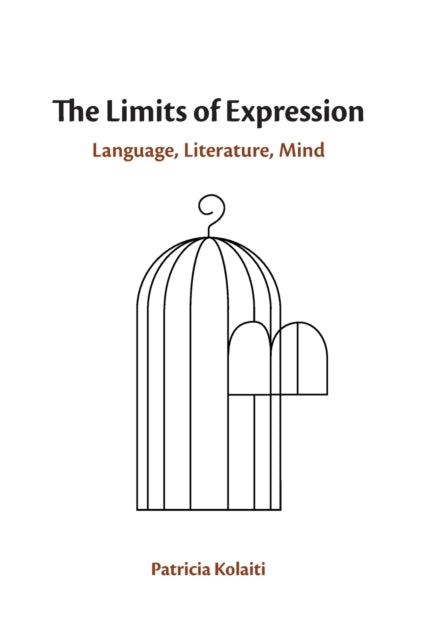
Patricia Kolaiti
Limits of Expression: Language, Literature, Mind
Limits of Expression: Language, Literature, Mind
💎 Earn 160 Points (£1.60) on this item.
We can order this item for you. Delivery usually takes about 4 to 6 weeks.
This item is not held in our immediate stock. We will order it for you after checkout.
Estimated delivery: About 4 to 6 weeks
YOU SAVE £1.90
- Condition: Brand new
- UK Delivery times: Usually arrives within 2 - 3 working days
- UK Shipping: Fee starts at £2.39. Subject to product weight & dimension
Bulk ordering. Want 15 or more copies? Get a personalised quote and bigger discounts. Learn more about bulk orders.
Couldn't load pickup availability
- More about Limits of Expression: Language, Literature, Mind
This book explores the relationship between language, literature, and the mind, reconsidering interdisciplinary issues such as the move from world to mind, the essence of art, and the nature of literature as a unique output of human cognition. It offers a new treatment of literature and literary language and sketches novel directions for literary study in the twenty-first century.
Format: Paperback / softback
Length: 152 pages
Publication date: 28 October 2021
Publisher: Cambridge University Press
Language, often perceived as a limited tool in capturing the intricate tapestry of human thoughts and experiences, serves as the focal point of this groundbreaking exploration. By shifting the focus from the literary text itself to literature as a manifestation of human agency, the book reconsiders a diverse array of interdisciplinary topics. These include the transition from the world to the mind, the existence or absence of a unique property of literariness or essence of art, the nature of literature as a distinctive product of human cognition, and the potential uniqueness of the mind that generates it. In a continuous exchange with philosophy, linguistics, and the cognitive sciences, this book presents a valuable new perspective on literature and literary language, while also suggesting innovative avenues for literary study in the twenty-first century.
The prison house of language, a pervasive notion that language falls short in conveying the diverse and complex nuances of the human mind, serves as the starting point for this transformative inquiry. By shifting the focus from the literary text itself to literature as a manifestation of human agency, the book reconsiders a wide range of interdisciplinary issues. These include the transition from the world to the mind, the existence or absence of a distinctive property of literariness or essence of art, the nature of literature as a unique output of human cognition, and the potential uniqueness of the mind that generates it. In a continuous exchange with philosophy, linguistics, and the cognitive sciences, this book presents a valuable new perspective on literature and literary language, while also suggesting innovative avenues for literary study in the twenty-first century.
The book delves into the intricate relationship between language, literature, and the mind, challenging prevailing notions and offering a fresh perspective. It explores the complexities of the human cognitive process, examining how language shapes and influences our understanding of the world. Through a multidisciplinary approach, the book examines the interplay between literature and the mind, exploring the ways in which literature can evoke emotions, create mental images, and shape our perception of reality.
One of the key themes of the book is the move from the world to the mind. The author argues that literature is not merely a reflection of the world but an active agent that shapes and transforms our understanding of it. By engaging with literature, we are not simply passively absorbing information but actively constructing our own mental representations of the world. The book explores the ways in which literature can create new worlds, challenge our assumptions, and offer alternative perspectives on the human experience.
Another important aspect of the book is the notion of literariness or the essence of art. The author questions whether there is a unique property or essence that distinguishes literature from other forms of artistic expression. Through a close analysis of literary texts, the book explores the ways in which literature possesses a distinctiveness that sets it apart from other artistic mediums. The author argues that literature is not merely a product of the mind but a creative process that involves the fusion of imagination, intellect, and emotion.
The book also examines the nature of literature as a unique output of human cognition. The author argues that literature is not merely a reflection of the world but a product of the unique cognitive processes of the human mind. By studying the structure and patterns of literary texts, the book explores the ways in which literature represents and communicates complex ideas and emotions. The author suggests that literature is a form of cognitive expression that allows us to explore the depths of our own minds and understand the complexities of the human experience.
In conclusion, this book offers a groundbreaking exploration of the interplay between language, literature, and the mind. By shifting the focus from the literary text itself to literature as a manifestation of human agency, the book reconsiders a diverse array of interdisciplinary topics. Through a multidisciplinary approach, the book examines the complexities of the human cognitive process, exploring how language shapes and influences our understanding of the world. The book offers a valuable new perspective on literature and literary language, suggesting innovative avenues for literary study in the twenty-first century. By engaging with the ideas presented in this book, readers will gain a deeper appreciation for the power of language and literature to shape our mental and emotional landscapes.
Weight: 234g
Dimension: 151 x 229 x 16 (mm)
ISBN-13: 9781108406291
This item can be found in:
UK and International shipping information
UK and International shipping information
UK Delivery and returns information:
- Delivery within 2 - 3 days when ordering in the UK.
- Shipping fee for UK customers from £2.39. Fully tracked shipping service available.
- Returns policy: Return within 30 days of receipt for full refund.
International deliveries:
Shulph Ink now ships to Australia, Belgium, Canada, France, Germany, Ireland, Italy, India, Luxembourg Saudi Arabia, Singapore, Spain, Netherlands, New Zealand, United Arab Emirates, United States of America.
- Delivery times: within 5 - 10 days for international orders.
- Shipping fee: charges vary for overseas orders. Only tracked services are available for most international orders. Some countries have untracked shipping options.
- Customs charges: If ordering to addresses outside the United Kingdom, you may or may not incur additional customs and duties fees during local delivery.