Michael Green
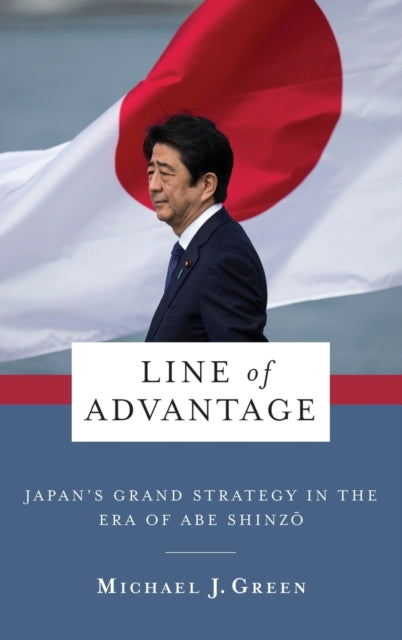
Line of Advantage: Japan's Grand Strategy in the Era of Abe Shinzo
Line of Advantage: Japan's Grand Strategy in the Era of Abe Shinzo
💎 Earn 473 Points (£4.73) on this item.
YOU SAVE £22.32
- Condition: Brand new
- UK Delivery times: Usually arrives within 2 - 3 working days
- UK Shipping: Fee starts at £2.39. Subject to product weight & dimension
Bulk ordering. Want 15 or more copies? Get a personalised quote and bigger discounts. Learn more about bulk orders.
Couldn't load pickup availability
- More about Line of Advantage: Japan's Grand Strategy in the Era of Abe Shinzo
Japan has developed a deliberate and successful grand strategy to manage China's rising economic and military power. Under Prime Minister Abe Shinzo, Japan has pursued closer security cooperation with the US and other democracies, established a more centralized national defense system, and advanced rules and norms to preserve the open regional order in the Indo-Pacific. Michael J. Green's book "Line of Advantage" provides an insiders perspective on Japan's strategic thinking and its economic, defense, and diplomatic priorities toward China, the US, the two Koreas, and the Indo-Pacific region.
Format: Hardback
Length: 328 pages
Publication date: 22 March 2022
Publisher: Columbia University Press
No other country has devised a grand strategy for managing China's rising economic and military power as deliberately or successfully as Japan. Seeking to counter Chinese ambitions toward regional hegemony, Japan has taken an increasingly assertive role in East Asia and the world. During the tenure of Prime Minister Abe Shinzo, the country pursued closer security cooperation with the United States and other democracies, established a more centralized national defense system, and advanced rules and norms to preserve the open regional order in the Indo-Pacific that is crucial to its prosperity and survival—all while managing an important economic relationship with China.
In Line of Advantage, Michael J. Green provides a groundbreaking and comprehensive account of Japan's strategic thinking under Abe. He explains the foundational logic and the worldview behind this approach, from key precedents in Japanese history to the specific economic, defense, and diplomatic priorities shaping contemporary policy toward China, the United States, the two Koreas, and the Indo-Pacific region. Drawing on two decades of access to Abe and other Japanese political, military, and business leaders, Green provides an insiders perspective on subjects such as how Japan pursued competition with China without losing the benefits of economic cooperation. Assessing the strengths and weaknesses of Japan's new active role, Line of Advantage sheds new light on a period with profound implications for the future of U.S. competition with China and international affairs in Asia more broadly.
Japan's strategic approach to managing China's rise is rooted in a deep understanding of its historical and cultural context. The country has long viewed China as a rival and has sought to establish its own regional hegemony in East Asia. However, Japan also recognizes the importance of economic cooperation with China, which accounts for a significant portion of its trade and investment.
Under Prime Minister Abe, Japan has pursued a multifaceted strategy to balance its competition with China while maintaining economic ties. This includes closer security cooperation with the United States and other democracies, such as the United Kingdom and Australia, to counter Chinese assertiveness in the Indo-Pacific region. Japan has also established a more centralized national defense system, including the establishment of a National Security Council and the development of new military capabilities, to enhance its ability to defend itself and its allies.
In addition to its military and security efforts, Japan has also advanced rules and norms to preserve the open regional order in the Indo-Pacific. This includes promoting free trade and investment, supporting regional institutions such as the ASEAN and the East Asia Summit, and working to resolve territorial disputes peacefully. Japan has also taken a lead in developing new technologies, such as artificial intelligence and renewable energy, to promote economic growth and innovation in the region.
One of the key strengths of Japan's strategy is its ability to balance competition with China while maintaining economic cooperation. Japan has pursued a policy of "coopetition," which involves competing with China while also collaborating with it on issues that are mutually beneficial. This approach has allowed Japan to maintain its economic growth while also limiting its dependence on China.
Another strength of Japan's strategy is its commitment to regional institutions and norms. Japan has been a strong supporter of the ASEAN, which is a regional organization that promotes economic cooperation and stability in the Indo-Pacific region. Japan has also played a key role in developing the East Asia Summit, which is a forum for dialogue and cooperation among East Asian countries.
However, Japan's strategy also faces challenges. One of the biggest challenges is the growing assertiveness of China in the Indo-Pacific region. China has been building up its military capabilities, expanding its influence in the region, and challenging the established order. Japan has responded by increasing its defense spending and developing new military capabilities, but it faces the challenge of maintaining a credible deterrent against China without provoking a military conflict.
Another challenge is the economic relationship between Japan and China. Japan is China's largest trading partner, and the two countries have a complex and multifaceted economic relationship. However, there are concerns about the impact of China's economic policies on Japan's economy, such as the trade deficit and the concentration of Chinese investment in Japan. Japan has also been criticized for its reluctance to address issues such as human rights and intellectual property rights in China.
Despite these challenges, Japan's strategy of managing China's rise remains a significant and innovative approach to international relations. Japan's commitment to regional institutions and norms, its policy of "coopetition," and its focus on economic growth and innovation are all important factors in shaping the future of international affairs in Asia. As China continues to grow and assert itself in the region, Japan will likely continue to play an important role in shaping the future of the Indo-Pacific region.
In conclusion, no other country has devised a grand strategy for managing China's rising economic and military power as deliberately or successfully as Japan. Japan's strategic approach to managing China's rise is rooted in a deep understanding of its historical and cultural context, and it is characterized by a commitment to regional institutions and norms, a policy of "coopetition," and a focus on economic growth and innovation. While Japan faces challenges, its strategy remains a significant and innovative approach to international relations, and it will likely continue to play an important role in shaping the future of the Indo-Pacific region.
Dimension: 229 x 152 (mm)
ISBN-13: 9780231204668
This item can be found in:
UK and International shipping information
UK and International shipping information
UK Delivery and returns information:
- Delivery within 2 - 3 days when ordering in the UK.
- Shipping fee for UK customers from £2.39. Fully tracked shipping service available.
- Returns policy: Return within 30 days of receipt for full refund.
International deliveries:
Shulph Ink now ships to Australia, Belgium, Canada, France, Germany, Ireland, Italy, India, Luxembourg Saudi Arabia, Singapore, Spain, Netherlands, New Zealand, United Arab Emirates, United States of America.
- Delivery times: within 5 - 10 days for international orders.
- Shipping fee: charges vary for overseas orders. Only tracked services are available for most international orders. Some countries have untracked shipping options.
- Customs charges: If ordering to addresses outside the United Kingdom, you may or may not incur additional customs and duties fees during local delivery.