Shulph Ink
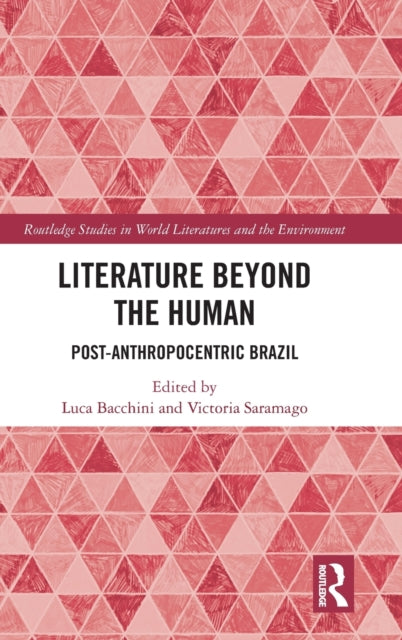
Literature Beyond the Human: Post-Anthropocentric Brazil
Literature Beyond the Human: Post-Anthropocentric Brazil
💎 Earn 811 Points (£8.11) on this item.
We can order this item for you. Delivery usually takes about 4 to 6 weeks.
This item is not held in our immediate stock. We will order it for you after checkout.
Estimated delivery: About 4 to 6 weeks
YOU SAVE £9.63
- Condition: Brand new
- UK Delivery times: Usually arrives within 2 - 3 working days
- UK Shipping: Fee starts at £2.39. Subject to product weight & dimension
Bulk ordering. Want 15 or more copies? Get a personalised quote and bigger discounts. Learn more about bulk orders.
Couldn't load pickup availability
- More about Literature Beyond the Human: Post-Anthropocentric Brazil
The first collection of essays in English dedicated to investigating Brazilian literature from the perspective of the environmental humanities, animal studies, Anthropocene studies, and other critical and theoretical perspectives that question the centrality of the human. It includes 15 chapters by leading scholars covering two centuries of Brazilian literary production, from Gonçalves Dias to Astrid Cabral, and highlights the theoretical potential of Brazilian thought to contribute to contemporary debates in the anglophone realm.
Format: Hardback
Length: 250 pages
Publication date: 22 July 2022
Publisher: Taylor & Francis Ltd
The writings of Clarice Lispector offer valuable insights into our understanding of the Anthropocene, a period marked by significant human-induced environmental changes. Through her intricate portrayal of human relationships and the natural world, Lispector sheds light on the complex interplay between human actions and their impact on the planet.
One of the key themes in Lispector's work is the concept of "the other," which she explores through the lens of race and ethnicity. In her novel "The Hour of the Star," for example, Lispector examines the relationship between a white woman and a black servant, highlighting the social and cultural barriers that exist between them. Through her characters, Lispector challenges the notion of a universal human experience and highlights the ways in which race and ethnicity shape our perceptions and interactions with the world.
Another important aspect of Lispector's writing is her exploration of the relationship between humans and animals. In her short story "The Animal," for instance, Lispector depicts a woman who becomes increasingly fascinated with a bird that visits her window daily. The bird's presence serves as a metaphor for the woman's own sense of isolation and longing, and the story explores the ways in which humans can form complex relationships with non-human creatures.
In addition to her exploration of race and animals, Lispector's writing also touches on the themes of environmental degradation and the production of knowledge. In her novel "The Green House," for example, Lispector examines the impact of industrialization on the natural world and the ways in which humans attempt to control and manipulate it. Through her characters, Lispector challenges the notion of progress and highlights the destructive consequences of human actions on the environment.
Overall, Clarice Lispector's writings provide a rich and nuanced perspective on the Anthropocene, offering insights into the complex relationships between humans and the natural world. Through her exploration of race, animals, and environmental degradation, Lispector challenges our assumptions about the human-nature relationship and encourages us to consider the broader social and cultural implications of our actions.
In Joaquim Maria Machado de Assis's works, race intersects with the treatment of animals in profound ways. Machado de Assis, a Brazilian writer known for his complex and nuanced portrayal of Brazilian society, often explores the relationship between humans and animals through the lens of power dynamics and social hierarch
One of the most notable examples of this is Machado de Assis's novel "The Posthumous Memoirs of Brás Cubas." In this work, Machado de Assis depicts a wealthy plantation owner named Brás Cubas, who is haunted by the memories of his deceased wife and the slaves who worked on his plantation. Through the character of Brás Cubas, Machado de Assis explores the complex relationship between race, class, and the treatment of animals.
Brás Cubas, a white man, is deeply invested in the hierarchical structure of Brazilian society, where race plays a significant role in determining one's social status and access to power. He views the slaves on his plantation as inferior beings and treats them with cruelty and contempt. However, as the novel progresses, Brás Cubas begins to question his own beliefs and values, particularly when he falls in love with one of his slaves, a woman named Lucinda.
Lucinda, a black woman, is subjected to the same brutal treatment as the other slaves on the plantation. However, she is also shown to have a deep intelligence and strength that sets her apart from the other slaves. Through her relationship with Brás Cubas, Lucinda challenges the hierarchical structure of Brazilian society and exposes the underlying cruelty and injustice that underpin it.
Machado de Assis also explores the relationship between race and the treatment of animals in other of his works, such as "The Garden of the Finzi Continent" and "The Death of Artemio Cruz." In these works, Machado de Assis depicts the brutal treatment of animals, particularly those that are considered inferior or non-human, by the dominant classes in Brazilian society.
For example, in "The Garden of the Finzi Continent," Machado de Assis depicts a wealthy family who owns a vast estate and treats the animals on their property with cruelty and indifference. The family's treatment of the animals is a reflection of their own sense of superiority and entitlement, and their disregard for the natural world is a symptom of the broader social and environmental problems that plague Brazilian society.
In "The Death of Artemio Cruz," Machado de Assis depicts the brutal murder of a poor man named Artemio Cruz by a wealthy landowner. The landowner, who is also a prominent politician, is motivated by greed and a desire to control the land and the people who live on it. However, his actions also reveal his deep disregard for the natural world and the animals that inhabit it.
Through his exploration of race and the treatment of animals, Machado de Assis highlights the ways in which power dynamics and social hierarch. He challenges the notion of a universal human experience and exposes the underlying cruelty and injustice that underpin it. He also highlights the ways in which race and the treatment of animals are interconnected, and how they are shaped by the broader social and cultural context in which they occur.
In conclusion, Joaquim Maria Machado de Assis's works offer a rich and nuanced exploration of the relationship between race, the treatment of animals, and the broader social and cultural context in which they occur. Through his complex and nuanced portrayal of Brazilian society, Machado de Assis challenges our assumptions about the human-nature relationship and encourages us to consider the broader social and cultural implications of our actions.
Indigenous philosopher and leader Ailton Krenak offers valuable insights into the relationship between environmental degradation and the production of knowledge. Krenak, a member of the Kayapó people, is a prominent figure in the Brazilian environmental movement and has been advocating for the rights of Indigenous peoples and the protection of the Amazon rainforest for over 40 years.
One of the key themes in Krenak's work is the concept of "the other," which he explores through the lens of Indigenous knowledge systems and the environmental crisis. Krenak argues that Western scientific knowledge is often based on a Eurocentric worldview that privileges the interests of the dominant culture and marginalizes the knowledge and perspectives of Indigenous peoples. This worldview is rooted in a colonial history that has resulted in the exploitation and destruction of Indigenous cultures and the environment.
Krenak also emphasizes the importance of Indigenous knowledge systems in addressing the environmental crisis. Indigenous knowledge systems are based on a deep understanding of the natural world and the interdependence of all living things. They emphasize the importance of respecting and honoring the natural world and the interconnectedness of all living things.
Krenak argues that Western scientific knowledge is often limited in its ability to address the environmental crisis because it is based on a narrow understanding of the natural world and the human-nature relationship. Western scientific knowledge is often driven by a desire for economic growth and profit, which can lead to the exploitation and destruction of the environment. In contrast, Indigenous knowledge systems are based on a holistic understanding of the natural world that recognizes the importance of balance and harmony in all living things.
Krenak also highlights the importance of Indigenous peoples in the fight against environmental degradation. Indigenous peoples have a long history of living in harmony with the natural world and have developed sustainable practices that protect the environment and promote sustainable development. However, their rights and livelihoods are often threatened by the expansion of industrialization and development projects.
Krenak argues that the recognition and respect of Indigenous peoples' rights and knowledge is essential in addressing the environmental crisis. He calls for the recognition of Indigenous peoples' rights to land, resources, and self-determination, as well as the recognition of their knowledge and expertise in environmental management. He also calls for the integration of Indigenous knowledge systems into mainstream scientific research and policy-making processes.
In conclusion, Ailton Krenak's work offers valuable insights into the relationship between environmental degradation and the production of knowledge. He emphasizes the importance of recognizing and respecting the knowledge and perspectives of Indigenous peoples and the importance of integrating Indigenous knowledge systems into mainstream scientific research and policy-making processes. Krenak's work highlights the need for a more holistic and inclusive approach to addressing the environmental crisis that recognizes the interdependence of all living things and the importance of balance and harmony in all living things.
In conclusion, literature beyond the human offers a rich and nuanced perspective on Brazilian literature and thought, from the influential Modernist thesis of "cultural cannibalism" (antropofagia) to the renewed interest in Amerindian perspectivism in culture. By underscoring the vast theoretical potential of Brazilian literature and thought, this volume demonstrates how the theoretical strength of Brazilian thought can contribute to contemporary debates in the anglophone realm. Clarice Lispector's writings provide valuable insights into our understanding of the Anthropocene, highlighting the complex interplay between human actions and their impact on the planet. Joaquim Maria Machado de Assis's works explore the relationship between race, the treatment of animals, and the broader social and cultural context in which they occur, challenging our assumptions about the human-nature relationship and exposing the underlying cruelty and injustice that underpin it. Ailton Krenak's work highlights the importance of recognizing and respecting the knowledge and perspectives of Indigenous peoples and the need for integrating Indigenous knowledge systems into mainstream scientific research and policy-making processes. Together, these essays provide a valuable contribution to our understanding of the complex and interconnected challenges facing our world today.
Dimension: 229 x 152 (mm)
ISBN-13: 9781032153995
UK and International shipping information
UK and International shipping information
UK Delivery and returns information:
- Delivery within 2 - 3 days when ordering in the UK.
- Shipping fee for UK customers from £2.39. Fully tracked shipping service available.
- Returns policy: Return within 30 days of receipt for full refund.
International deliveries:
Shulph Ink now ships to Australia, Belgium, Canada, France, Germany, Ireland, Italy, India, Luxembourg Saudi Arabia, Singapore, Spain, Netherlands, New Zealand, United Arab Emirates, United States of America.
- Delivery times: within 5 - 10 days for international orders.
- Shipping fee: charges vary for overseas orders. Only tracked services are available for most international orders. Some countries have untracked shipping options.
- Customs charges: If ordering to addresses outside the United Kingdom, you may or may not incur additional customs and duties fees during local delivery.