Shulph Ink
Literature, Learning, and Social Hierarchy in Early Modern Europe
Literature, Learning, and Social Hierarchy in Early Modern Europe
💎 Earn 423 Points (£4.23) on this item.
- Condition: Brand new
- UK Delivery times: Usually arrives within 2 - 3 working days
- UK Shipping: Fee starts at £2.39. Subject to product weight & dimension
Bulk ordering. Want 15 or more copies? Get a personalised quote and bigger discounts. Learn more about bulk orders.
Couldn't load pickup availability
- More about Literature, Learning, and Social Hierarchy in Early Modern Europe
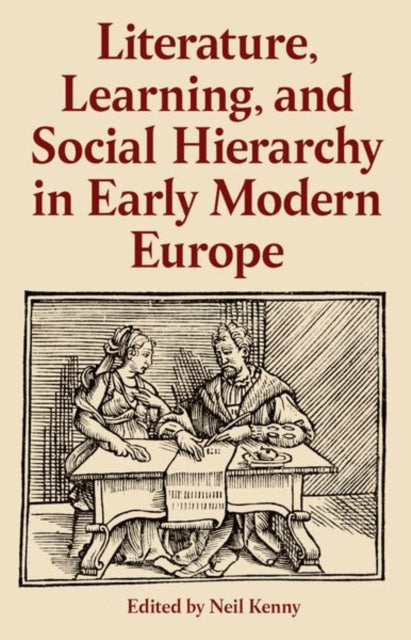
Literature and literate knowledge in Europe from the fifteenth to the seventeenth centuries were shaped by rigid social hierarchies, which both bolstered and questioned the status and worth of members. This is the first book to explore this topic in relation to a wide range of genres, disciplines, practices, and writers.
Format: Hardback
Length: 312 pages
Publication date: 17 March 2022
Publisher: Oxford University Press
Literature, learning, and social hierarchy in early modern Europe were closely intertwined, with societies characterized by rigid hierarchical structures. This had a significant impact on the literature and literate knowledge produced during this period, shaping its production, reception, and the way it was perceived by both writers and audiences. In this essay, we will explore the ways in which social hierarchy influenced the literature and literate knowledge of early modern Europe.
One of the primary ways in which social hierarchy influenced literature was through the patronage system. Patrons, who were often wealthy and powerful individuals, supported writers and artists by providing them with financial resources, access to social networks, and opportunities to publish their work. This patronage system was essential for the development of literature, as it allowed writers to create works that were not only popular but also socially relevant. However, the patronage system was also subject to criticism, as it could be used to promote certain ideologies or to suppress dissenting voices.
Another way in which social hierarchy influenced literature was through the printing press. The printing press was invented in the 15th century and revolutionized the way that literature was produced and distributed. It made it possible for books to be produced in large quantities and to be distributed widely, making literature more accessible to a wider audience. However, the printing press also had its own set of challenges, as it was subject to censorship and regulation.
Literature and literate knowledge also played a significant role in shaping social hierarchy. Writers and artists used their works to critique and challenge the social order, and to promote their own ideas and values. This could be seen in the works of writers such as Shakespeare, Cervantes, and Voltaire, who used their plays and novels to explore the nature of power, authority, and social inequality.
However, literature and literate knowledge also had its limitations. For example, literature was often written in a language that was inaccessible to many people, particularly those who were not educated. This meant that literature was not always able to reach a wide audience, and that it could be used to reinforce existing social hierarchies rather than challenge them.
In addition, literature and literate knowledge were often used to justify and maintain social hierarchies. For example, the works of philosophers such as Aristotle and Plato were used to justify the idea of a hierarchical society, where some people were born to rule and others were born to serve. This idea was reinforced by the social practices of the time, such as the feudal system and the caste system.
Despite these limitations, literature and literate knowledge continued to play a significant role in shaping early modern Europe. Writers and artists continued to create works that challenged and questioned the social order, and that helped to promote social change. For example, the works of writers such as Karl Marx and Friedrich Engels helped to lay the foundation for the socialist movement, and the works of writers such as Jane Austen and Charlotte Bronte helped to challenge the traditional gender roles of the time.
In conclusion, literature, learning, and social hierarchy in early modern Europe were closely intertwined, with societies characterized by rigid hierarchical structures. This had a significant impact on the literature and literate knowledge produced during this period, shaping its production, reception, and the way it was perceived by both writers and audiences. While literature and literate knowledge had its limitations, they continued to play a significant role in shaping early modern Europe and in promoting social change.
Weight: 1g
Dimension: 240 x 160 x 27 (mm)
ISBN-13: 9780197267332
This item can be found in:
UK and International shipping information
UK and International shipping information
UK Delivery and returns information:
- Delivery within 2 - 3 days when ordering in the UK.
- Shipping fee for UK customers from £2.39. Fully tracked shipping service available.
- Returns policy: Return within 30 days of receipt for full refund.
International deliveries:
Shulph Ink now ships to Australia, Belgium, Canada, France, Germany, Ireland, Italy, India, Luxembourg Saudi Arabia, Singapore, Spain, Netherlands, New Zealand, United Arab Emirates, United States of America.
- Delivery times: within 5 - 10 days for international orders.
- Shipping fee: charges vary for overseas orders. Only tracked services are available for most international orders. Some countries have untracked shipping options.
- Customs charges: If ordering to addresses outside the United Kingdom, you may or may not incur additional customs and duties fees during local delivery.