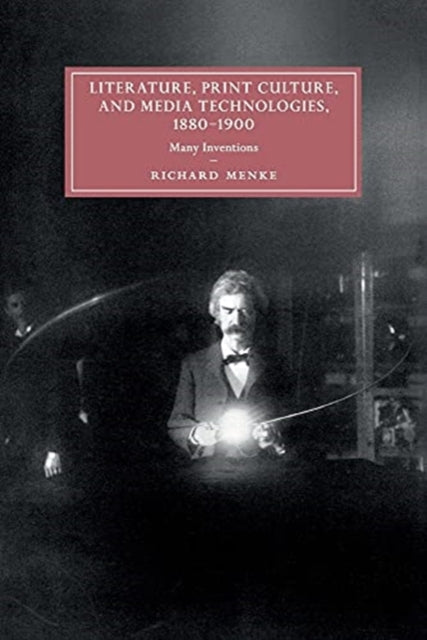
RichardMenke
Literature, Print Culture, and Media Technologies, 1880-1900: Many Inventions
Literature, Print Culture, and Media Technologies, 1880-1900: Many Inventions
💎 Earn 160 Points (£1.60) on this item.
We can order this item for you. Delivery usually takes about 4 to 6 weeks.
This item is not held in our immediate stock. We will order it for you after checkout.
Estimated delivery: About 4 to 6 weeks
YOU SAVE £1.90
- Condition: Brand new
- UK Delivery times: Usually arrives within 2 - 3 working days
- UK Shipping: Fee starts at £2.39. Subject to product weight & dimension
Bulk ordering. Want 15 or more copies? Get a personalised quote and bigger discounts. Learn more about bulk orders.
Couldn't load pickup availability
- More about Literature, Print Culture, and Media Technologies, 1880-1900: Many Inventions
The era of Bell and Edison brought about new technologies for recording and communication, such as telephones, transoceanic telegraphy, typewriters, and phonographs. Print was also becoming a mass medium, with works from newspapers to novels exploiting new markets and innovations in publishing to address expanded readerships. Media multiplicity connected writers from Whitman to Kipling, Mark Twain to Bram Stoker and Marie Corelli, and questions about media change became a transatlantic topic. Literature, Print Culture, and Media Technologies, 1880–1900 analyzes this ferment as an urgent subject as authors sought to understand the places of printed writing in the late nineteenth century's emerging media cultures.
Format: Paperback / softback
Length: 277 pages
Publication date: 30 September 2021
Publisher: Cambridge University Press
The era of Bell and Edison, a time of remarkable technological advancements, saw the introduction of a diverse range of devices for recording and communication. From telephones and transoceanic telegraphy to typewriters and phonographs, these innovations transformed the way we interact and exchange information. Simultaneously, print media emerged as a mass medium, leveraging new markets and publishing innovations to reach a broader audience. As inventions and languages continued to evolve at an accelerated pace, questions about media change became a transatlantic concern, uniting writers from various backgrounds and genres. The multiplicity of media presented both opportunities for unity and division, emphasizing the material aspects of communication or its transcendent qualities. It raised questions about the distinctions between media and whether they should be ignored altogether.
In the context of this transformative period, Literature, Print Culture, and Media Technologies, 1880–1900 delves into the examination of this dynamic ferment as authors sought to understand the evolving roles of printed writing in the emerging media cultures of the late nineteenth century. The book explores the interplay between literature, print culture, and media technologies, shedding light on the ways in which these elements shaped and influenced each other. It examines the ways in which authors responded to the changing media landscape, employing various literary techniques and forms to adapt to the new technological possibilities and challenges.
One of the key themes of the book is the relationship between literature and print culture. It explores how literature has been shaped by the technological advancements of the time, from the development of printing presses to the rise of digital publishing. The book also examines the impact of print culture on literature, highlighting the ways in which print media has influenced the production, distribution, and consumption of literature.
Another important aspect of the book is the examination of media technologies. It explores the various devices and platforms that have emerged in the late nineteenth century, such as telephones, telegraphs, typewriters, phonographs, and cinema. The book analyzes the ways in which these technologies have shaped the production and consumption of literature, as well as the impact they have had on society as a whole.
Through its comprehensive analysis, Literature, Print Culture, and Media Technologies, 1880–1900 provides a valuable insight into the complex relationship between literature, print culture, and media technologies in the late nineteenth century. It offers a rich and nuanced understanding of the ways in which these elements interacted and influenced each other, shedding light on the broader cultural and social transformations of the time. Whether you are a scholar of literature, media studies, or history, this book is an essential resource for anyone interested in exploring the dynamic and ever-changing world of media and communication.
Weight: 410g
Dimension: 150 x 227 x 24 (mm)
ISBN-13: 9781108730174
UK and International shipping information
UK and International shipping information
UK Delivery and returns information:
- Delivery within 2 - 3 days when ordering in the UK.
- Shipping fee for UK customers from £2.39. Fully tracked shipping service available.
- Returns policy: Return within 30 days of receipt for full refund.
International deliveries:
Shulph Ink now ships to Australia, Belgium, Canada, France, Germany, Ireland, Italy, India, Luxembourg Saudi Arabia, Singapore, Spain, Netherlands, New Zealand, United Arab Emirates, United States of America.
- Delivery times: within 5 - 10 days for international orders.
- Shipping fee: charges vary for overseas orders. Only tracked services are available for most international orders. Some countries have untracked shipping options.
- Customs charges: If ordering to addresses outside the United Kingdom, you may or may not incur additional customs and duties fees during local delivery.