Rory Hoy
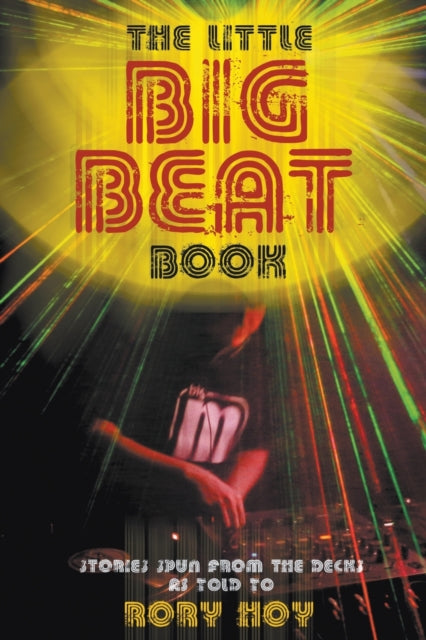
Little Big Beat Book
Little Big Beat Book
YOU SAVE £3.78
- Condition: Brand new
- UK Delivery times: Usually arrives within 2 - 3 working days
- UK Shipping: Fee starts at £3.89. Subject to product weight & dimension
Bulk ordering. Want 15 or more copies? Get a personalised quote and bigger discounts. Learn more about bulk orders.
Couldn't load pickup availability
- More about Little Big Beat Book
Big Beat was a popular musical movement in the mid-late 1990s, led by artists like Fatboy Slim, The Chemical Brothers, and The Prodigy. It was known for its loud, eclectic sound and syncopated beats, but received a massive backlash from critics, leading to its quick and painful death. This documentary explores the scene's history, including new and exclusive interviews with those who were in the thick of it.
\n Format: Paperback / softback
\n Length: 292 pages
\n Publication date: 10 September 2018
\n Publisher: New Haven Publishing Ltd
\n
Big Beat was once one of the most significant and enigmatic musical movements of the mid-to-late 1990s, spearheaded by some of the biggest names in the Electronic Dance Music scene. Its loud, eclectic sound, characterized by syncopated beats, resonated with audiences worldwide, resulting in nights of raucous, yet good-natured, hedonism. It served as the soundtrack to the advertising world of the late 1990s and early 2000s, capturing the essence of a vibrant and energetic era. However, despite its immense popularity, the genre faced a severe backlash from critics, leading to a swift and painful demise. It became the very victim of its own success.
Where did Big Beat go wrong, and is there a chance for the scene to experience a revival? To answer these questions, this documentary delves into the origins, evolution, and ultimate downfall of Big Beat. Through exclusive interviews with Rory Hoy, who has conducted over 120 interviews with key figures in the scene, including Fatboy Slim, Liam Howlett, and Keith Flint from The Prodigy, the film offers a celebratory and sometimes humorous perspective on a music scene that was short-lived but had a profound impact.
The rise of Big Beat can be traced back to the early 1990s, when a fusion of electronic music, hip-hop, and dance music began to take shape. Artists like Fatboy Slim, The Chemical Brothers, and The Prodigy emerged as pioneers, pushing the boundaries of what was considered acceptable in the music industry. Their loud, energetic tracks, characterized by heavy basslines, distorted vocals, and sampled beats, resonated with a younger generation of music enthusiasts who were seeking something different from the mainstream.
Big Beat's popularity soared in the late 1990s and early 2000s, with its tracks being played in clubs, festivals, and on radio stations worldwide. It became the soundtrack to a new era of youth culture, with its raucous and rebellious spirit resonating with those who were disillusioned with the conservative and mainstream music of the time. The genre's influence extended beyond music, with its bold and colorful visuals and fashion trends also becoming popular among fans.
However, as Big Beat gained popularity, it also attracted the attention of critics who were not entirely sold on its loud, eclectic sound. Some critics accused the genre of being overly commercial, while others claimed that it was too repetitive and lacked artistic merit. The backlash against Big Beat grew stronger in the late 2000s, as the genre began to lose its appeal to younger audiences and its artists struggled to find new ways to innovate.
The decline of Big Beat was swift and painful, with many artists struggling to maintain their careers in the face of the backlash. The genre's popularity waned, and its influence on the music industry began to diminish. Clubs and festivals that once hosted Big Beat events began to focus on other genres, and the genre's influence on fashion and culture also began to fade.
Despite its downfall. Big Beat's impact on the music industry cannot be denied. It paved the way for the emergence of other genres, such as techno and house, and its bold and eclectic sound influenced generations of musicians and artists. Its legacy continues to be felt today, with its influence being seen in the music of artists such as Disclosure, Flume, and Oliver Heldens.
In conclusion, Big Beat was once one of the biggest and most influential musical movements of the mid-to-late 1990s, lead by some of the biggest artists in the Electronic Dance Music scene. Its loud, eclectic sound, characterized by syncopated beats, resonated with audiences worldwide, resulting in nights of raucous hedonism. Despite its immense popularity, the genre faced a severe backlash from critics, leading to a swift and painful demise. While its legacy cannot be denied, the question remains whether the scene can experience a revival and reclaim its former glory. Only time will tell.
\n Weight: 395g\n
Dimension: 153 x 228 x 19 (mm)\n
ISBN-13: 9781912587094\n \n
UK and International shipping information
UK and International shipping information
We deliver throughout the United Kingdom and to 128 countries and territories worldwide, including the United States, Australia, Canada, Germany, Spain and France.